A Conversation With Alan Schwartz
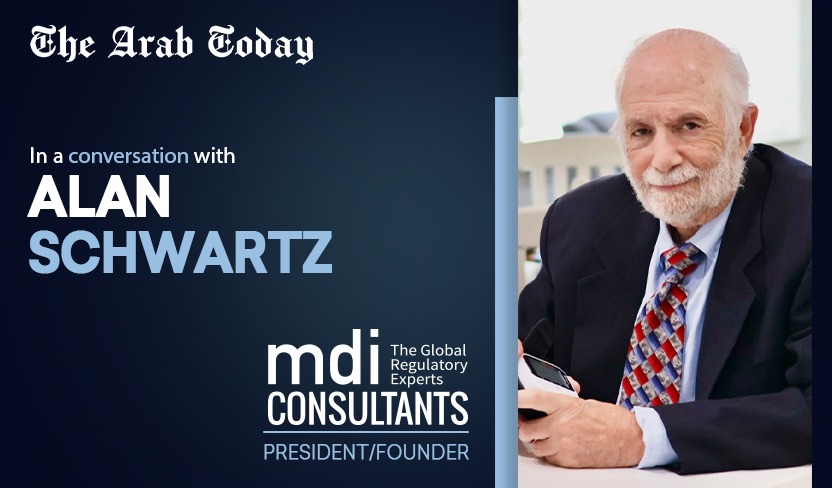
Alan Schwartz, Founder and President of mdi Consultants, has spent more than five decades helping organizations navigate the increasingly complex world of regulatory compliance. Beginning his career as an FDA Investigator in 1972, Schwartz gained firsthand experience inside the regulatory system before founding mdi Consultants in 1978. Since then, he has worked with companies across the medical device, pharmaceutical, biotechnology, food, and dietary supplement industries, helping them achieve regulatory compliance, strengthen quality systems, and successfully enter global markets.
Widely recognized for his expertise in FDA regulations, ISO certifications, quality management systems, and international compliance strategies, Schwartz has dedicated his career to helping organizations move beyond reactive compliance and build sustainable systems that support long-term growth. Under his leadership, mdi Consultants has trained more than 15,000 professionals and supported organizations worldwide through audits, submissions, certifications, and regulatory challenges.
In this exclusive conversation with The Arab Today, Alan Schwartz shares insights from his FDA career, discusses the evolving challenges facing regulated industries, and explains why proactive compliance and continuous improvement remain critical for long-term success.
From FDA Investigator to Trusted Industry Advisor
We started the interview by asking, “You began your career as an FDA Investigator in 1972 and later founded mdi Consultants. How did your FDA experience shape your consulting philosophy and leadership style?”
Alan Schwartz replied, “My years at the FDA gave me firsthand exposure to how regulatory systems operate from the inside. I learned that compliance is not just about passing inspections. It is about building systems that consistently protect patient safety and product quality.
When I transitioned into consulting in 1978, I wanted to help companies become proactive rather than reactive.
At mdi Consultants, we built our philosophy around preparation, transparency, and continuous improvement. Having supervised FDA field operations, I understood the common reasons companies fail audits and the operational gaps that create compliance risks. That experience allowed us to create systems and methodologies that help organizations avoid those issues before they escalate.
Leadership wise, I believe in combining technical expertise with practical implementation. Regulations constantly evolve, so consultants must remain deeply involved in industry developments and maintain real world experience.
Our approach has always focused on long term partnerships where we guide companies through quality systems, audits, submissions, and global regulatory challenges with clarity and confidence. We pride ourselves on building true working relationships and trust.”
Navigating an Increasingly Complex Regulatory Environment
The Arab Today: mdi Consultants has worked across medical devices, pharmaceuticals, biotechnology, food industries, and dietary supplements worldwide. What makes regulatory compliance particularly challenging today?
Alan Schwartz replied, “The biggest challenge today is the speed of regulatory evolution combined with globalization. Companies are no longer dealing with one regulatory authority. They often need to satisfy FDA, European, Canadian, and other international requirements simultaneously.
Every market has different expectations, documentation standards, and quality requirements.
Another major challenge is the increasing complexity of technologies. We now see advanced medical devices, software driven healthcare systems, biologics, artificial intelligence integration, and additive manufacturing. Regulators expect companies to demonstrate not only safety and effectiveness but also cybersecurity, data integrity, risk management, and lifecycle control.
In addition, many companies underestimate the importance of internal culture. Compliance is not just the responsibility of the quality department. It must become part of the organization’s mindset.
Successful companies invest heavily in employee training, process validation, and continuous monitoring. At mdi Consultants, we have trained more than 15,000 professionals because education is critical for maintaining sustainable compliance programs.”
Why Companies Struggle During FDA and ISO Audits
The Arab Today: You have helped companies navigate FDA audits and ISO certifications for decades. What are the most common mistakes organizations make during inspections?
Alan Schwartz replied, “One of the most common mistakes is treating inspections as isolated events instead of ongoing operational realities.
Companies often rush to organize documentation right before an audit rather than maintaining audit readiness every day. Any experienced FDA investigator can immediately recognize whether a system is genuinely integrated or simply prepared for appearance.
Another major issue is weak documentation practices. Even if a company performs excellent work operationally, poor documentation can create serious regulatory concerns. If procedures, validations, deviations, or corrective actions are not properly recorded, regulators may conclude that the system lacks control.
Communication during inspections is also extremely important. Employees sometimes provide incomplete or inconsistent answers because they are nervous or insufficiently trained. That is why we emphasize mock audits and extensive staff preparation.
Our role is not only to fix compliance gaps but also to help organizations develop confidence and discipline in how they operate under regulatory scrutiny. mdi’s staff has attended many FDA and ISO audits to ensure that inspections run smoothly and organizations are fully prepared.
Finally, many companies fail to conduct meaningful risk analysis. Modern regulations increasingly focus on risk based thinking, supplier oversight, and preventive controls. The FDA’s Quality Management System Regulation, or QMSR, requires the use of risk analysis throughout manufacturing design and operational processes.
Organizations that build strong risk management systems tend to perform far better during inspections.”
Staying Ahead of Regulatory Change
The Arab Today: mdi Consultants emphasizes involvement in regulation development and staying ahead of industry changes. Why is proactive adaptation so important in FDA compliance?
Alan Schwartz replied, “Regulatory compliance is not static. Agencies continuously update expectations based on new technologies, public health concerns, and emerging risks.
If companies wait until regulations become mandatory before adapting, they often fall behind competitors and face costly remediation efforts.
Our participation in areas such as HACCP regulation development allowed us to understand regulatory direction before many companies recognized its impact. That insight helps clients prepare strategically rather than scrambling later under enforcement pressure.
Proactive adaptation also creates significant business advantages. Companies with strong compliance systems gain faster market access, smoother audits, stronger investor confidence, and greater credibility with customers.
Compliance should not be viewed purely as a regulatory burden. When implemented properly, it becomes a strategic asset that improves operational efficiency, risk management, and organizational performance.
At mdi Consultants, we constantly refine our systems, training programs, audit methodologies, and submission strategies because staying current is essential in this environment. Regulatory success requires continuous learning and continuous improvement.”
Building Successful Healthcare and Medical Technology Companies
Lastly, we asked, “What advice would you give to emerging healthcare and medical technology companies trying to enter regulated markets?”
Alan Schwartz concluded, “My first advice is to build a strong quality system early.
Many startups focus entirely on innovation and product development while delaying compliance planning. That approach creates major problems later because regulators expect quality and risk management to be integrated from the beginning.
Most entrepreneurs do not always see the full regulatory picture that can ultimately affect their success.
Second, surround yourself with experienced regulatory professionals who understand both strategy and implementation, as well as realistic timelines. A strong regulatory roadmap can save enormous amounts of time and money. Whether you are pursuing a 510(k), PMA, CE Mark, or another approval pathway, early planning is essential.
Third, never underestimate the value of training and internal education. Employees must understand why procedures exist, not just how to follow them. Organizations with strong compliance cultures perform better operationally and adapt more effectively during inspections.
Finally, remember that regulatory agencies ultimately care about patient safety and product reliability. Companies that prioritize those principles in their culture and decision making usually achieve long term success.
Compliance is not about checking boxes. It is about creating trustworthy systems that consistently deliver safe and effective products to the market.
Rushing to market can be a dangerous road without a strong map to success. Companies that invest in quality, preparation, and continuous improvement from the start will be far better positioned for sustainable growth and regulatory success.”
Building Trust through Quality, Compliance & Continuous Improvement
As healthcare technologies continue to evolve and global regulatory requirements become increasingly complex, organizations face greater pressure than ever to demonstrate quality, safety, and operational excellence.
For more than five decades, Alan Schwartz has helped companies navigate these challenges by transforming compliance from a reactive obligation into a strategic advantage. Through mdi Consultants, he continues to guide organizations worldwide in building stronger quality systems, achieving regulatory readiness, and creating cultures that prioritize both innovation and patient safety.
In an industry where trust, reliability, and compliance are essential, Schwartz believes the most successful organizations are those that view regulatory excellence not as a destination, but as an ongoing commitment to continuous improvement.
For more information, https://mdiconsultants.com/
Also Read:-
Swagat Pathade on Intelligent Integration & Automation
Vincenzo Russi: Sustainable Architecture & Green Innovation
Hamed Sarhan: How AKOYA WATER Redefines Quality in KSA