Saudi Non-Oil Exports Reach Record $166B in 2025
Saudi Arabia’s non-oil exports reached a record $166.4 billion (SAR 624 billion) in 2025. This is a 15% increase compared to 2024. The growth shows the country’s strong push to reduce its dependence on oil and build a more diverse economy.
Non-oil exports made up 44% of Saudi Arabia’s total exports in 2025. This is higher than 39% in 2024 and is the highest level ever recorded for the country. These figures were reported by the Saudi Press Agency based on the latest official data. The rise shows that sectors outside oil are becoming more important to the national economy.
Steady Growth Over the Years
Saudi Arabia’s non-oil exports have been growing steadily for several years. In 2021, non-oil exports were valued at $86.7 billion (SAR 325 billion). In 2022, they increased to $124.8 billion (SAR 468 billion). Growth continued in 2023, reaching $127.2 billion (SAR 477 billion). In 2024, exports rose further to $144.8 billion (SAR 543 billion). Finally, in 2025, they reached a new record of $166.4 billion.
This steady increase shows a clear long-term trend. Saudi Arabia is successfully building industries outside of oil. The country is investing in manufacturing, services, mining, chemicals, and logistics. These sectors are now playing a bigger role in the economy.
The share of non-oil exports in total exports has also increased significantly. In 2021, non-oil exports made up 30% of total exports. By 2025, this share had grown to 44%. This change highlights the success of Saudi Arabia’s economic diversification strategy.
Strong Growth in Re-Exports
One of the biggest areas of growth in 2025 was re-exports. Re-exports are goods that are imported into Saudi Arabia and then exported again to other countries.
In 2025, re-exports reached $37.1 billion (SAR 139 billion). This is a sharp increase from $24.3 billion (SAR 91 billion) in 2024. The growth rate was 53% in just one year. This is a major jump and shows how quickly this sector is expanding.
For the first time, re-exports went above the $26.7 billion (SAR 100 billion) mark. This is an important milestone. The growth has been strong over the past few years. In 2021, re-exports were only $12.3 billion (SAR 46 billion). Since then, the sector has more than tripled in size.
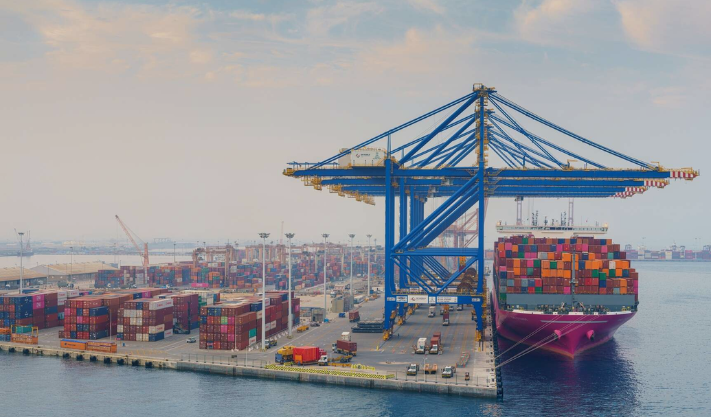
This rapid growth reflects Saudi Arabia’s improving logistics and trade infrastructure. The country is becoming an important trade hub in the region. Better ports, transport systems, and trade policies are helping support this expansion.
Key Sectors Driving Growth
Several sectors are helping drive the growth of non-oil exports. Manufacturing is one of the most important. Saudi Arabia is producing more goods locally and exporting them to global markets.
The chemicals sector is also strong. The country has long been a major producer of petrochemicals, and this continues to support export growth.
Mining is another growing area. Saudi Arabia is rich in natural resources such as gold, phosphate, and bauxite. The government is investing heavily in mining to increase production and exports.
The services sector is also expanding. This includes tourism, finance, and other service-based industries. Logistics is another key sector, especially with the growth in re-exports. Improved transport networks are helping goods move more efficiently.
All these sectors together are helping Saudi Arabia reduce its reliance on oil and build a more balanced economy.
Positive Economic Outlook
The strong export performance comes as global organizations remain optimistic about Saudi Arabia’s economy. The International Monetary Fund (IMF) expects the country to be one of the fastest-growing economies in the G20 over the next few years.
According to the IMF’s World Economic Outlook for 2026–2027, Saudi Arabia’s economy is expected to grow by 3.1% in 2026. Growth is expected to increase further to 4.5% in 2027.
If these forecasts are achieved, Saudi Arabia will become the third-fastest-growing economy in the G20 in 2027. It would rank behind Indonesia and India, but ahead of China. This shows strong confidence in the country’s economic direction.
The IMF highlighted Saudi Arabia’s ongoing transformation. The country is making major changes to its industrial, logistics, and trade sectors. These changes are part of a long-term plan to modernize the economy and reduce dependence on oil.
Economic Stability Despite Challenges
Saudi Arabia’s economy has remained stable even with ongoing geopolitical tensions in the region. The Ministry of Investment has stated that the country continues to show strong and steady growth.
The government’s reforms and investments are helping support this stability. By focusing on non-oil sectors, Saudi Arabia is reducing its exposure to fluctuations in global oil prices.
This approach makes the economy more resilient. It also creates new opportunities for businesses and investors.
Long-Term Vision
The growth in non-oil exports is part of Saudi Arabia’s broader economic transformation plan. The country is working to build a more sustainable and diversified economy.
Efforts include investing in new industries, improving infrastructure, and attracting foreign investment. The government is also encouraging innovation and supporting private sector growth.
The results are already visible in the export data. Non-oil sectors are growing faster and contributing more to the economy.
Conclusion
Saudi Arabia’s record non-oil exports in 2025 mark an important milestone. The country is successfully moving away from its heavy reliance on oil and building a more diverse economy.
With strong growth across multiple sectors and a positive economic outlook, Saudi Arabia is well-positioned for the future. Continued investment and reforms are expected to support further growth in the coming years.
The rise in non-oil exports is not just a short-term success. It reflects a long-term shift in the country’s economic structure. As Saudi Arabia continues this path, it is likely to become a more balanced and resilient global economy.
Also Read:-
Youmna Khoury, Founder of Youmi Beauty: Beauty Is Power
Jumeirah Restores Burj Al Arab’s Iconic Legacy
Doha Bank Sets a New Global Benchmark in Wholesale Banking