Preba Moodley Interview
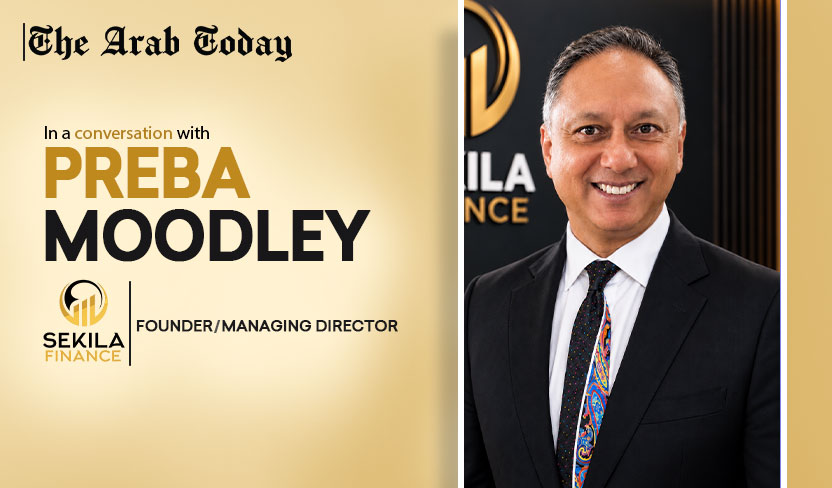
Preba Moodley is the Founder and Managing Director of Sekila Finance, a Dubai-based financial advisory firm specializing in structured trade and commodity finance, project finance, debt restructuring, yacht finance and aviation finance.
With a career spanning more than three decades across finance, structured products, investment, and advisory, Moodley has developed experience in designing financing solutions for complex transactions and businesses. Alongside his finance career, Preba Moodley is also a professional magician and music producer, bringing together very different worlds that both require preparation, discipline, analytical and creative thinking, and an ability to understand people.
Building Sekila Finance’s Vision
We started the interview by asking, “Preba Moodley, what inspired you to build Sekila Finance and focus on structured finance?”
Preba Moodley replied, “My career has always been rooted in banking, financial markets, investment and structured finance. However, what truly inspired me to establish Sekila Finance in 2006 was recognising the enormous disconnect between Africa’s vast commodity wealth and the availability of financing required to unlock its commercial potential.
Africa is a major producer of agricultural commodities, minerals, metals and energy resources. Yet, despite its strategic importance to global supply chains, the continent continues to face a substantial trade finance gap, estimated by the African Development Bank at approximately US$100 billion annually. This financing shortfall constrains commodity flows, limits the growth of African businesses and prevents many producers and traders from fully participating in international markets.
I saw an opportunity to bridge this gap by creating a specialised financial advisory platform focused on mobilising international banking liquidity, institutional capital and private credit to finance African commodity flows.
At Sekila Finance, our philosophy is that financing must be structured around the underlying commercial transaction, its cash flows, collateral, logistics and risk profile. Whether financing agricultural exports, petroleum products, fertilisers or metals, every transaction requires a tailored approach that aligns the interests of commodity producers, traders, banks and investors.
Our role extends beyond introducing capital. We originate, structure and arrange financing solutions that enable commodities to move efficiently across borders, connecting African businesses with international financial institutions and global markets.
Ultimately, my vision for Sekila Finance has always been about more than arranging finance. It is about unlocking Africa’s commodity potential, narrowing the trade finance gap and transforming commercial opportunities into bankable transactions that drive trade, investment and economic growth.”
Understanding Structured Trade Finance
The Arab Today: What is structured trade and commodity finance, and why is it important for businesses?
Preba Moodley replied, “Structured trade and commodity finance is designed to support transactions involving the movement, purchase, sale, or financing of commodities and goods. Depending on the transaction, financing can involve the underlying trade flows, contracts, receivables, inventory, collateral, and other relevant elements.
It is important because businesses involved in international trade can require substantial working capital between purchasing a commodity and receiving payment from the buyer. A well-designed structure can help address that financing requirement while taking into account the underlying transaction and associated risks.”
A Transaction-Focused Financing Approach
The Arab Today: How does your approach to commodity finance differ from conventional business financing?
Preba Moodley replied, “Conventional financing often looks primarily at the company and its financial position. Structured commodity finance can require a much broader examination of the transaction itself.
We look at the parties involved, the commodity, contracts, payment flows, jurisdictions, collateral, counterparties, and the overall commercial structure. Understanding how the transaction works from beginning to end is essential. This allows the financing structure to be considered in the context of the actual trade rather than in isolation.”
Navigating Complex Financing Challenges
The Arab Today: What are some of the biggest challenges in arranging financing for complex transactions?
Preba Moodley replied, “Complexity itself can be a major challenge. A transaction may involve different countries, currencies, legal systems, counterparties, assets, and contractual arrangements.
Another important factor is risk assessment. Every transaction needs to be examined carefully before a financing structure is considered. Documentation, cash flows, counterparties, collateral, market conditions, and repayment mechanisms all need attention.
Experience helps because it allows you to identify important questions early and understand where a transaction may require additional structuring or clarification.”
Expanding into Luxury Asset Finance
The Arab Today: Why did you add Yacht and Private Jet Finance to your areas of expertise?
Preba Moodley replied, “Our expansion into yacht and private jet financing was a natural evolution of Sekila Finance’s business, driven primarily by the changing needs of our clients.
Over the years, we have worked closely with successful entrepreneurs, international commodity traders and business owners, helping them structure and secure financing for their commercial operations. As their businesses expanded and their wealth grew, so too did their requirements for sophisticated asset financing, particularly for private jets and luxury yachts.
We recognised that our relationships with clients should extend beyond financing their businesses to supporting their broader financial and asset acquisition requirements.
Interestingly, despite Dubai being one of the world’s leading centres for private aviation and luxury yachting, relatively few local banks have a strong appetite for financing these specialised asset classes. This creates a financing gap for otherwise financially strong individuals and businesses.
Rather than accepting this limitation, we applied our structured finance expertise to develop innovative cross-border financing solutions, accessing specialist lenders and financial institutions in Taiwan and South Africa that have the expertise and appetite to finance private aircraft and luxury yachts.
These structures allow us to connect Dubai-based and international clients with alternative sources of capital, while addressing the complexities of asset ownership, registration, collateral, jurisdictional considerations and repayment structures.
For us, this is what structured finance is fundamentally about: identifying financing gaps, thinking beyond conventional banking boundaries and creating solutions where traditional lenders may not be willing to participate.
Ultimately, yacht and private jet finance is not a departure from our core business. It is a natural extension of our commitment to our clients. As our clients grow, Sekila Finance evolves alongside them, ensuring that their ambitions are supported by access to innovative financing solutions, wherever that capital may be located.”
Three Decades of Financial Evolution
The Arab Today: You have worked in finance for more than three decades. How has the industry changed since you started?
Preba Moodley replied, “The financial industry has changed considerably. Markets have become more interconnected, technology has transformed information and communication, and transactions have become increasingly international.
At the same time, the fundamentals remain important. Understanding risk, cash flow, counterparties, documentation, and commercial reality is still essential. Technology can improve how we work, but good financial judgment and disciplined analysis remain critical.”
Lessons from Building Decillion
The Arab Today: You co-founded Decillion and were involved in South Africa’s early non-bank derivatives and structured finance sector. What did that experience teach you?
Preba Moodley replied, “Co-founding Decillion was one of the most formative experiences of my career. We were operating at a time when South Africa’s non-bank financial services industry was evolving rapidly, creating opportunities for innovation in derivatives, fixed income, structured finance and alternative investments.
Building Decillion from an entrepreneurial venture into a publicly listed financial services business taught me that financial innovation must always be supported by disciplined risk management, sound commercial judgement and strong institutional foundations.
One of the defining milestones was Decillion’s Initial Public Offering (IPO) and listing on the Johannesburg Stock Exchange (JSE). That experience gave me invaluable exposure to the fundamentals of corporate valuation, capital markets, shareholder expectations and corporate governance.
It taught me how businesses are valued, how investors assess risk and growth potential, and how financial performance, transparency, accountability and governance ultimately influence the value of an enterprise.
Perhaps most importantly, I learned the distinction between building a successful business and building an institution capable of attracting capital, maintaining investor confidence and creating sustainable long-term shareholder value.
My involvement in derivatives trading, hedge funds, debt origination and structured finance also reinforced the importance of understanding risk at a fundamental level. Financial engineering can create tremendous opportunities, but every structure must have a clear commercial rationale, appropriate risk allocation and a sustainable economic foundation.
Those lessons continue to shape my approach at Sekila Finance today. Whether we are structuring complex commodity finance transactions, engaging international banks and private credit funds, or advising clients on capital raising, I approach every opportunity with the same principles: rigorous valuation, disciplined risk management, transparency and sound corporate governance.
Ultimately, Decillion taught me how to think like an entrepreneur, structure like an investment banker and govern like a publicly listed institution. That combination has been fundamental to my journey in international structured finance.”
Essential Qualities in Structured Finance
The Arab Today: What qualities do you believe are essential for someone working in structured finance?
Preba Moodley replied, “Analytical ability is certainly important, but structured finance requires much more than being comfortable with numbers. You need strong attention to detail, commercial awareness, sound judgment, communication skills, and the ability to understand how different parts of a transaction connect. Every transaction can have its own challenges, involving different counterparties, jurisdictions, assets, contracts, and risk factors. You therefore need to be comfortable asking the right questions, examining the details carefully, and looking at the transaction from different perspectives before reaching a conclusion.
Experience and integrity are equally important. Clients need to trust that their advisor understands both the opportunities and the risks involved. In my view, good structured finance professionals combine technical knowledge with practical experience, clear communication, and the discipline to make well-considered decisions.”
The Creative World of Magic and Music
The Arab Today: You have another very different career as a professional magician. How did magic become part of your life?
Preba Moodley replied, “Magic began as a personal passion and evolved into a professional career that has taken me to audiences around the world. I have been performing professionally since 2009, specialising in close-up magic, mentalism, illusion and stage cabaret. I have also had the privilege of participating in the World Championship of Magic in Beijing and am a member of the International Magicians Society.
But my creative interests extend beyond magic. I am also a music producer, with tracks released through major record labels and distributed across international music streaming platforms. Music production allows me to explore another dimension of creativity, combining artistic expression, technology and innovation.
What fascinates me is the connection between magic, music and structured finance. Although they appear to be entirely different disciplines, they share a fundamental principle: creativity.
Magic challenges you to see beyond the obvious, question conventional thinking and create possibilities that others may not immediately recognise. Music production involves imagination, composition and bringing different elements together to create something original. Structured finance requires much the same mindset – taking complex financial, commercial and risk considerations and combining them into innovative solutions.
I believe that remaining creatively active through music and magic makes me a better financial structurer. It encourages me to think differently, challenge conventional approaches and find solutions where others may see obstacles.
Interestingly, magic has also become an extension of my professional life in international finance. I regularly perform at client corporate events and international trade finance conferences in Singapore, Cape Town, Dubai, London, Egypt and Nairobi. These performances bring a completely different dimension to business gatherings, creating memorable experiences and strengthening relationships beyond the traditional boardroom environment.
There is something quite extraordinary about discussing complex commodity finance transactions with international bankers and business executives during the day, and then entertaining those same audiences with mentalism and illusion in the evening.
For me, these are not competing careers. They complement one another.
Finance is the art of structuring possibilities. Magic is the art of making the impossible appear possible. Music is the art of transforming imagination into something people can experience.
All three keep me curious, innovative and constantly looking for new ways to challenge conventional thinking.”
Balancing Finance with Creativity
The Arab Today: How do you balance your work in finance with your career in magic and music?
Preba Moodley replied, “They are very different disciplines, but both require preparation and discipline. Finance involves analysing information, understanding structures, and managing complex situations. Magic and music requires practice, observation, presentation, and understanding the audience.
Having these very different professional interests also keeps me curious. It allows me to approach problems from different perspectives and maintain a creative side alongside the analytical nature of finance.”
Shaping the Future of Sekila Finance
The Arab Today: What is your vision for Sekila Finance in the coming years?
Preba Moodley replied, “My vision is to establish Sekila Finance as a leading international structured finance and financial technology platform, with a particular focus on mobilising capital for African commodity flows and bridging the continent’s substantial trade finance gap.
We will continue expanding our core expertise in structured trade and commodity finance, project finance, debt restructuring and specialist asset financing, while strengthening our relationships with international banks, development finance institutions and private credit providers.
An important part of our growth strategy is the development of proprietary FinTech, AgriTech and AdverTech platforms that support our clients and institutional partners. These technologies will improve supply chain transparency, commodity traceability, financial inclusion and access to finance, while creating new commercial opportunities through digital innovation.
Our ambition is to evolve Sekila beyond traditional financial advisory into an integrated finance and technology business that connects capital, commodities, data and markets.
Ultimately, we want to do more than arrange financing. We want to build innovative solutions that unlock Africa’s economic potential, enable international trade and create sustainable long-term value for our clients and financial partners.”
An Approach to Financial Solutions
Finally we asked, “What would you like clients and business leaders to understand about working with Sekila Finance?”
“Every financing requirement has its own circumstances. A solution that works for one business or transaction may not necessarily work for another.
At Sekila Finance, our approach is very bespoke. We understand the transaction first, identify the key financial and commercial considerations, and then explore appropriate structuring possibilities. For complex financing requirements, having an experienced advisor who can look at the entire picture can make an important difference.” Preba Moodley concluded
Connect with Preba Moodley on LinkedIn
For more information visit Sekila Finance
Also Read:-
Lars Mourey on Shower Filtration and Water Softening
Benjamin Miekisiak on Leadership, Clarity and Judgement
Dr. Manoj Kurup on Modern Facilities Management Leadership