BRAVE CLARITY INTERVIEW
Seeing What Others Miss, Questioning What Others Accept
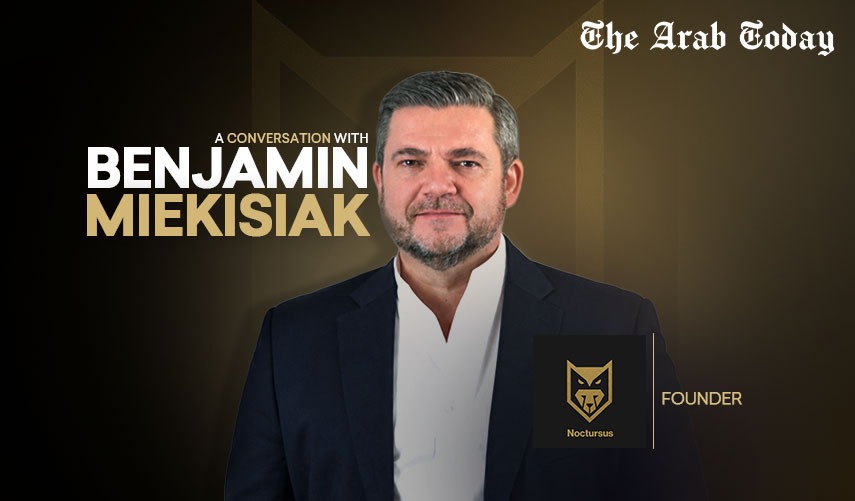
Interview with Benjamin Miekisiak, Founder of Noctursus
After more than 25 years of international executive experience across private banking, industry and strategic consulting, Benjamin Miekisiak founded Noctursus in Dubai. He shares his perspective on leadership, independent thinking, judgement and the courage to turn clarity into action.
Why Clarity Takes Courage
We started the interview by asking, “You founded Noctursus around a philosophy you call “Brave Clarity”. Why does clarity require courage?”
Benjamin Miekisiak replied, “Because clarity is not always comfortable.
Organisations develop habits, assumptions and accepted ways of thinking. Over time, some become so deeply embedded that nobody questions them anymore.
I’ve always been curious about what lies behind the obvious. What are we missing? What are we taking for granted? What if the real issue is not where everyone is looking?
But seeing differently is only half the equation. Sometimes what you discover challenges established thinking, powerful interests or decisions already made. Recognising it is one thing. Having the courage to articulate it is another.
Clarity without courage changes very little.
Brave Clarity is not about provocation or proving others wrong. It’s about curiosity, independent judgement and constructive candour. And ultimately, having the strength to act on what you discover.”
Connecting the Dots Across Disciplines
The Arab Today: “Your career spans industry, strategic consulting and international private banking. What has moving across these worlds taught you?”
Benjamin Miekisiak replied, “That the most interesting answers aren’t always found within the boundaries of a single discipline.
Industry taught me that decisions have tangible consequences. Strategic consulting developed my ability to structure complexity and challenge assumptions. International private banking exposed me to situations where growth, people, regulation, risk and geopolitics were deeply interconnected.
What I value most today is the ability to bring those perspectives together.
I don’t pretend to know everything about every subject. Specialists bring essential depth. But sometimes the answer lies between their respective areas of expertise.
I connect the dots others are looking at separately.
And having been on the executive side of the table, I know that identifying an opportunity isn’t enough. Someone eventually has to make a decision and live with its consequences.”
Questioning the Problem Before Solving It
The Arab Today: “ You often question the way a problem is presented. Can you give an example where that made a difference?”
Benjamin Miekisiak replied, “I remember an analysis involving a customer service call centre dealing with a particularly high volume of incoming calls.
The conventional approach would have been to focus on the call centre itself: improving agents’ productivity, reducing handling times or finding ways to process more calls with the same resources.
But we decided to look at the problem from a different angle. Instead of asking how to handle calls more efficiently, we asked why customers were calling in the first place.
That led us outside the call centre, where we identified two important causes: issues with the marketing brochures customers were receiving and problems in the SIM card activation process.
Neither originated within the call centre, yet both were generating additional calls and contributing to its workload.
Suddenly, the discussion was no longer just about improving efficiency. It was about eliminating some of the reasons customers needed to call at all.
That experience illustrates a question I often ask:
Are we answering the wrong question extremely well?
Sometimes the greatest contribution isn’t another solution. It’s changing how everyone understands the problem.”
The Value of an Independent Voice
The Arab Today: “You believe CEOs and boards particularly need independent perspectives. Doesn’t that suggest a lack of trust in their own teams?”
Benjamin Miekisiak replied, “Not at all. It’s about recognising how organisations and human relationships work.
The higher you rise, the more information becomes available to you. Yet paradoxically, the more filtered that information can become.
People naturally adapt their messages. Bad news may be softened, assumptions go unchallenged, and apparent consensus can replace genuine debate.
So I often ask: Who tells the CEO what nobody else wants to say?
Sometimes it’s a trusted colleague or an effective board. Sometimes an independent voice can bring a perspective that internal dynamics make difficult to express.
The purpose isn’t confrontation. It’s constructive challenge, helping leaders see what they may be missing and improve the quality of their decisions.”
Turning Insight Into Action
The Arab Today: “Seeing things differently is one thing. How do you translate that into real results?”
Benjamin Miekisiak replied, “For me, clarity without execution remains an interesting observation.
Leadership isn’t simply about defining a vision or designing an excellent solution. It’s about making that solution work in reality.
I’ve seen technically strong solutions achieve very little because people never genuinely adopted them. Quality matters, but so does acceptance. An excellent tool nobody uses has limited value.
That’s why leadership means helping people understand and use the tools available, supporting them through setbacks, and making difficult decisions when circumstances demand it.
The real test isn’t whether a transformation looks convincing in a presentation.
It’s what actually changes on Monday morning.
And whether those changes endure long after the programme has ended.”
Closing the AI Capability Gap
The Arab Today: “You’ve spoken about a growing “Capability Gap” in AI. What concerns you most?”
Benjamin Miekisiak replied, “There’s an interesting paradox emerging in AI.
Technological barriers are falling rapidly. Capabilities that once required significant expertise and investment are becoming increasingly accessible.
Yet I believe another gap is widening: the distance between what technology makes possible and what organisations are actually capable of turning into value.
That’s the Capability Gap.
And it goes far beyond AI skills. It involves strategy, business processes, data, governance, operating models, people and the ability to execute change.
Organisations also face difficult investment choices. With technology evolving so quickly, today’s solution may become obsolete before its benefits have fully materialised.
So the challenge isn’t simply adopting AI. It’s building the organisational capabilities to absorb it, govern it and translate experimentation into sustainable results.
AI can accelerate an organisation, including in the wrong direction.
And as technology makes answers increasingly accessible, I suspect human judgement, curiosity and accountability will become even more valuable.
The bigger question isn’t just what AI can do. It’s how much of that potential organisations can actually turn into value.”
Bringing Independent Judgement to Leadership
The Arab Today: “Why did you decide to create Noctursus now, and what do you want to bring to the leaders you work with?”
Benjamin Miekisiak replied, “Throughout my career, I’ve had the opportunity to work across different industries, markets and organisational environments, often in roles where I could put my thinking into practice and take responsibility for the outcomes.
Those experiences shaped not only what I know, but also how I approach problems, connect perspectives and make decisions.
Until now, however, that contribution has largely been within the organisations I was working for.
At this stage of my career, I wanted to bring that perspective beyond the boundaries of a single organisation, contributing independently to different leaders, boards and businesses.
That’s really why I created Noctursus.
Not because I believe I have all the answers, or a methodology that works everywhere. But because I think the combination of experience, independent judgement and a different way of looking at situations can sometimes make a meaningful contribution.
Whether as a strategic advisor, a board advisor or an independent director, I’d like to help leaders see things they may not have considered, challenge their thinking constructively and turn decisions into action.
Ultimately, I don’t want someone to leave a conversation thinking simply, “He knows a lot.”
I’d much rather they think, “I hadn’t looked at it that way. I’d like to continue that conversation.”
Connect with Benjamin Miekisiak on LinkedIn
For more information visit Noctursus
Also Read:-
Dr. Manoj Kurup on Modern Facilities Management Leadership
Mohamed El Mardi El Tegani on Sustainable Investment
Prof. Dr. Causevic: Engineering a Resilient Future