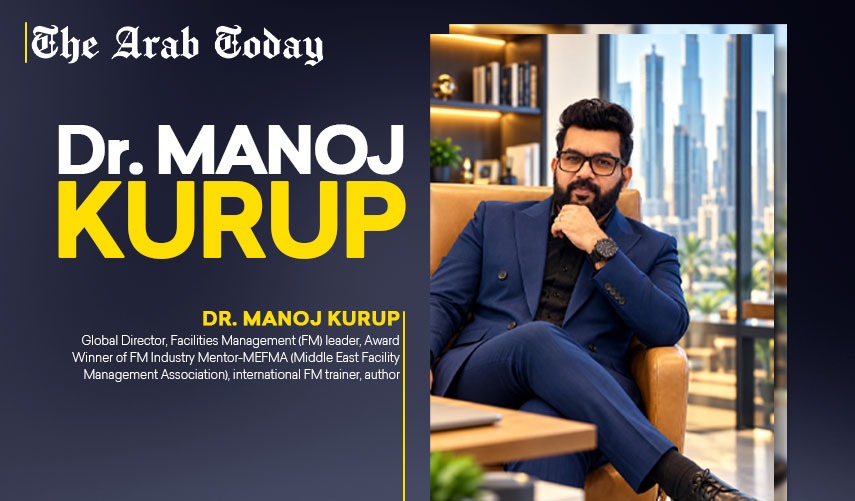
Dr. Manoj Kurup Interview
Dr. Manoj Kurup is a global Facilities Management (FM) leader, Award Winner of FM Industry Mentor-MEFMA (Middle East Facility Management Association), international FM trainer, author with more than 25+years of experience across Facilities Management, Asset Management, Reliability Maintenance, Project Management, and Business Development. Recognized among the Middle East’s Top 50 Most Influential Leaders in Facilities Management for five consecutive years since 2019, he has built his career around operational excellence, strategic growth, and professional development. As a former General Manager at TBOAM Facilities Management and Head of Technical department of Johnson Controls Global Workplace Solutions, Dr. Kurup combines industry experience with a strong commitment to education, innovation, and sustainability. He is also the author of Facilities Management: Red vs. Blue Ocean Strategy and is preparing his next book, AI Tsunami in Facility Management: Data to Decision. And now he is holding a position of Co-founder and Global Director of International Facilities Management Education Private Limited (IFM Edu Academy)
FM Leadership Journey
We started the interview by asking, “You have more than 25+ years of experience across Facilities Management, Asset Management, Reliability Maintenance, Project Management, and Business Development. What first attracted you to this industry, and how has your professional journey shaped your approach to leadership?”
Dr. Manoj Kurup replied, “My journey in Facilities Management has been driven by a strong interest in operational excellence, problem-solving, and creating long-term value for organizations. Over the years, I have realized that Facilities Management is much more than maintaining buildings or managing service contracts. It involves understanding how people, processes, technology, and physical assets work together to support business objectives. Working across different areas of the industry has helped me develop a broader perspective on leadership. I have learned the importance of financial discipline, customer relationships, employee development, and continuous improvement. Every role has presented different challenges, from improving operational efficiency to managing stakeholder expectations and identifying new business opportunities.
These experiences have shaped my belief that an effective FM leader must understand both the technical and commercial sides of the business. Leaders need to make informed decisions, build capable teams, and remain adaptable as client expectations and industry requirements evolve. For me, success means delivering reliable services while creating sustainable value for clients, employees, and the organization.”
Driving Business Growth
The Arab Today: During your tenure as General Manager at TBOAM Facilities Management, you focused on operational transformation, revenue growth, and client retention. Which leadership strategies made the greatest difference in improving business performance?
Dr. Manoj Kurup replied, “One of the most important steps was changing how departments understood their responsibilities and financial performance. By restructuring departments into profit centers, we could improve accountability, evaluate performance more clearly, and identify opportunities to control costs while maintaining service quality.
Business growth also depends on understanding client needs and building relationships based on trust. Securing contracts with major developers requires more than competitive pricing. Clients expect consistent service delivery, transparency, responsive communication, and the confidence that their facilities will be managed professionally. We worked to strengthen these areas while pursuing new business opportunities. Client retention was another important priority. Achieving a strong contract renewal record requires teams to deliver on their commitments throughout the contract period, rather than focusing only on renewal discussions. Regular performance reviews, timely problem resolution, and clear communication help maintain confidence. My approach has always been to connect business strategy with daily operations. When employees understand their objectives, performance is measured properly, and client expectations are managed effectively, an organization is better positioned to achieve sustainable growth.”
AI in Facilities Management
The Arab Today: You have been actively involved in technology integration and are preparing your book, AI TSunami in Facility Management: Data to Decision. How do you see artificial intelligence, the Internet of Things, and automation changing Facilities Management?
Dr. Manoj Kurup replied, “Technology is changing Facilities Management by helping organizations move from reactive maintenance towards more predictive, data-driven operations. Traditionally, teams often responded to equipment failures after a problem had already occurred. With the right combination of IoT sensors, automation, and AI-powered analytics, it becomes possible to identify unusual performance patterns, anticipate potential failures, and plan maintenance more effectively. For example, connected systems can monitor equipment conditions, energy consumption, indoor environmental parameters, and operating performance. AI can help analyze this information and highlight issues that require attention. This can support better maintenance planning, improve resource allocation, and reduce unnecessary downtime.
However, technology alone does not guarantee better results. Organizations need reliable data, suitable digital infrastructure, trained employees, and clear processes for acting on the information generated. Human judgment remains important, particularly when decisions involve safety, cost, compliance, or the experience of building occupants.
My upcoming book, AI Tsunami in Facility Management: Data to Decision, explores the importance of converting data into practical business decisions. I believe the future belongs to organizations that can combine technological capability with professional expertise to improve efficiency, sustainability, and service quality.”
Sustainable Facility Operations
The Arab Today: Sustainability and proptech are increasingly important in the built environment. What practical steps can Facilities Management professionals take to improve environmental performance while maintaining cost efficiency and occupant comfort?
Dr. Manoj Kurup replied, “Facilities Management has a direct influence on how efficiently buildings use energy, water, materials, and other resources. This gives FM professionals an important role in helping organizations meet their sustainability objectives while maintaining safe, comfortable, and productive environments. The first step is to understand current performance. Organizations should monitor energy and water consumption, equipment efficiency, waste generation, and maintenance requirements. Once reliable baseline data is available, teams can identify areas where improvements will have the greatest impact. Measures such as optimizing HVAC operations, improving lighting efficiency, preventing water leakage, and maintaining equipment properly can deliver practical benefits.
Technology can strengthen these efforts through smart building systems, connected sensors, and data analytics. These tools help teams identify inefficiencies and understand how buildings perform under different operating conditions. Asset management is equally important because maintenance and replacement decisions influence both lifecycle costs and environmental impact. I believe sustainability should be integrated into everyday operational decisions rather than treated as a separate initiative. The objective is to balance environmental responsibility, financial performance, regulatory requirements, and occupant well-being. When these priorities are managed together, Facilities Management can contribute meaningfully to more sustainable buildings.”
Global FM Careers
The Arab Today: As Co-founder and Global Director of International Facilities Management Education Private Limited, also known as IFM Edu Academy, what skills and learning opportunities do you believe are essential for preparing the next generation of globally employable FM professionals?
Dr. Manoj Kurup replied, “The Facilities Management industry needs professionals who combine technical knowledge with practical experience, communication skills, and commercial awareness. Understanding maintenance, safety, asset performance, sustainability, and service delivery is essential, but professionals must also learn how to work with clients, manage teams, analyze information, and make responsible decisions.
Through IFM Edu Academy, our aim is to help learners develop these capabilities through industry-focused diploma programmes. These include the Diploma in Mastery of Facilities Management (DMFM), Diploma in Facility Administration (DFA), and Diploma in Facility Operations and Maintenance (DOM). Certified Facility Manager (CFM) ,Certified Maintenance & Reliability Professional (CMRP), Artificial Intelligence for Facility Managers (AIFM) and many more certifications related to FM. Our focus is on connecting structured learning with the practical requirements of the profession.
We also recognize that the industry is changing. Digital transformation, AI, sustainability, international standards, and evolving client expectations are creating new demands for FM professionals. Continuous learning is therefore essential, whether someone is entering the industry or moving into a leadership position.
For individuals who want to build international careers, understanding professional standards and developing transferable skills can improve their readiness for opportunities across India, the GCC, and other markets. My goal is to encourage professionals to see Facilities Management as a long-term career with opportunities for specialization, leadership, and global growth.”
Leadership Through Mentorship
The Arab Today: You are an international FM trainer and FM Industry Mentor who delivers professional development programmes across several disciplines. How can training and mentorship help professionals become more effective leaders in an increasingly complex industry?
Dr. Manoj Kurup replied, “Training and mentorship are important because technical expertise alone does not automatically prepare someone to lead a team or manage a business. Professionals must also learn how to communicate clearly, handle difficult situations, manage competing priorities, and make decisions under pressure. My training work covers areas such as Facilities Management, Asset Management, Sustainability, Health and Safety, leadership, and professional development. I also support preparation for industry-recognized qualifications, including IFMA credentials and maintenance and reliability certifications. These learning opportunities help professionals strengthen their knowledge and understand recognized industry practices.
Mentorship adds another dimension by helping individuals apply what they learn to real workplace situations. A mentor can share experience, encourage critical thinking, and help a professional identify strengths and areas for improvement. This is particularly valuable for people moving from technical roles into supervisory or management positions. I believe effective leaders should create an environment where people feel encouraged to learn, ask questions, and take responsibility. Investing in people improves individual confidence and can also strengthen team performance, employee engagement, and service delivery. In a changing industry, organizations that prioritize continuous development are better equipped to adapt and grow.”
Competitive FM Strategies
The Arab Today: In your book, Facilities Management: Red vs. Blue Ocean Strategy, you explore strategic thinking in the FM sector. How can this approach help organizations differentiate themselves in a competitive market?
Dr. Manoj Kurup replied, “In a competitive market, Facilities Management companies can easily become focused on price, particularly when clients compare service providers primarily on contract costs. This creates pressure on margins and can make it difficult for organizations to invest in people, technology, and service improvements. The Red Ocean and Blue Ocean concepts offer a useful way to think about this challenge. A Red Ocean approach focuses on competing within an established market, where businesses often try to outperform one another using similar services and commercial models. A Blue Ocean approach encourages organizations to identify opportunities to create additional value and develop differentiated offerings. In Facilities Management, differentiation might come from combining traditional services with smart building technology, data-driven reporting, sustainability solutions, specialized asset management, or a stronger focus on the occupant experience. Companies can also improve their value proposition by helping clients understand the relationship between maintenance decisions, asset lifecycle costs, operational risks, and long-term performance.
The key is to understand what clients genuinely need and identify where the organization can deliver measurable improvements. Strategic differentiation is not simply about offering more services. It is about solving relevant problems in a way that clients recognize as valuable. This approach can help FM businesses build stronger relationships and compete on expertise, outcomes, and innovation rather than price alone.”
People and Career Growth
Lastly we asked, “Alongside your work in Facilities Management, you are involved in psychology counselling and international career guidance. How do these areas influence your understanding of people, and what advice would you give professionals who want to build meaningful, future-ready careers?”
“My involvement in counselling and career guidance has reinforced my understanding that professional success is closely connected to personal development, emotional well-being, and the ability to make informed decisions. People often have the knowledge and potential to progress, but they may need guidance to understand their strengths, manage challenges, or identify the right direction. In leadership and training, this perspective is equally valuable. Every team includes individuals with different experiences, motivations, communication styles, and learning needs. Leaders who listen carefully and understand these differences are better positioned to build trust, support development, and create collaborative working environments. For professionals planning their careers, my advice is to remain curious and take responsibility for continuous learning. Develop a strong foundation in your chosen field, improve your communication and problem-solving abilities, and stay informed about emerging technologies and industry developments. Seek mentors, gain practical experience, and be willing to adapt when new opportunities arise.
In Facilities Management, the combination of technical competence, digital awareness, sustainability knowledge, and leadership ability will become increasingly important. At the same time, professionals should not overlook integrity, resilience, and respect for people. Long-term success comes from developing both professional capability and personal maturity. Ultimately, my goal as a leader, trainer, mentor,author, and counsellor is to help people recognize their potential and make better decisions about their futures. When individuals continue learning and organizations invest in their people, the benefits extend beyond individual careers to the wider industry and society.” Dr. Manoj Kurup concluded
Connect with Dr.Manoj Kurup – https://www.linkedin.com/in/manoj-kurup/trainer@drmanojkurup.com
www.drmanojkurup.com
Phone: +971588861813
Also Read:-
Mohamed El Mardi El Tegani on Sustainable Investment
Prof. Dr. Causevic: Engineering a Resilient Future
Sandra Woodall: Designing Resilient, Sustainable Cities