UAE Economy in Simple Numbers: Non-Oil Growth Reaches 77%
The United Arab Emirates (UAE) has been working for many years to build an economy that does not depend only on oil. Today, the results show that this plan is working well. Recent data explains how the country is growing and changing.
The International Monetary Fund (IMF) expects the UAE economy to grow by 3.1%. At the same time, S&P has kept the country’s credit rating stable. These updates show that the UAE’s economy is strong, even during global uncertainty.
One of the biggest changes in the UAE is the growth of its non-oil sector. In the first quarter of 2025, non-oil activities made up 77.3% of the country’s total economy. Many years ago, the UAE depended almost completely on oil, but now most of its income comes from other sectors. During the first nine months of the year, the non-oil sector grew by 6.1%, showing strong progress.
The UAE’s total economy is estimated to be about $571.6 billion in 2025. This makes it the 30th largest economy in the world and the second largest in the Gulf Cooperation Council (GCC), after Saudi Arabia. The economy grew by 5.8% compared to the previous year. The average income per person (GDP per capita) reached $54,210, which is considered high.
The country has a population of around 11.47 million people, making it the second most populated country in the GCC. The UAE covers an area of about 84,000 square kilometers.
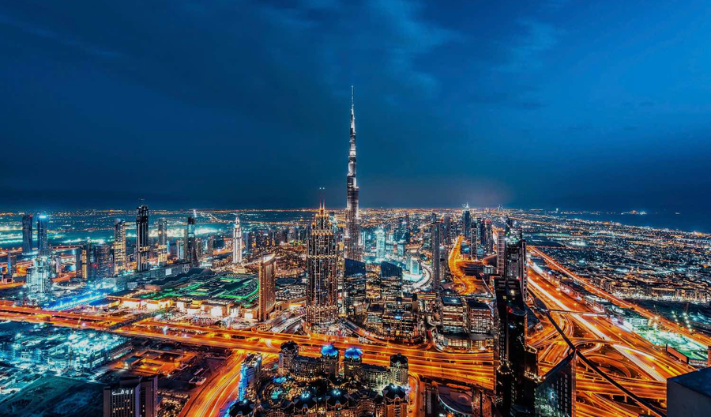
Cities like Dubai and Abu Dhabi have become important global centers for business and finance. They are also strong in areas such as tourism, transportation, and technology. The UAE ranked fifth in the IMD World Competitiveness Index and also fifth in Stanford University’s AI Environment Index. These rankings show that the country is focusing on becoming a knowledge-based economy.
Looking at different sectors, trade is the largest contributor to the economy, making up 16.1% of GDP. Manufacturing follows with 13.9%, while finance and insurance contribute 13.5%. Construction accounts for 11.9%, and real estate makes up 7.9%. These numbers show how the UAE has successfully built many strong industries outside oil.
Even though the country has diversified, energy is still very important. According to OPEC, the UAE is the fourth-largest oil exporter in the world, after Saudi Arabia, the United States, and Russia. It also has the sixth-largest oil reserves globally.
The UAE’s energy data is significant. Oil exports were worth $77.6 billion. The country has about 113 billion barrels of oil reserves and large natural gas reserves. Daily oil production reached 2.9 million barrels. The UAE also produces large amounts of natural gas and has strong refining capacity.
Electricity production in the UAE reached 167,532 GWh in 2023. The energy mix includes 60% natural gas, 28% oil, and 9% nuclear energy. This shows that while oil is still important, the country is also using other energy sources.
At the same time, the UAE is investing heavily in clean energy. Renewable energy capacity reached 7.7 gigawatts in 2025, making up 15.3% of the total energy mix. This is a big step forward.
Masdar, a clean energy company from Abu Dhabi, has developed projects with a total capacity of 65 gigawatts across the world. The company has invested about $45 billion so far and plans to reach 100 gigawatts by 2030.
The UAE has also set a goal to reach net-zero carbon emissions by 2050. It hosted the COP28 climate conference in Dubai in 2023. However, global rankings show that the country still needs to improve. The Climate Change Performance Index ranked the UAE 62nd with a “very low” rating, mainly due to high emissions and energy use.
Trade is a major strength of the UAE. In 2024, total exports and re-exports reached $467 billion. This made the UAE the ninth-largest exporter of goods in the world. Imports were about $400 billion, resulting in a strong current account surplus of $80 billion.
Foreign investment is also growing fast. In 2024, foreign direct investment reached $45.6 billion, which was a 48.7% increase compared to the previous year. This shows that global investors trust the UAE as a stable and attractive place to do business.
The government’s financial position is strong. Public debt is relatively low at 31.4% of GDP. The country also has a budget surplus of 4.89% of GDP. In addition, the UAE’s central bank holds $270 billion in foreign exchange reserves.
One of the most impressive aspects of the UAE is its sovereign wealth funds. These funds manage large amounts of money and invest globally. The Abu Dhabi Investment Authority (ADIA) manages about $1.187 trillion. The Investment Corporation of Dubai (ICD) manages $429 billion. Mubadala Investment Company holds $385 billion. ADQ manages $300 billion, and the Emirates Investment Authority (EIA) has $116 billion. These funds make the UAE one of the wealthiest countries in terms of global investments.
The UAE’s banking sector is also strong and profitable. Total banking assets reached $1.5 trillion in 2025. Credit growth was 17.9%, and deposits grew by 16.2%. This shows that financial activity in the country is expanding quickly.
The UAE’s location gives it a major advantage. It sits between Europe, Asia, and Africa, making it an important hub for travel and trade. Dubai International Airport handled 95.2 million passengers in 2025, making it the busiest airport in the world for international travelers.
Tourism is another key sector. More than 25 million tourists visited the UAE in the first nine months of 2025. Dubai alone welcomed 19.6 million visitors during the year. The city has more than 154,000 hotel rooms across 827 properties, supporting its tourism growth.
The UAE ranked first in the Arab world and 18th globally in the Travel and Tourism Development Index. This shows its strong position as a global travel destination.
In logistics, Jebel Ali Port in Dubai is the largest port in the Middle East. It connects to more than 150 ports worldwide. Its operator, DP World, handled 93.4 million containers in 2025 and reported revenues of $24.4 billion.
However, the UAE also faces challenges. The geopolitical situation in the region has become more complex. During the recent conflict involving the US, Israel, and Iran, the UAE faced security risks. Some attacks targeted important infrastructure, and shipping routes were disrupted.
The country’s defense systems were able to stop about 96% of incoming threats, reducing damage. Despite the tensions, S&P maintained the UAE’s strong credit rating, highlighting its financial strength and ability to manage risks.
The IMF expects economic growth to slow slightly to 3.1% in 2026 due to these tensions. However, growth is expected to rise again to 5.3% in 2027, showing confidence in the country’s long-term outlook.
An interesting fact is that the UAE passport is one of the strongest in the world. It ranks second globally, allowing visa-free or visa-on-arrival access to 187 destinations.
In conclusion, the UAE has successfully transformed its economy over the years. While oil remains important, most of the country’s growth now comes from other sectors. Strong investment, global trade, and strategic planning continue to support its development. Even with global and regional challenges, the UAE remains one of the most dynamic and resilient economies in the world.
Also Read:-
Gulf shift challenges global luxury brands growth
Youmna Khoury, Founder of Youmi Beauty: Beauty Is Power
Jumeirah Restores Burj Al Arab’s Iconic Legacy