Saudi Non-Oil Exports Rise 20.7% in November 2025 Due to Machinery Growth
Saudi Arabia’s non-oil exports grew strongly in November 2025, helped mainly by higher shipments of machinery and electrical equipment. Official data released on Sunday showed that non-oil exports, including re-exports, increased by 20.7% compared with the same month last year.
According to the General Authority for Statistics (GASTAT), non-oil exports excluding re-exports rose by 4.7% year-on-year. Re-exports showed a much sharper rise, jumping by 53.1%. This increase was largely due to a big rise in machinery, electrical equipment, and parts, which grew by 81.9% and made up 51.5% of total re-exports.
Total merchandise exports increased by 10% in November 2025 compared to a year earlier. Oil exports also rose, but at a slower pace of 5.4%. The share of oil in total exports fell to 57.2%, down from 70.1% in November 2024. This decline shows Saudi Arabia’s ongoing push to reduce its dependence on oil as part of its Vision 2030 economic diversification plan.
The trade surplus rose sharply by 70.2% compared to November last year. Imports fell slightly by 0.2%. At the same time, the ratio of non-oil exports (including re-exports) to imports improved to 42.2%, up from 34.9% a year earlier. This reflects stronger non-oil export performance.
Machinery, electrical equipment, and parts continued to be the most important non-oil export category. This segment accounted for 24.2% of total non-oil exports and rose by 81.5% year-on-year. Chemical products ranked second, making up 20.3% of non-oil exports, though growth in this category was modest at 0.5%.
China remained Saudi Arabia’s largest export market, receiving 13.5% of total merchandise exports in November 2025. The UAE followed with 11.7%, while Japan accounted for 9.9%. Other major export destinations included India, South Korea, the United States, Egypt, Singapore, Bahrain, and Poland. Together, the top 10 trading partners made up 71.4% of total exports.
On the import side, machinery, electrical equipment, and parts were also the largest category. They accounted for 30.7% of total imports and rose by about 8.5% compared to November 2024. Transport equipment and parts came next, representing 14.4% of imports, with a 2.2% increase.
China was the leading source of Saudi imports, supplying 26.7% of the total. The United States followed with 10.2%, and the UAE with 6.2%. Other major suppliers included Germany, Japan, India, Italy, France, Switzerland, and Egypt. The top 10 import partners accounted for 68.6% of total imports.
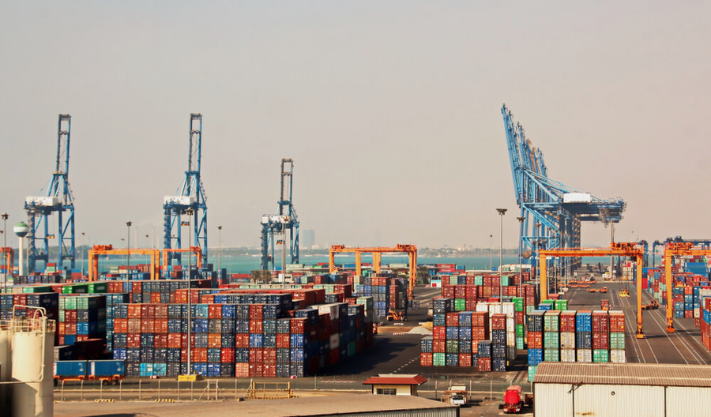
King Abdulaziz Port in Dammam handled the largest share of imports at 22.8%, closely followed by Jeddah Islamic Port at 22.6%. The top five ports and airports together managed 80% of total imports.
For non-oil exports, King Abdulaziz International Airport in Jeddah was the main outlet, handling 17.2%. Overall, the top five export facilities accounted for 57.8% of non-oil merchandise exports.
Published: 27th January 2026
For more article like this please follow our social media Twitter, Linkedin & Instagram
Also Read:
Davos 2026: UAE pushes bridge-building in global trade
GCC Debt Issuance to Cross $1.25 Trillion in 2026, Fitch Says
Egypt deficit drops 45% as remittances, tourism grow