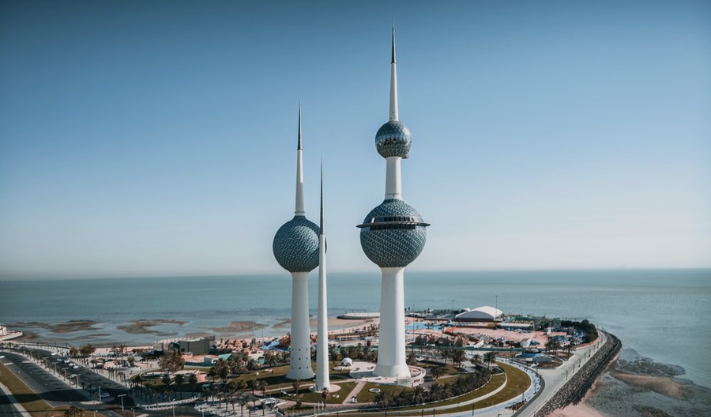
Kuwait’s Strong Finances Help Protect Its Economy During Regional Tensions
Even with rising tensions in the Middle East, Kuwait is using its strong financial reserves and stable banking system to protect its economy. These strengths help the country reduce the impact of regional problems and prepare for possible future shocks.
Kuwait’s economy depends heavily on key sectors like oil exports, shipping routes, and aviation. These sectors are at risk when there is conflict in the region. However, experts say Kuwait is in a better position than many nearby countries because it has large financial savings and a strong financial system. This gives the government more ability to manage risks in the short and medium term.
As the conflict creates uncertainty in energy and financial markets, Kuwait is not relying only on its yearly budget. Instead, it is using its large financial reserves to stay stable. These reserves give the government more flexibility to respond to any sudden changes.
Kuwait’s Economy in Numbers
Kuwait remains financially strong, even as Gulf countries worry about possible problems in the Strait of Hormuz, an important route for oil exports. However, Kuwait is still more at risk than some other countries if there is a long disruption.
According to the International Monetary Fund (IMF), the assets managed by the Kuwait Investment Authority (KIA) are expected to reach about 640% of the country’s GDP by the end of 2025. This is an increase from 605% in 2024. These large assets show how strong Kuwait’s financial position is.
Kuwait’s banking sector is also strong. Local bank assets reached about $340.5 billion in early 2026. In addition, the Central Bank of Kuwait holds around $39.7 billion in official reserves, not including the large external assets managed by the KIA.
The country’s 2025–2026 budget shows expected revenues of $59.5 billion and spending of $80.1 billion, creating a deficit of $20.6 billion. Capital spending is estimated at about $6 billion, making up 11.4% of total spending.
Oil remains the main source of income, making up 84% of total revenue, while non-oil income accounts for only 16%. On April 17, 2026, Kuwaiti oil was priced at $102.56 per barrel. This is much higher than the budget estimate of $68 and above the breakeven price of $90.5.
Kuwait’s GDP was about $160 billion in 2024. In the first half of 2025, GDP fell slightly by 3.4% compared to the same period in 2024. However, the IMF reported that the economy grew by 1.7% in the second quarter of 2025 and is expected to grow by 2.6% for the whole year.
Sovereign Wealth as a Safety Net
Kuwait’s strength comes not only from its budget but also from its large sovereign wealth fund. The IMF estimates that KIA assets could reach close to $1 trillion, based on the country’s GDP. However, the actual value can change depending on global markets.
This wealth acts as a safety net for the country. It reduces financial risks and gives the government more options if regional problems continue. It also helps Kuwait maintain strong credit ratings.
For example, S&P Global Ratings recently confirmed Kuwait’s rating at AA- with a stable outlook. Fitch Ratings also noted that Gulf countries, including Kuwait, have shown resilience so far, but warned that longer conflicts could create more pressure.
Strong Banking Sector
Kuwait’s banking system remains stable. Fitch reported that Gulf banks face limited immediate risks from the conflict. The Central Bank of Kuwait also confirmed that local banks have strong liquidity and capital levels, even higher than global standards.
To support the banking system, Kuwait introduced a stimulus package during the period of rising tensions. This helped increase confidence and strengthen the sector further.
However, Kuwait still faces a budget deficit of $20.6 billion. The IMF expects the deficit to reach 8.7% of GDP in 2025–2026 and rise to 9.4% in 2026–2027.
Despite this, government debt remains relatively low. It is expected to reach 14.7% of GDP in 2025 and 24.2% in 2026. This gives Kuwait more financial flexibility compared to many other countries.
The Strait of Hormuz Risk
Kuwait’s situation shows both strength and risk. While oil prices are currently high, the country depends heavily on oil exports. The budget assumes oil production of 2.5 million barrels per day at $68 per barrel, but actual prices are much higher.
This creates a short-term financial advantage. However, if exports are disrupted, especially through the Strait of Hormuz, it could create serious problems.
The World Bank considers Kuwait one of the countries most exposed to a possible long-term disruption in this route. This is because the economy relies heavily on oil exports and a single main route.
Economic Recovery Before the Crisis
Despite these risks, Kuwait entered this period of conflict in a relatively strong position. Before the crisis, the economy was already improving.
The IMF reported that GDP growth reached 1.7% in the second quarter of 2025. Inflation dropped to 2.4% by late 2025, and the country recorded a strong current account surplus of 23.6% of GDP.
The IMF had also predicted that Kuwait’s economy would grow by 3.8% in 2026 before the conflict changed global conditions. This shows that Kuwait was already on a path to recovery, which helps it handle current challenges better.
Investment in Infrastructure
Kuwait is also investing heavily in infrastructure. The government’s development plan for 2025–2026 includes many construction projects across different sectors.
In the electricity and water sector, the Az-Zour North project costs more than $3.3 billion and will produce 2,700 megawatts of power and large amounts of desalinated water. The government plans to add even more capacity in the next five years, with major investments and strong private sector involvement.
In energy, Kuwait operates the large Al-Zour Refinery, one of the biggest in the world. The country also plans to increase oil production capacity to 4 million barrels per day by 2035 and gas production by 2040. This shows that Kuwait is working to expand its energy sector.
In transport, Kuwait is improving airports and ports. The new terminal at Kuwait International Airport will handle up to 25 million passengers each year. Ports like Shuwaikh and Shuaiba are also handling large amounts of cargo, supported by extensive storage facilities.
Road projects are also moving forward, with major contracts already in progress and some ahead of schedule.
A Strong but Challenged Economy
Kuwait’s economy remains strong, especially in terms of foreign trade. In early 2025, exports were about $18.5 billion, while imports were around $10.2 billion, creating a trade surplus.
However, challenges remain. One key issue is the labor market. Most Kuwaiti citizens work in the public sector, with only a small number in private jobs. This shows that the economy still depends heavily on government spending rather than private sector growth.
Conclusion
Kuwait is not completely safe from the effects of regional conflict, but it is well protected by its strong financial position. While the country is exposed to risks like disruptions in the Strait of Hormuz, it has the resources to manage these challenges.
In the short and medium term, Kuwait is better prepared than many other countries in the region to handle economic shocks. However, long-term stability will depend on reducing its reliance on oil and building a stronger private sector.
Also Read:-
Arab real estate moguls behind $28.8B fortune
Saudi Arabia’s PIF Eyes $5B Stake in SpaceX IPO
Fiscal Discipline Drives Oman’s Resilience