GCC Central Banks Keep Interest Rates Unchanged After US Fed Decision
Central banks across the Gulf Cooperation Council (GCC) countries decided to keep their interest rates unchanged on Wednesday. This decision came after the US Federal Reserve announced it would also keep its interest rates steady in its first policy meeting of the year.
Several GCC countries often follow the US Federal Reserve’s decisions because their currencies are linked to the US dollar. As a result, when the Fed pauses or changes interest rates, GCC central banks usually respond in a similar way.
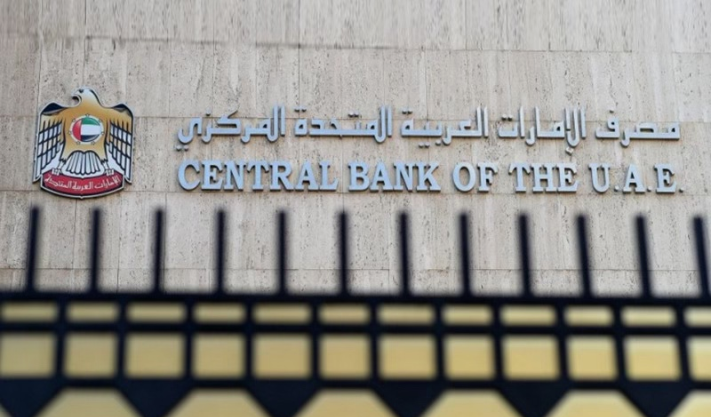
In the United Arab Emirates, the Central Bank of the UAE (CBUAE) kept its base rate for the overnight deposit facility at 3.4%. The bank confirmed this decision in a statement shared on social media platform X.
The Qatar Central Bank also decided to leave its main rates unchanged. Its deposit rate remains at 3.85%, the lending rate at 4.35%, and the repo rate at 4.1%.
In Bahrain, the Central Bank of Bahrain maintained its overnight deposit interest rate at 4.45%, keeping borrowing conditions stable.
Lower policy rates across the GCC are helping reduce borrowing costs for people and businesses. This includes lower interest on home loans, car loans, and personal loans. When borrowing becomes cheaper, households usually have more disposable income, which can lead to increased spending and support economic growth.
The US Federal Reserve’s decision to pause interest rate changes has sent a signal to global markets that rates may remain steady for longer. Investors believe this pause could continue beyond Fed Chair Jerome Powell’s final meetings scheduled for March and April.
Economic Outlook for the GCC
According to a report released by the International Monetary Fund (IMF) in December, economic growth across the GCC is expected to improve in the coming years. Total output growth in the region is forecast to rise from 1.7% in 2024 to an average of 3.3% in 2025.
This growth is mainly due to a recovery in oil and gas production, as earlier production cuts are gradually removed. By September, the third phase of voluntary production cuts—about 1.3 million barrels per day—had been fully lifted by Kuwait, Oman, Saudi Arabia, and the UAE.
Looking ahead to 2026, hydrocarbon production in the region is expected to grow even faster, with an average growth rate of 5.9%. Growth is likely to vary across countries, ranging from 1.8% in Bahrain to as high as 12.1% in Qatar.
This stronger performance is supported by continued increases in oil and gas production and major energy projects. These include Qatar’s North Field LNG expansion, higher oil output and refinery capacity in the UAE, and the completion of the Ruwais LNG plant.
Inflation Outlook
Inflation in the GCC region is expected to remain stable at around 2% over the medium term. During 2025 and 2026, inflation is forecast to stay below 2% in Bahrain, Oman, and Qatar. In Saudi Arabia and the UAE, inflation is expected to be close to 2%, while in Kuwait it may be slightly higher.
Overall, steady interest rates, improving energy production, and controlled inflation are expected to support economic stability and growth across the GCC region.
Published: 29th January 2026
For more article like this please follow our social media Twitter, Linkedin & Instagram
Also Read:
Dubai launches $27.2bn DIFC expansion as finance hub
OQ Group seals $598M deals to boost Oman’s manufacturing
Dana Gas, Crescent Sign Supply Deal for Kurdistan Plants