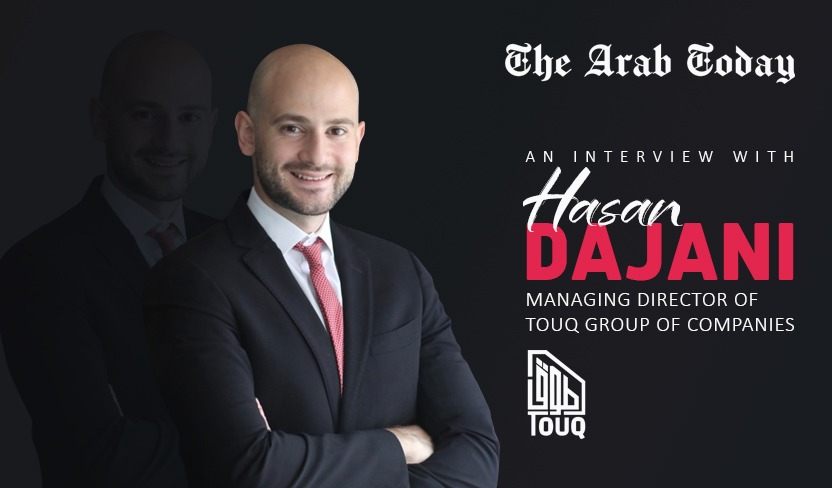
Interview With Hasan Dajani
In this insightful conversation with the leader of Touq Group reveals how true business success lies in bridging strategy with execution. By integrating engineering precision, financial discipline, and operational control, Touq Group has built a diversified yet highly efficient business model. From managing cash flow in capital-intensive industries to leveraging joint ventures for scalable growth, the approach centers on structured systems, clear accountability, and performance-driven leadership.
Turning Strategy into Execution
We started the interview by asking, “You operate at the intersection of engineering, finance, and execution. How do you ensure strategy translates into real-world results?”
Hasan Dajani replied, “Strategy is only as good as its execution. I focus on building systems where every plan is stress-tested against operational realities cash flow, timelines, and especially resource availability. My background helps me break down complexity, while my commercial approach ensures that every decision is financially viable. At Touq, we don’t separate strategy from execution; we integrate both through tight controls, clear KPIs, and accountability across all levels.”
Managing Diversification Efficiently
The Arab Today: Touq Group spans multiple sectors from concrete manufacturing to facilities management. How do you maintain efficiency across such a diversified portfolio?
Hasan Dajani replied, “Diversification only works if it’s structured correctly. We’ve built Touq Group with centralized governance but decentralized execution. Each entity operates with clear performance metrics, while group-level systems ensure alignment in procurement, finance, and strategy. This allows us to maintain agility within each business while leveraging economies of scale across the group.”
The Power of Cash Flow Discipline
The Arab Today: Cash flow and financial discipline are recurring themes in your leadership. Why are they so critical in your industry?
Hasan Dajani replied, “In construction and industrial businesses, profitability on paper means nothing without liquidity. Projects are capital-intensive and delays can quickly erode margins. I prioritize cash flow visibility, disciplined budgeting, and realistic forecasting. This ensures we not only survive market fluctuations but also capitalize on opportunities when others are constrained.”
Strategic Partnerships
The Arab Today: You’ve worked extensively with JV and royalty-based models. What makes these structures effective for growth?
Hasan Dajani replied, “JV and royalty-based models allow you to scale without over extending capital or operational bandwidth. Using the culture of everybody wins only works with full transparency. The key is alignment choosing partners with complementary strengths and structuring agreements that are transparent and performance-driven. When done right, these models accelerate market entry, reduce risk, and create win-win outcomes for all stakeholders.”
Core Principles of Leadership
Lastly we asked, “From managing mega projects to leading a multi-entity group, what leadership principles have remained constant for you?”
“Clarity, accountability, and direct communication. Regardless of scale, people perform best when expectations are clear and decisions are transparent. I believe in being hands-on, especially in critical phases of a project or business cycle. Leadership, for me, is about creating systems where teams can execute efficiently while staying aligned with the bigger vision.” Hasan Dajani concluded
Connect with Hasan Dajani on LinkedIn
For more information visit Touq Group of Companies
Also Read:-
Majed Al-Amoudi: From financial discipline to real estate leader
Walaa Fouda on Media, Innovation
Sergey Volnov leads It’s AI with a focus on trust