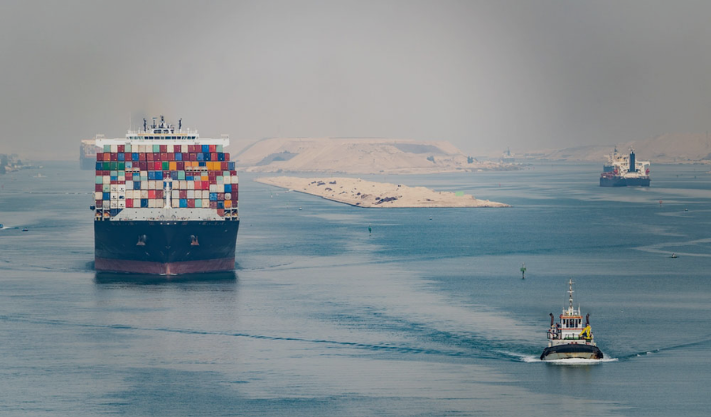
Suez Canal earnings in Egypt drop 60% in 2024 because of Red Sea conflicts
The Suez Canal, one of Egypt’s most vital economic arteries and a key global trade route, has faced a severe downturn in revenues in 2024, with earnings plummeting by 60%. This dramatic drop is primarily attributed to escalating conflicts in the Red Sea region, which have disrupted maritime traffic and undermined the canal’s stability as a secure passage for international trade.
The Importance of the Suez Canal
The Suez Canal is a strategic waterway connecting the Mediterranean Sea to the Red Sea, enabling ships to bypass the lengthy and perilous route around the southern tip of Africa. It is one of the world’s busiest trade arteries, accommodating roughly 12% of global trade annually. The canal generates billions of dollars for Egypt, providing a critical source of foreign currency and bolstering the national economy.
In recent years, the Suez Canal Authority (SCA) has implemented significant upgrades and expansion projects to increase the canal’s capacity and ensure its competitiveness in the global shipping industry. These efforts have historically ensured a steady flow of revenue for Egypt, making the current downturn particularly alarming.
The Red Sea Conflicts and Their Impact
The Red Sea region has seen a sharp rise in geopolitical tensions and maritime insecurity in 2024. Ongoing disputes between regional powers and the involvement of international actors have escalated into open conflicts. These conflicts have included piracy, attacks on merchant vessels, and blockades in critical zones near the Bab-el-Mandeb Strait, which serves as the southern gateway to the Red Sea and a key access point to the Suez Canal.
Shipping companies, facing heightened risks and increased insurance premiums, have rerouted vessels away from the Red Sea and the Suez Canal, opting instead for alternative routes. For instance, some operators have chosen the Cape of Good Hope route despite its additional transit time and fuel costs, as it offers a safer, conflict-free passage. These diversions have led to a significant decline in the number of ships passing through the Suez Canal.
Economic Consequences for Egypt
The dramatic revenue loss from the Suez Canal poses a serious challenge for Egypt’s economy, which relies heavily on canal earnings to fund public services and infrastructure projects. In 2023, the canal generated approximately $8 billion in revenue, making the current 60% drop a substantial blow. This downturn exacerbates existing economic pressures, including inflation, foreign debt, and a depreciating currency.
The Suez Canal Authority has reported a decrease in cargo volumes and container traffic, further highlighting the adverse impact of the Red Sea conflicts. Efforts to provide incentives for shippers, such as reduced transit fees, have had limited success in mitigating the revenue loss.
Global Trade Implications
The disruption of the Suez Canal also has far-reaching implications for global trade. Supply chain delays and increased shipping costs have contributed to rising prices for goods, further straining global markets already grappling with post-pandemic recovery challenges. The canal’s reduced accessibility underscores the vulnerability of critical trade routes to geopolitical instability.
Looking Ahead
Addressing the crisis requires concerted international efforts to stabilize the Red Sea region and ensure the safety of maritime routes. Enhanced security measures, diplomatic resolutions to conflicts, and collaboration among regional and global powers are essential to restore confidence in the Suez Canal as a secure and efficient trade route.
For Egypt, diversifying economic resources and reducing reliance on canal revenues may also be necessary to safeguard the country’s financial stability. While the Suez Canal remains a cornerstone of Egypt’s economy, the challenges of 2024 highlight the importance of resilience and adaptability in the face of global uncertainties.
Published: 27th December 2024
For more article like this please follow our social media Twitter, Linkedin & Instagram
Also Read:
Our Habitas Ras Abrouq: A Trip to Peace and Nature
ADFD provides $40M loan to complete Maldives’ Velana Airport
Mubadala acquires 80% stake in 2 GHH healthcare firms