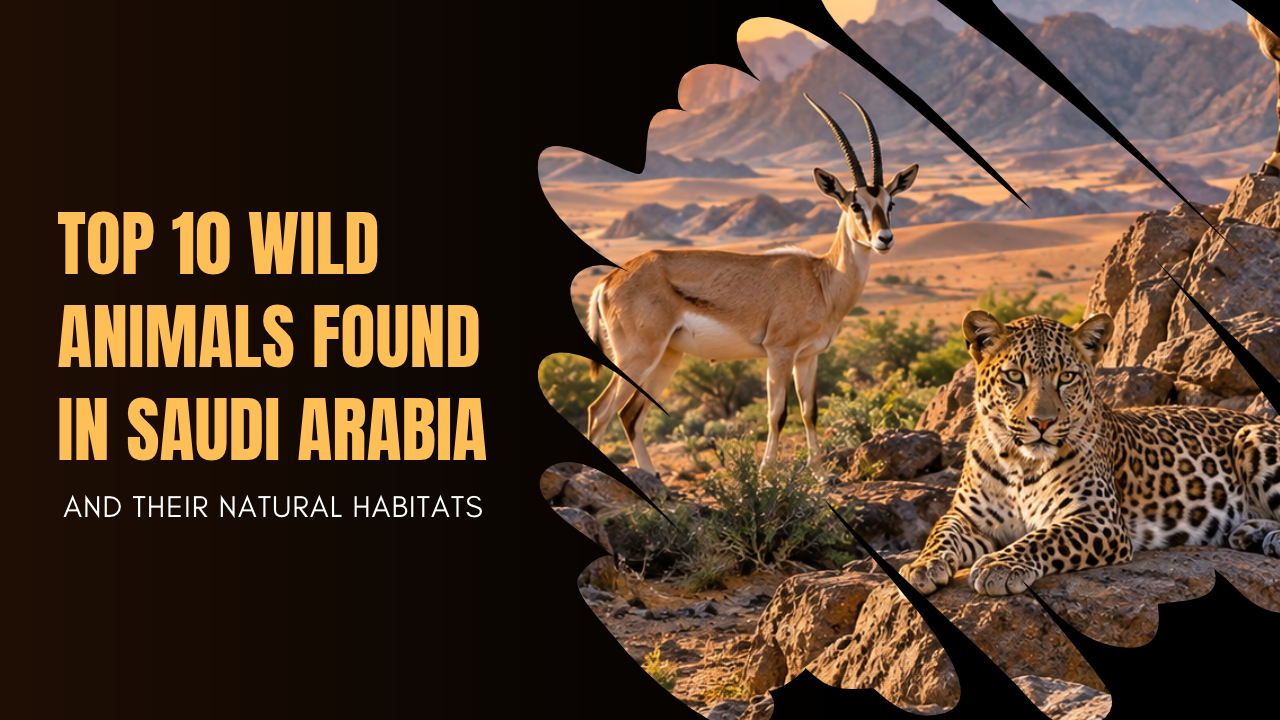
Saudi Arabia is recognised for its expansive deserts, towering mountains, rugged valleys, and extensive coastline. These landscapes host a remarkable variety of animals, including large mammals, desert predators, reptiles, and birds. Although the country’s environment is often hot and dry, its wildlife has evolved impressive adaptations to survive with limited water and vegetation.
Saudi Arabia’s wild animals inhabit a variety of environments, including the Rub’ al Khali, or Empty Quarter, the rocky highlands of Hejaz and Asir, the Nefud Desert, the central plateau of Najd, and coastal ecosystems around the Red Sea and Arabian Gulf.
The Arabian oryx is one of the species closely associated with conservation and wildlife restoration projects. Other animals that have adapted to harsh desert conditions include the Arabian wolf, sand cat, and Arabian red fox.
In this guide, we explore 10 fascinating wild animals found in Saudi Arabia. We discuss where they live, what they eat, how they survive, and why protecting them is important.
Saudi Arabia Wildlife FAQ
What Are the Most Common Wild Animals Found in Saudi Arabia?
Wild animals found in Saudi Arabia include the Arabian oryx, Arabian wolf, Arabian red fox, sand cat, Nubian ibex, Arabian sand gazelle, caracal, striped hyena, honey badger, and Rüppell’s sand fox. Their distribution depends on their preferred habitats, food availability, and local conservation conditions.
What Are the Main Habitats for Animals in Saudi Arabia?
Saudi Arabia’s principal wildlife habitats include sandy deserts, gravel plains, rocky mountains, wadis, scrublands, and coastal environments. Each habitat provides different combinations of food, shelter, water, and breeding sites.
How Do Desert Animals Survive the Saudi Arabian Heat?
Many desert animals avoid the hottest hours by resting in shaded areas, rock crevices, or underground burrows. Some become more active at night, obtain moisture from their food, conserve water through efficient kidney function, and tolerate substantial temperature fluctuations.
Arabian Oryx: The White Antelope of Saudi Arabia
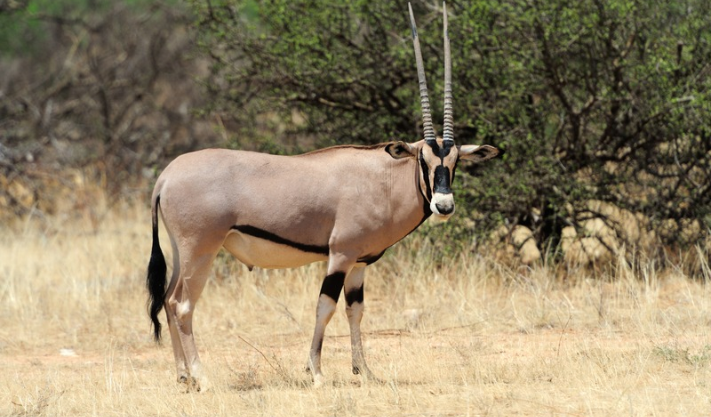
Scientific name: Oryx leucoryx
Where Is the Arabian Oryx Found in Saudi Arabia?
One of the most famous wild animals of the Arabian Peninsula is the Arabian oryx. Its light-coloured coat, long, straight horns, and distinctive facial markings help it blend into the arid landscape. It inhabits dry plains, sandy deserts, rocky slopes, and areas with sparse vegetation.
In Saudi Arabia, Arabian oryx populations are associated with protected landscapes and wildlife reintroduction projects. The ‘Uruq Bani Ma’arid Protected Area, located along the western edge of the Rub’ al Khali, is particularly important because it supports free-ranging herds of this species.
How Does the Arabian Oryx Survive in the Desert?
Arabian oryx feed on grasses, leaves, buds, and other desert plants. They can survive for extended periods without drinking water by obtaining moisture from vegetation when conditions permit.
Their light-coloured coats help reflect sunlight, while physiological adaptations allow them to cope with heat and conserve water. Arabian oryx may also adjust their activity patterns according to temperature, feeding when conditions are favourable and resting during periods of extreme heat.
Why Is the Arabian Oryx Important to Saudi Arabia?
The Arabian oryx represents a major wildlife conservation success story. Hunting and habitat pressures caused severe population declines, and the species became extinct in the wild before reintroduction programmes helped establish free-ranging populations again.
Its recovery demonstrates how captive breeding, habitat protection, population monitoring, and carefully managed releases can help rebuild vulnerable wildlife populations.
Arabian Wolf: A Predator of Desert and Mountain Landscapes
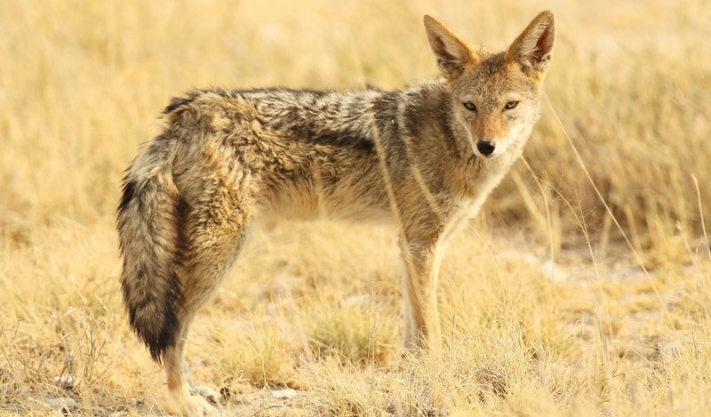
Scientific name: Canis lupus arabs
Where Do Arabian Wolves Live?
The Arabian wolf is a regional subspecies of the grey wolf that has adapted to the dry environments of the Middle East. In Saudi Arabia, it inhabits rocky mountains, arid plains, wadis, scrublands, and remote areas where prey and shelter are available.
The species occurs in parts of western and southern Saudi Arabia, although its distribution varies with habitat suitability, prey availability, and human activity.
What Does the Arabian Wolf Eat?
The Arabian wolf is an opportunistic carnivore. Its diet can include small mammals, hares, rodents, birds, reptiles, and carrion. It may also prey on larger animals when opportunities arise.
Food availability varies between desert regions, so wolves must travel in search of suitable feeding opportunities. Their diets and hunting behaviours can change according to the season, prey abundance, and competition with other predators.
How Does the Arabian Wolf Survive in High Temperatures?
The Arabian wolf avoids the hottest periods by seeking shade and shelter among rocks. It can also adjust its activity patterns to take advantage of cooler conditions.
Despite these adaptations, human-wildlife conflict remains a concern. Threats include poisoning, illegal killing, habitat fragmentation, and conflicts involving livestock. Conservation strategies include protecting natural prey populations and promoting coexistence with local communities.
Arabian Red Fox: A Desert Survivor That Adapts Well
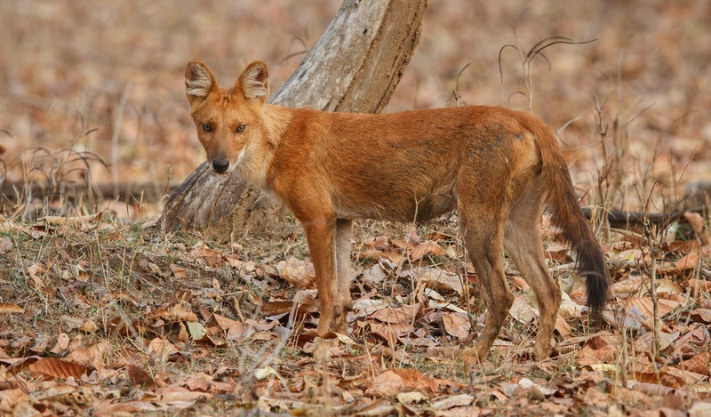
Scientific name: Vulpes vulpes — Arabian populations
Where Do Arabian Red Foxes Live?
The Arabian red fox is an adaptable mammal that occupies numerous Saudi Arabian habitats, including sandy deserts, rocky terrain, scrublands, wadis, and areas around human settlements.
Its ability to survive in different environments makes it one of the more versatile wild predators in the region. Red foxes may also occur in and around protected areas where food and shelter are available.
What Does the Arabian Red Fox Eat?
The Arabian red fox is an opportunistic omnivore. Its diet may include rodents, insects, lizards, small birds, eggs, fruits, and carrion.
A varied diet helps the fox survive when one food source becomes scarce. By feeding on rodents and insects, it also contributes to the ecological balance of desert environments.
Is the Arabian Red Fox Nocturnal or Diurnal?
Arabian red foxes are often more active during cooler periods, particularly at night, around dawn, and at twilight. During hot weather, they may rest in shaded areas or dens.
Their excellent hearing, strong sense of smell, and quiet movements help them locate prey. Because they are adaptable, they can occupy remote desert landscapes as well as areas near cultivated land and urban settlements.
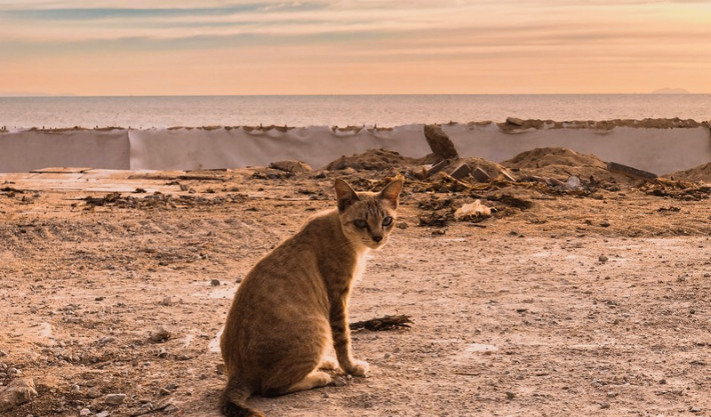
Sand Cat: The Desert’s Small Wild Cat
Scientific name: Felis margarita
What Makes the Sand Cat Special?
The sand cat is a small wild feline specially adapted to desert conditions. It has a broad head, large ears, pale sandy-coloured fur, and heavily furred paws that help it move across hot, loose sand.
Unlike many larger wild cats, sand cats can survive in environments where surface water is scarce. Their secretive behaviour and excellent camouflage make them difficult to observe in the wild.
Where Does the Sand Cat Live in Saudi Arabia?
Sand cats inhabit harsh desert environments, particularly sandy areas with sparse vegetation and suitable places to dig or shelter.
The species has been recorded in Saudi Arabian protected landscapes, including ‘Uruq Bani Ma’arid. Its presence depends on suitable habitat, prey availability, and environmental conditions.
What Does a Sand Cat Eat?
Sand cats primarily feed on small animals, including rodents, lizards, and occasionally snakes and small birds. They hunt by moving quietly through the desert and using their keen hearing to detect prey.
Thick fur on their feet helps insulate their paws from hot sand and provides traction on loose ground. Sand cats are primarily nocturnal, which helps them avoid the highest daytime temperatures.
Why Is the Sand Cat Difficult to Find?
The sand cat’s pale coat blends into its surroundings, while its nocturnal habits make daytime sightings uncommon. It may also use burrows or sheltered ground to rest during the day.
Although it is not one of Saudi Arabia’s largest predators, the sand cat plays an important role in controlling small-animal populations. Its long-term survival depends on protecting suitable desert habitats and maintaining healthy ecosystems.
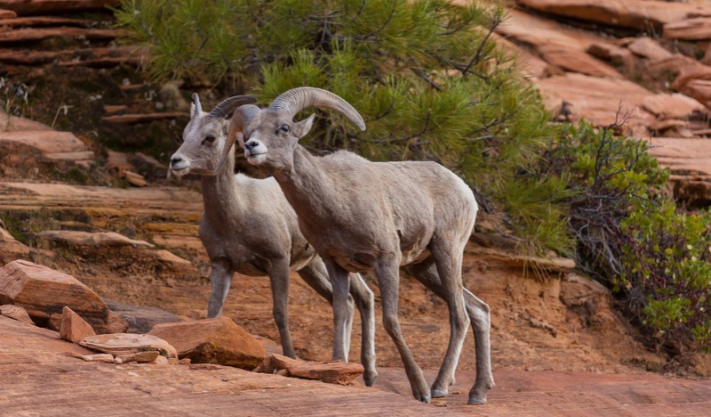
Nubian Ibex: Monarch of the Rocky Mountains
Scientific name: Capra nubiana
Where Does the Nubian Ibex Live?
The Nubian ibex is a wild mountain goat adapted to steep, rocky terrain. In Saudi Arabia, it inhabits mountainous environments and rugged escarpments where cliffs and ledges provide shelter from predators and human disturbance.
The Ibex Protected Area in the Riyadh Region is an important conservation site for the species. Nubian ibex populations are also associated with suitable habitats in the western mountain ranges of Saudi Arabia.
What Do Nubian Ibex Eat?
Nubian ibex are herbivores. Their diet consists of grasses, leaves, shrubs, and other plants found in their mountainous surroundings. They may descend to lower slopes to feed before returning to steeper terrain.
Their specialised hooves help them grip uneven surfaces, making them excellent climbers. This adaptation allows them to reach feeding areas and escape into rugged locations that many predators cannot easily access.
What Are the Greatest Risks to the Nubian Ibex?
Habitat degradation, competition for vegetation with domestic livestock, and illegal hunting can affect ibex populations. Small, isolated populations may also be vulnerable to environmental changes and the loss of suitable habitat.
Saudi Arabia’s conservation efforts include protected areas, population monitoring, and managed reintroduction initiatives. Maintaining wildlife corridors and reducing pressure on natural vegetation can further support population recovery.
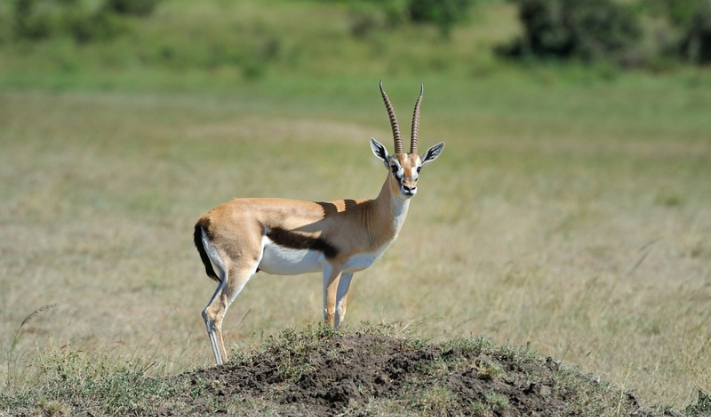
Arabian Sand Gazelle: A Speedster of Open Deserts
Scientific name: Gazella marica
Where Does the Arabian Sand Gazelle Live?
The Arabian sand gazelle is an elegant antelope adapted to dry plains, sandy deserts, gravel plains, and open scrubland. Its light-coloured coat blends with the pale desert landscape, while its long legs help it move rapidly across open ground.
In Saudi Arabia, the species is associated with protected desert habitats and wildlife restoration projects. ‘Uruq Bani Ma’arid is one of the protected environments that supports Arabian sand gazelles and other desert-adapted animals.
How Can the Arabian Sand Gazelle Survive With Little Water?
The Arabian sand gazelle obtains much of its moisture from vegetation, including grasses, leaves, and shrubs. It can adjust its feeding habits according to seasonal rainfall and the availability of fresh plant growth.
Its speed helps it escape predators, while its keen eyesight allows it to detect movement across broad landscapes. Gazelles may form small groups, although group size and behaviour vary with food availability and local conditions.
Why Is the Arabian Sand Gazelle Vulnerable?
Habitat destruction, poaching, and the fragmentation of natural landscapes can reduce gazelle populations. When desert vegetation declines, these animals may struggle to find sufficient food.
Protected areas, wildlife monitoring, and reintroduction programmes help support population recovery. Arabian sand gazelles are important members of desert ecosystems because they also sustain predators and scavengers that depend on healthy prey populations.
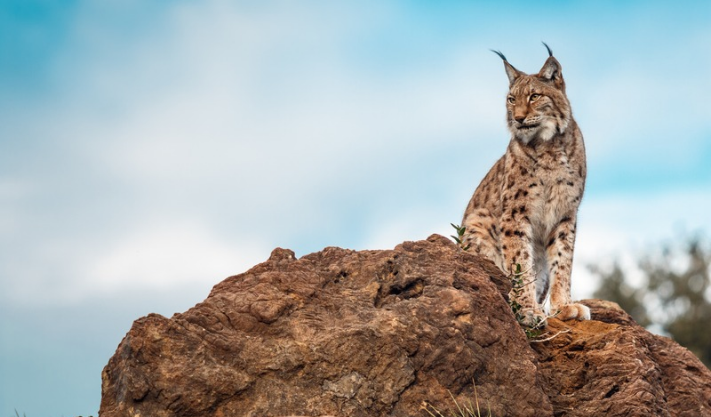
Caracal: A Powerful Wild Cat With Tufted Ears
Scientific name: Caracal caracal
Where Does the Caracal Live in Saudi Arabia?
The caracal is a medium-sized wild cat recognised by its reddish-brown coat, long legs, and distinctive black ear tufts. In Saudi Arabia, it inhabits rocky hills, mountains, scrublands, and other environments that provide shelter and prey.
The species has been recorded in protected locations such as Jabal Shada al-A’la and Jurf Raydah. These landscapes contain steep rocky slopes, vegetation, and rugged ground that can provide suitable habitat.
What Does a Caracal Eat?
The caracal is a carnivore that feeds on small mammals, birds, and other animals of a suitable size. It is particularly well known for its ability to leap into the air and catch birds in flight.
Its powerful hind legs and sharp claws help it hunt effectively. Like many wild predators living in hot environments, the caracal may rest in sheltered places during the hottest hours and become more active when temperatures fall.
What Is the Caracal’s Role in the Ecosystem?
Caracals help regulate populations of small mammals and birds. As predators, they contribute to the ecological balance between prey species and their food sources.
Habitat fragmentation, declining prey availability, and conflicts with humans can threaten their survival. Protecting connected natural landscapes is important because caracals need sufficient space to forage, find shelter, and reproduce.
Striped Hyena: Saudi Arabia’s Night-Time Scavenger
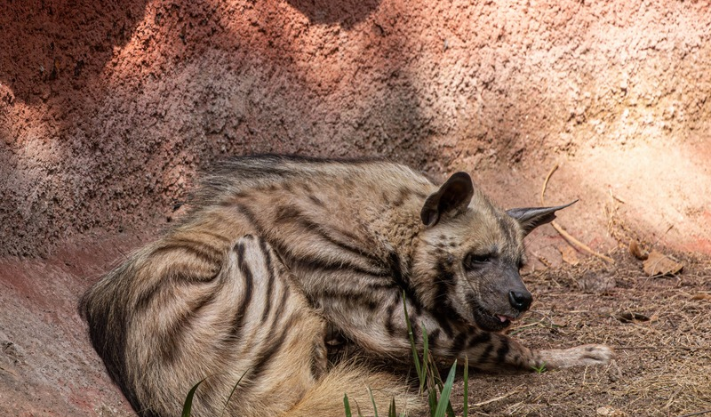
Scientific name: Hyaena hyaena
What Is the Habitat of the Striped Hyena?
The striped hyena is a predominantly nocturnal mammal found in dry woodland, rocky slopes, scrublands, desert margins, and other open environments. It has been documented in protected regions of Saudi Arabia, including rugged habitats in the west of the country.
Its sloping back, pointed ears, and dark body stripes make it recognisable. Although hyenas are often thought of only as hunters, the striped hyena is also an important scavenger.
What Do Striped Hyenas Eat?
The striped hyena is a scavenger that feeds on carrion, small animals, bones, and other accessible food. It may also consume fruits and other plant material when available.
Its powerful jaws allow it to process parts of animal carcasses that many other scavengers cannot easily consume. By removing carcasses, hyenas help recycle nutrients and reduce the accumulation of organic remains in the environment.
Why Is the Striped Hyena Important to Saudi Arabia’s Biodiversity?
Scavenging and occasional predation by striped hyenas contribute to ecological balance. Their presence can indicate that a landscape provides food and shelter for wildlife.
However, poisoning, road accidents, persecution, and habitat degradation can threaten local populations. Conservation efforts should focus on reducing unnecessary conflict and maintaining the natural food resources these animals depend on.
Honey Badger: A Tough Survivor of Arid Landscapes
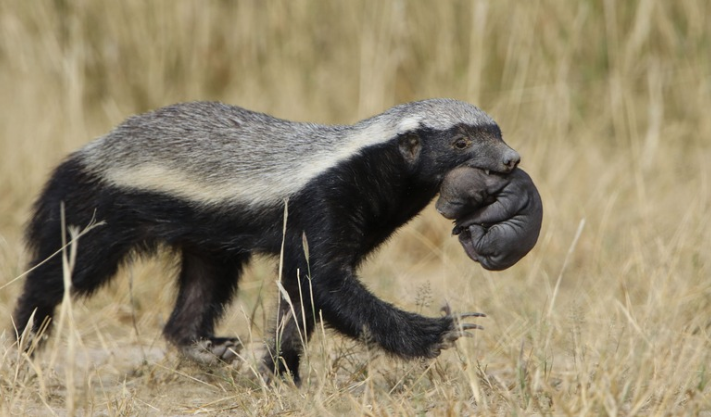
Scientific name: Mellivora capensis
Where Does the Honey Badger Live in Saudi Arabia?
The honey badger, also known as the ratel, is a robust mammal with strong claws, thick skin, and an impressive ability to exploit different food sources.
It has been recorded in protected environments in Saudi Arabia, including Jurf Raydah, Nafud al-‘Urayq, and Majami’ al-Hadb. These landscapes contain combinations of rocky terrain, dry plains, and vegetation that provide opportunities for shelter and feeding.
What Does the Honey Badger Eat?
Honey badgers are opportunistic omnivores. Their diet may include insects, rodents, reptiles, eggs, birds, small mammals, and other available food.
Despite its name, the honey badger does not feed exclusively on honey. Its muscular forelimbs and long claws help it dig for food and explore underground burrows.
This flexible diet is particularly useful in arid regions, where food availability changes with the seasons.
How Does the Honey Badger Survive in the Desert?
The honey badger combines physical strength with behavioural flexibility. It can dig shelters, forage across different types of terrain, and consume a wide range of animals.
Despite its reputation for toughness, it still requires suitable habitat and a functioning food chain. Human expansion, habitat fragmentation, and persecution can reduce the areas where it can survive successfully.
Rüppell’s Sand Fox: A Small Fox for Dry Places
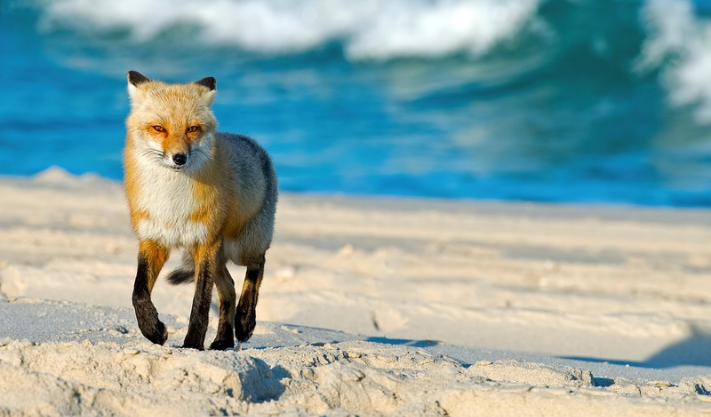
Scientific name: Vulpes rueppellii
What Is the Habitat of Rüppell’s Sand Fox?
Rüppell’s sand fox is a small fox adapted to dry and semi-arid environments. Its light-coloured fur, relatively large ears, and compact body help it survive in sandy deserts, stony plains, and areas with sparse shrubs.
The species occurs in suitable desert habitats in Saudi Arabia and has been documented in protected areas, including ‘Uruq Bani Ma’arid and Nafud al-‘Urayq.
What Does Rüppell’s Sand Fox Eat?
Rüppell’s sand fox is an omnivore that may feed on insects, rodents, small reptiles, birds, and fruit. Its varied diet helps it survive in different desert environments.
Its large ears help dissipate heat and may also assist it in detecting small animals moving across the ground. Like many desert mammals, it is generally more active during cooler nighttime hours.
How Does Rüppell’s Sand Fox Differ From the Arabian Red Fox?
Both species are adapted to dry environments, but Rüppell’s sand fox is particularly associated with arid desert habitats. It generally has a paler appearance and proportionally large ears.
The Arabian red fox can display a broader range of coat colours and occupies a wider variety of habitats. These differences illustrate how similar species can occupy different ecological niches. Protecting diverse desert environments benefits both species and the wider wildlife community.
Wild Animals in Saudi Arabia: Natural Habitats
Saudi Arabia’s varied landscapes are closely connected to its wildlife. Understanding these environments helps explain why some species thrive on sand dunes while others depend on mountains, rocky valleys, or coastal ecosystems.
Sandy Deserts
The Rub’ al Khali and other sandy desert regions support desert-adapted animals, including sand cats, sand foxes, Arabian oryx, and other mammals in suitable locations. Extreme heat and sparse vegetation make water conservation essential.
Rocky Mountains and Escarpments
Nubian ibex, caracals, Arabian wolves, and other animals use mountain slopes and cliffs for shelter and protection. Crevices and steep terrain offer refuge from predators and human disturbance.
Desert Scrublands and Wadis
Seasonal watercourses, known as wadis, can support shrubs, grasses, insects, and small mammals. Foxes, wolves, honey badgers, and other species may be attracted to these areas because of their food and shelter resources.
Gravel Plains and Open Plateaus
Open plains provide habitats for grazing animals, including Arabian sand gazelles, while also offering hunting grounds for predators. Native plants and grasses are important sources of nourishment.
Many of these habitats occur within Saudi Arabia’s protected areas, which contribute to wildlife monitoring, habitat restoration, and species reintroduction initiatives.
Conservation of Wildlife in Saudi Arabia
Why Is Wildlife Protection Important in Saudi Arabia?
Wildlife conservation aims to protect native species, maintain ecological balance, and preserve the natural heritage of the Arabian Peninsula. Desert ecosystems may initially appear empty, but they contain complex relationships among plants, herbivores, predators, and scavengers.
Saudi Arabia’s wildlife faces threats from overhunting, predator poisoning, urban expansion, habitat degradation, and fragmentation. Some native species have disappeared from parts of their historical ranges, making continued conservation efforts essential.
How Does Saudi Arabia Protect Wild Animals?
Conservation initiatives include protected-area management, scientific research, captive breeding, wildlife monitoring, habitat restoration, and reintroduction programmes.
The ‘Uruq Bani Ma’arid Protected Area is particularly important for Arabian oryx conservation. Other protected landscapes, including the King Salman bin Abdulaziz Royal Reserve, support desert wildlife and habitat restoration efforts.
How Can People Help Protect Wild Animals?
People can take several practical steps to support wildlife conservation:
-
Avoid approaching, feeding, or attempting to capture wild animals.
-
Follow park regulations and remain on designated routes when visiting protected areas.
-
Avoid purchasing products made from protected wildlife.
-
Report suspected illegal hunting or wildlife trafficking to the relevant authorities.
-
Support reputable conservation organisations and responsible ecotourism.
-
Reduce pollution and avoid damaging natural environments.
Respecting wildlife allows animals to maintain their natural behaviours without unnecessary disturbance.
Wild Animals in Saudi Arabia: Frequently Asked Questions
What Is the National Animal of Saudi Arabia?
The Arabian camel is an important symbol of Saudi Arabia’s cultural heritage and desert traditions. The Arabian oryx is also widely associated with the country’s wildlife conservation success. These represent different aspects of the country’s natural and cultural identity.
Are There Endangered Animals in Saudi Arabia?
Yes. Saudi Arabia is home to threatened species, including the Arabian leopard, which is classified as Critically Endangered. The Arabian oryx also experienced severe historical population declines, although reintroduction programmes have helped restore free-ranging populations.
Do Wild Cats Live in Saudi Arabia?
Yes. The sand cat and caracal are examples of wild cats found in Saudi Arabia. The Arabian leopard is another native wild feline, but it faces serious conservation challenges because of its critically endangered status.
Do Wild Animals Live in the Empty Quarter?
Yes. Suitable areas of the Rub’ al Khali support desert-adapted wildlife, including sand cats, sand foxes, and other animals. Arabian oryx and Arabian sand gazelles also occur in protected desert habitats associated with this region. However, wildlife distribution is uneven, and not every species occurs throughout the vast desert.
Which Wild Animal Is Best Adapted to Saudi Arabia’s Arid Climate?
There is no single answer because different species use different survival strategies. Arabian oryx can survive for extended periods without drinking water, sand cats are adapted to sandy desert conditions, and desert foxes rely on flexible diets and activity patterns to cope with heat and limited resources.
Can Travellers Watch Wildlife in Saudi Arabia?
Yes. Wildlife viewing is possible in selected protected reserves and approved nature-tourism locations. Sightings depend on the location, season, species, and conservation restrictions. Many animals are elusive or nocturnal, so sightings are never guaranteed. Visitors should follow local regulations and observe wildlife from a respectful distance.
Conclusion: Protecting the Unique Wildlife of Saudi Arabia
Saudi Arabia’s wild animals demonstrate how life can adapt to some of the world’s harshest environmental conditions. The Arabian oryx roams protected desert plains, the Nubian ibex navigates steep mountain slopes, and every species contributes to the country’s natural ecosystems.
Saudi Arabia’s deserts and mountains support diverse wildlife, including the Arabian wolf, Arabian red fox, sand cat, Arabian sand gazelle, caracal, striped hyena, honey badger, and Rüppell’s sand fox.
Also Read:-
Why Qatar Is Becoming a Global Business and Investment Hub
UAE business challenges for foreign entrepreneurs in 2026.
Top 15 Most Profitable Businesses to Start in Saudi Arabia