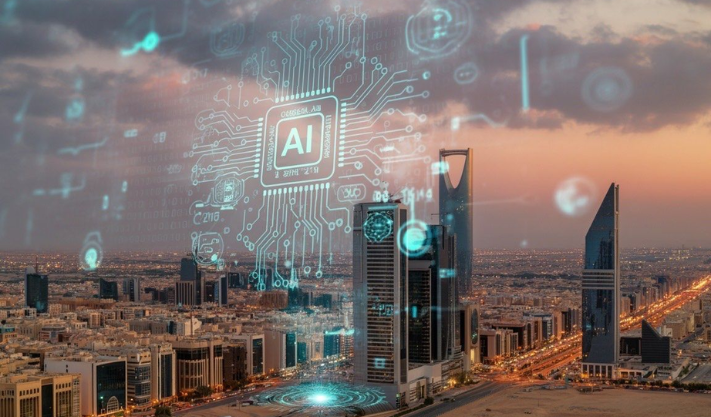
The AI State: How Gulf Governments Turned Artificial Intelligence Into Critical Infrastructure
In the 21st century, the definition of national infrastructure is undergoing a profound transformation. Where once roads, ports, and power grids dominated state investment, a new layer has emerged—digital, intelligent, and data-driven. In the Gulf region, particularly in the United Arab Emirates and Saudi Arabia, artificial intelligence (AI) is no longer treated as an emerging technology. Instead, it is being embedded as critical infrastructure, reshaping governance, economies, and everyday life. This shift marks the rise of what can be described as the “AI State.”
Redefining Infrastructure in the Digital Age
Infrastructure has traditionally referred to the physical systems that support economic activity and societal function. However, Gulf governments are expanding this definition to include data ecosystems, AI platforms, and digital services. These elements are now considered as essential as electricity or water supply.
National AI strategies in the region reflect this mindset. Governments are investing heavily in cloud computing, data centers, and machine learning systems that underpin decision-making processes. AI is being integrated into public administration, enabling faster, more efficient, and more predictive governance.
This transition is not incremental—it is systemic. AI is being designed into the foundation of how the state operates, making it a core utility rather than a supplementary tool.
Vision-Driven Transformation
A defining feature of the Gulf’s AI evolution is its top-down, vision-led approach. Strategic frameworks such as Saudi Arabia’s Vision 2030 and the UAE’s National AI Strategy provide clear roadmaps for integrating AI across sectors.
These initiatives are not limited to technology adoption; they aim to restructure entire economies. For oil-dependent nations, AI represents a pathway to diversification, enabling the development of knowledge-based industries and reducing reliance on hydrocarbons.
Governments are aligning policy, investment, and education systems to support this transformation. The result is a coordinated effort that accelerates implementation and minimizes fragmentation—a stark contrast to more decentralized approaches seen elsewhere.
Smart Cities as AI Ecosystems
One of the most visible manifestations of the AI State is the development of smart cities. Projects like NEOM and initiatives such as Smart Dubai serve as large-scale laboratories for AI integration.
These urban environments are designed to operate on interconnected digital systems that manage everything from traffic and energy consumption to public safety and waste management. Sensors, cameras, and IoT devices feed real-time data into AI systems, which then optimize city functions automatically.
In such settings, governance becomes dynamic and responsive. Instead of relying solely on human intervention, cities can anticipate problems, allocate resources efficiently, and deliver services seamlessly. This transforms urban living into a highly optimized experience, where convenience and efficiency are embedded into daily life.
AI in Public Services and Governance
Beyond urban development, AI is revolutionizing how governments interact with citizens. In the UAE, AI-powered platforms streamline processes such as visa applications, business licensing, and healthcare services. These systems reduce bureaucratic delays and enhance user experience by providing quick, accurate responses.
Healthcare is another sector undergoing significant transformation. AI is being used for diagnostics, predictive analytics, and patient management, improving both efficiency and outcomes. In education, personalized learning platforms powered by AI are helping tailor curricula to individual student needs.
At the governance level, AI enables data-driven policymaking. Governments can analyze vast datasets to identify trends, predict challenges, and design more effective policies. This marks a shift from reactive governance to proactive and predictive administration.
Energy, Sustainability, and AI
For Gulf countries, which have long relied on energy exports, AI is playing a crucial role in managing the transition toward sustainability. Intelligent systems are being used to optimize energy production, reduce waste, and integrate renewable sources into national grids.
AI-driven analytics help forecast energy demand, improve efficiency in oil and gas operations, and support the development of smart grids. This not only enhances economic resilience but also aligns with global climate goals.
In this context, AI becomes a bridge between traditional energy sectors and future sustainability objectives, ensuring that economic growth and environmental responsibility can coexist.
Economic Diversification and Global Positioning
The integration of AI into national infrastructure is also a strategic move to position Gulf nations as global leaders in technology and innovation. By investing in AI research, startups, and talent development, these countries are building ecosystems that attract international expertise and capital.
Technology hubs, innovation centers, and partnerships with global firms are accelerating the growth of digital economies. This creates new opportunities in sectors such as fintech, healthtech, and smart manufacturing.
As a result, the Gulf is not just adopting AI—it is actively shaping its global trajectory. The region’s ability to implement large-scale AI projects quickly gives it a competitive advantage in the race for technological leadership.
Governance, Security, and Ethical Considerations
While the benefits of AI integration are substantial, they come with important challenges. The use of AI in surveillance, security, and data management raises questions about privacy, transparency, and accountability.
AI systems can enhance national security through real-time monitoring and threat detection, but they also concentrate power within centralized systems. Ensuring that these technologies are used responsibly is a critical concern for policymakers.
Ethical frameworks, regulatory oversight, and public trust will play a crucial role in determining the long-term success of the AI State. Balancing innovation with individual rights is one of the most complex challenges facing Gulf governments today.
Challenges and Limitations
Despite rapid progress, the transition to AI-driven infrastructure is not without obstacles. Talent shortages, reliance on foreign expertise, and the complexity of integrating new technologies into existing systems present ongoing challenges.
Additionally, over-reliance on AI could create vulnerabilities, particularly in the event of system failures or cyberattacks. Building resilient and secure systems is essential to ensure continuity and reliability.
Addressing these challenges requires sustained investment in education, cybersecurity, and local innovation capabilities.
A New Model of Statehood
What sets the Gulf apart is its ability to implement AI at scale through centralized decision-making and substantial financial resources. This has enabled the rapid transformation of entire sectors, creating a new model of governance where the state operates as a digital platform.
In this model, data flows continuously across systems, AI algorithms drive decision-making, and services are delivered seamlessly to citizens. The boundaries between government, technology, and daily life become increasingly blurred.
This approach may serve as a blueprint for other nations seeking to modernize their infrastructure and governance systems.
Conclusion
The rise of the AI State in the Gulf represents a fundamental shift in how governments function. By embedding artificial intelligence into critical infrastructure, countries like the UAE and Saudi Arabia are redefining the relationship between technology and governance.
This transformation goes beyond efficiency and convenience—it is about building adaptive, resilient, and forward-looking societies. While challenges remain, the Gulf’s bold approach demonstrates the potential of AI to reshape not only economies but the very structure of the modern state.
In essence, the AI State is not just a technological evolution; it is a reimagining of governance itself—where data powers decisions, systems think in real time, and nations operate with unprecedented intelligence and agility.
Also Read:-
Top 10 Richest Entrepreneurs in Bahrain 2026
Protein Goes Mainstream in Middle East Wellness Economy
Impact Beyond Oil: How Middle East Conflict Is Disrupting Global Commodity Markets