Who Owns America’s Debt in the Arab World? Three GCC Nations Lead
In 2025, three Gulf countries—Saudi Arabia, the UAE, and Kuwait—held most of the Arab world’s investments in US government debt. These countries are members of the Gulf Cooperation Council (GCC), and they continue to play a major role in regional financial markets.
By December 2025, the total amount of US Treasury securities held by Arab countries reached $315.3 billion. Out of this total, Saudi Arabia held $149.5 billion, the UAE held $95.6 billion, and Kuwait held $66.1 billion. Together, these three countries accounted for the majority of the region’s investments in US Treasuries.
Their strong positions show how closely GCC economies are linked to the United States and global financial markets.
Why US Treasuries Matter
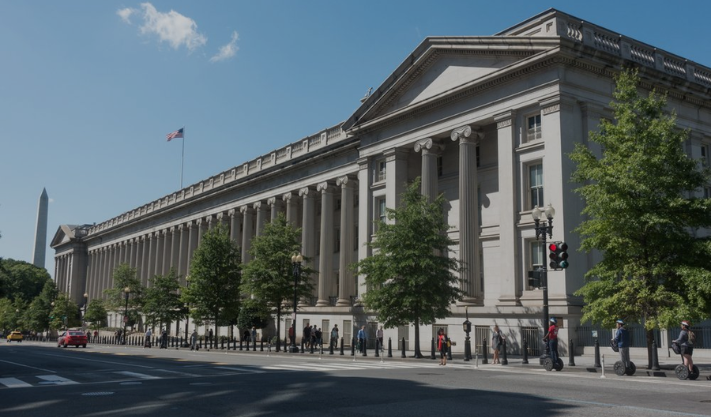
US Treasury securities are bonds issued by the American government. They are considered safe investments because they are backed by the US government. Many countries buy them to protect their reserves, earn stable returns, and manage financial risks.
In 2025, the US central bank, the Federal Reserve, reduced interest rates three times. The benchmark rate fell from 4.25%–4.5% to 3.5%–3.75% by the end of the year. When interest rates fall, bond prices usually rise. This creates an opportunity for investors to lock in higher yields earlier and potentially gain from price increases later.
During this period, the three GCC countries increased their investments in US Treasuries. Around 70% of the Arab portfolio was placed in long-term debt, helping reduce reinvestment risk and secure returns over a longer period.
Now let’s look at each country in detail.
1. Saudi Arabia
US Treasury holdings (December 2025): $149.5 billion
Year-on-year increase: $12 billion
Saudi Arabia is the largest Arab holder of US Treasury securities. By December 2025, its holdings reached $149.5 billion, up from $126.4 billion earlier in the year. This steady rise shows a clear strategy.
Strong oil revenues helped Saudi Arabia increase its foreign reserves. At the same time, US bond yields were attractive compared to other safe investments. These factors made Treasuries appealing.
Experts say Treasuries help Saudi Arabia maintain currency stability and ensure liquidity. Because the Saudi riyal is pegged to the US dollar, the country’s monetary policy often follows decisions made by the Federal Reserve. However, holding large amounts of US debt also means that global bond market volatility can affect government finances.
Overall, Saudi Arabia’s approach in 2025 reflects careful income planning and adjustments to changing interest-rate expectations.
2. United Arab Emirates
US Treasury holdings (December 2025): $95.6 billion
Year-on-year increase: $18.5 billion
The UAE recorded the largest increase among Arab investors in 2025. Its holdings rose by $18.5 billion during the year.
The UAE’s portfolio grew significantly, reflecting active reserve management. Financial experts believe this increase shows the country’s focus on liquidity and strengthening its balance sheet.
In a world marked by geopolitical tensions and uneven economic growth, flexibility is important. By increasing investments in US Treasuries, the UAE secured access to high-quality, liquid assets that can be sold quickly if needed.
Like other GCC countries, the UAE’s currency is pegged to the US dollar. This means it already closely follows US monetary policy. Large Treasury holdings, however, can add extra exposure to changes in US interest rates.
Still, the UAE’s rise in US Treasury holdings highlights its strong financial position and global investment strategy.
3. Kuwait
US Treasury holdings (December 2025): $66.1 billion
Year-on-year increase: $15.7 billion
Kuwait had the second-largest annual increase among Arab nations after the UAE. Its holdings rose from $50.3 billion at the end of 2024 to $66.1 billion in December 2025. That represents a 31.2% growth year-on-year.
Earlier in the year, Kuwait’s Treasury portfolio dipped slightly before rising steadily. This suggests a careful and planned approach to building foreign reserves.
According to financial experts, Kuwait took advantage of higher yields in early 2025. As expectations grew that the Federal Reserve would lower interest rates, locking in higher returns became more attractive. If rates fall, bond prices usually go up, creating potential gains.
Kuwait’s measured expansion shows its effort to protect financial stability while taking advantage of global market opportunities.
4. Morocco
US Treasury holdings (December 2025): $4.1 billion
Year-on-year increase: $891 million
Morocco’s holdings are much smaller compared with GCC countries. By December 2025, its investments reached $4.1 billion, up from $3.2 billion a year earlier.
The increase was steady but moderate. Morocco’s strategy appears cautious. As a smaller economy, it maintains limited exposure to US assets while focusing on reserve protection.
The rise in holdings is linked to stronger foreign direct investment inflows and growth in tourism. By increasing reserves, Morocco strengthens its ability to cover imports and manage external risks.
The Bigger Picture
In December 2025, Arab countries together held 3.4% of the global US Treasury market, which totaled $9.3 trillion.
Compared with the world’s biggest holders—such as Japan with $1.19 trillion, the United Kingdom with $866 billion, and China with $683 billion—the Arab share is relatively small. Still, it represents a meaningful level of international investment.
The steady rise in GCC holdings shows a clear pattern. These countries are using US Treasuries to protect reserves, maintain liquidity, and manage risks during changing global interest-rate cycles.
As long as GCC currencies remain linked to the US dollar and oil revenues stay strong, US Treasury securities will likely remain an important part of the region’s investment strategy.
In simple terms, Saudi Arabia, the UAE, and Kuwait continue to lead the Arab world in owning America’s debt—not as a political move, but as a financial strategy focused on stability, returns, and long-term economic security.
Published: 23th February 2026
For more article like this please follow our social media Twitter, Linkedin & Instagram
Also Read:
The Quiet Rise of Gulf Family Offices as a New Financial Force
Libya reopens oil and gas bids after nearly 20 years
Saudi Arabia builds tourism, but execution is key