UAE Economy Grows 5.6% in 2025; Bank Assets Reach $1.5 Trillion
The United Arab Emirates (UAE) saw strong economic growth in 2025. The country’s real gross domestic product (GDP) grew by 5.6%. At the same time, the total assets of the banking sector increased to $1.5 trillion (AED 5.4 trillion). This shows that 2025 was an important year for the UAE’s economy.
Economic performance
The UAE’s growth was mainly supported by non-oil sectors. These sectors are becoming more important as the country works to reduce its dependence on oil. Government strategies to diversify the economy have been successful. In addition, smart monetary policies helped keep inflation low at 1.3%, according to the Central Bank’s 2025 report.
Economic activity became stronger toward the end of the year. In December, the Purchasing Managers’ Index (PMI) reached 54.2. A PMI above 50 shows that the economy is growing, so this figure confirms that business activity continued to expand.
During the first three quarters of 2025, non-oil sectors showed strong growth. Key industries included financial services, manufacturing, and construction. Trade-related sectors like wholesale and retail also performed well, along with real estate.
Oil production also increased. It rose by 6.9% compared to the previous year, reaching an average of 3.12 million barrels per day. Gas production and sales also grew, rising by 2.7% and 3.9%.
Looking ahead, the UAE’s economy is expected to continue growing. Real GDP is forecast to grow by another 5.6% in 2026. This growth will likely be driven by strong non-oil sectors and a recovery in oil and gas production. By 2027, growth may slow slightly to around 4.4% as oil sector growth becomes more stable.
Non-oil trade
The UAE’s non-oil foreign trade saw a big increase in 2025. In the first nine months of the year, it rose by 24.6% compared to the same period in 2024. Total trade reached $689 billion (AED 2.53 trillion).
Non-oil exports grew very strongly, increasing by 45%. Re-exports also rose by 13%. Imports went up by 22.3%, showing strong demand within the country.
China remained the UAE’s largest trading partner, making up 11.2% of total non-oil trade. India was the second largest at 8.1%, followed by Switzerland at 6.3%.
The main goods traded included gold, telecommunications equipment, and motor vehicles. Small declines in exchange rates also helped improve the UAE’s competitiveness in global markets.
The UAE’s banking sector
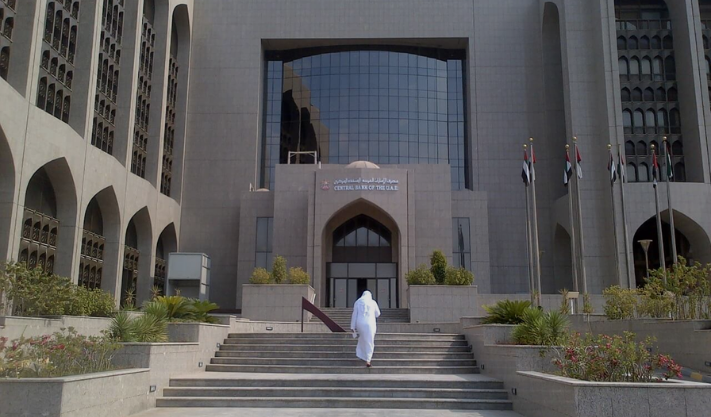
The UAE’s banking sector showed strong growth in 2025. Total assets reached $1.47 trillion (AED 5.4 trillion). This growth was mainly driven by an increase in lending and deposits.
Credit grew by 17.9%, meaning banks gave out more loans to businesses and individuals. Deposits also increased by 16.2%, showing that people and companies saved more money in banks.
The insurance sector also performed well. Gross written premiums increased by 15.5%, reaching $20.47 billion (AED 75.2 billion). Total assets in the insurance sector rose to $45.39 billion (AED 166.7 billion).
This growth shows that the financial sector is strong and plays an important role in supporting the economy. It also helps protect businesses and individuals from financial risks.
Ratings and outlook
Last month, S&P Global Ratings confirmed the UAE’s strong credit ratings. The country received long- and short-term ratings of ‘AA/A-1+’ with a stable outlook.
According to the agency, the stable outlook reflects the UAE’s strong financial position. The country has large financial reserves and a healthy external balance. This gives the government flexibility to respond to challenges.
These challenges could include geopolitical risks or changes in the oil and gas market. For example, oil production or exports could be affected by global events. However, the UAE is well prepared to handle such risks.
Conclusion
Overall, 2025 was a year of strong growth for the UAE. The economy expanded steadily, supported by both oil and non-oil sectors. Trade increased significantly, and the banking sector showed solid performance.
The country’s focus on economic diversification is clearly working. Non-oil sectors are becoming more important and helping to create a more balanced economy.
With strong financial systems, growing trade, and positive future forecasts, the UAE is well positioned to continue its economic progress in the coming years.
Also Read:-
Oman Opens Bids for New Oil and Gas Blocks
Saudi AI Gamble: Ambition, Scale & Risk Push
From Oil Powerhouse to Multi-Source Energy Leader