Oman’s OQ Group Signs $598 Million Deals to Strengthen Manufacturing Sector
Oman’s state-owned energy company, OQ Group, has signed two major agreements worth a total of $598 million to support industrial and advanced manufacturing projects in the country. The deals involve partners from Germany and India and are part of Oman’s long-term plan to grow its non-oil economy and create new jobs.
According to Oman’s state news agency, ONA, the agreements were signed with Germany-based M.A.K. and India’s Deepak Fertilizers and Petrochemicals Corporation Limited. The projects will be developed in the Sohar Free Zone and the Salalah Free Zone, two key industrial areas in the country.
First Deal: PTA and PET Plant in Sohar
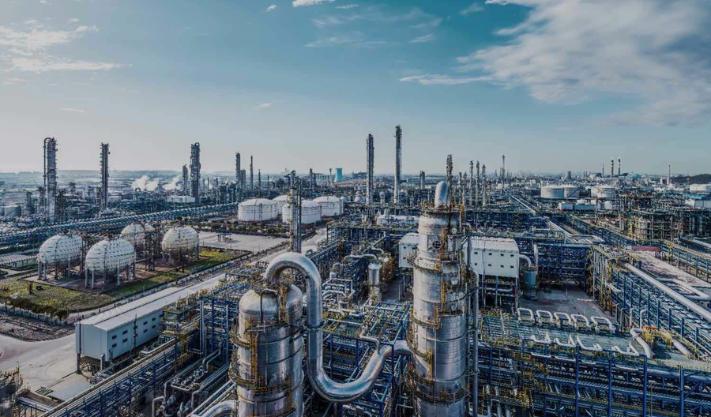
The first agreement was signed between OQ Refineries and Petroleum Industries (OQ RPI) and Germany’s M.A.K. This deal focuses on building a new manufacturing facility for Purified Terephthalic Acid (PTA) and Polyethylene Terephthalate (PET) in the Sohar Free Zone.
The total value of this project is $499.4 million (around OMR 192 million). Once completed, the plant will have a production capacity of 700 kilotonnes per year. The facility will mainly use paraxylene as its raw material, consuming around 425 kilotonnes every year.
PTA and PET are important materials used to make plastic bottles, food containers, textiles, and packaging products. By producing these materials locally, Oman aims to reduce imports and support downstream industries within the country.
The project is also expected to have a strong impact on employment. Around 700 direct jobs will be created, helping boost local employment and skills development in the industrial sector.
Second Deal: Chemical Plant in Salalah
The second agreement was signed between OQ Base Industries (OQBi) and India’s Deepak Fertilizers and Petrochemicals Corporation Limited. This project involves building a sodium nitrite and sodium nitrate manufacturing plant in the Salalah Free Zone.
The project is valued at more than $98.8 million (around OMR 38 million). It will operate under a renewable ten-year ammonia supply agreement, with OQBi providing the required ammonia.
The plant will have an annual production capacity of 70 kilotonnes. Sodium nitrite and sodium nitrate are widely used in industries such as pharmaceuticals, chemicals, food processing, and agriculture.
This project is expected to create about 150 direct jobs, adding further value to the local economy and supporting industrial growth in southern Oman.
Supporting Local Manufacturing
Both agreements are part of OQ Group’s manufacturing localization strategy. The company plans to use locally produced raw materials and convert them into high-value industrial products. This strategy helps strengthen supply chains, attract foreign investment, and reduce reliance on imports.
By partnering with experienced international companies, OQ aims to bring advanced technology, expertise, and global standards into Oman’s manufacturing sector.
New Power Projects Worth $2.6 Billion
Earlier this month, Oman also signed major agreements to support its energy infrastructure. Nama Power and Water Procurement signed two power purchase agreements with international consortia led by Qatar’s Nebras Power and South Korea’s Korea Western Power (KOWEPO).
These agreements will support the development of two power plants in Misfah and Duqm, with a total investment of $2.6 billion (around OMR 1 billion).
Construction work on both projects is expected to begin this month. The initial commercial operations are planned to start in April 2028, while full commercial operations are expected by April 2029.
These power projects are essential to meet the growing demand for electricity as Oman expands its industrial base and develops new economic zones.
Oman’s Wider Economic Strategy
These investments come at a time when Oman is working to position itself as a regional financial and business hub. The country is following a broader regional trend, as neighboring countries develop international financial centers to attract global companies and foreign capital.
Oman’s focus is on economic diversification, reducing dependence on oil, and encouraging growth in industries such as manufacturing, logistics, tourism, and finance.
Economic Growth and Stability
Oman’s economy showed solid growth in 2025. In the first half of the year, the economy grew by 2.3% compared to the same period last year. This was an improvement from the 1.6% growth recorded in 2024.
The growth was mainly driven by strong performance in non-oil sectors, including construction, agriculture, fisheries, tourism, and logistics. These sectors continue to benefit from government reforms and rising domestic demand.
Oil production growth remained limited due to ongoing OPEC+ production cuts. However, non-oil economic activity increased by a strong 3.5% in the first half of 2025, showing the success of Oman’s diversification efforts.
Inflation in the country remained low and stable. Between January and October 2025, inflation rose slightly to 0.9%, compared with 0.6% in 2024. Price increases across most categories stayed under control, supporting economic stability and consumer confidence.
Looking Ahead
The new industrial and power projects highlight Oman’s commitment to long-term economic growth. By investing in manufacturing, energy infrastructure, and global partnerships, the country aims to create jobs, attract investment, and build a more diverse and resilient economy.
Published: 28th January 2026
For more article like this please follow our social media Twitter, Linkedin & Instagram
Also Read:
Dana Gas, Crescent Sign Supply Deal for Kurdistan Plants
Saudi non-oil exports jump 20.7% on machinery growth
Davos 2026: UAE pushes bridge-building in global trade