Dubai continues to attract entrepreneurs, investors, startups, freelancers, and international companies because of its global connectivity, business infrastructure, diverse economy, and established free-zone ecosystem. However, starting a business in Dubai requires more than simply registering a company. Entrepreneurs need to choose the right business activity, legal structure, jurisdiction, licensing route, ownership model, office arrangement, and tax setup.
Frequently Asked Questions: Starting a Business in Dubai
What is the first step to starting a business in Dubai?
The first step is to clearly define your business activity.
Your chosen activity determines which licence you need, whether additional approvals are required, where you can establish the company, and what legal structure may be appropriate.
Common business categories include:
- Professional and consulting services
- Trading and general commerce
- E-commerce
- Technology and software
- Marketing and media
- Real estate-related activities
- Manufacturing
- Tourism and hospitality
- Education and training
- Financial and professional services
Before submitting an application, entrepreneurs should identify the exact activity rather than using a broad description such as “consulting” or “online business.”
Why is choosing the business activity so important?
Your business activity is the foundation of the registration process.
For example, a technology company, restaurant, management consultancy, online retailer, and manufacturing company may face different licensing and approval requirements.
Some activities are regulated and may require approval from a relevant government authority before the company can legally operate.
A clear activity description also helps you determine whether a mainland or free-zone setup is more suitable.
Should you start a business in Dubai Mainland or a Free Zone?
There is no single structure that is appropriate for every entrepreneur. The right choice depends on the business model, customers, location, operational requirements, and licensing needs.
A mainland company is generally established under Dubai’s local economic licensing framework and can operate in the UAE market subject to the applicable rules.
A free-zone company is established within a designated economic zone and operates under that zone’s regulatory framework.
Free zones are popular among startups, international entrepreneurs, professional service providers, and companies with specialized activities because they can offer specific licensing packages and business facilities.
The important question is not simply which option is cheaper. It is which structure fits the company’s intended activities and customers.
Can foreigners start a business in Dubai?
Yes. Foreign entrepreneurs can establish businesses in Dubai, subject to the applicable company, licensing, immigration, and regulatory requirements.
The UAE has significantly expanded opportunities for foreign investors, including allowing full foreign ownership for many mainland commercial activities.
However, ownership rules can vary depending on the activity and regulatory framework. Certain strategic or regulated activities may have additional requirements.
Entrepreneurs should therefore confirm the ownership conditions applicable to their specific activity before registering the company.
Do you need a UAE partner to start a company?
Not necessarily.
For many business activities, foreign investors can establish companies without an Emirati shareholder. The exact requirements depend on the activity, jurisdiction, legal structure, and applicable regulations.
Older information about mandatory local sponsorship can therefore be misleading when applied broadly to businesses being established in 2026.
Before choosing a structure, entrepreneurs should verify the current ownership rules for their particular activity.
What types of business licences are available in Dubai?
The licence depends on what the company intends to do.
Common categories include:
Commercial licence: Generally used for trading and commercial activities.
Professional licence: Commonly associated with professional and service-oriented activities.
Industrial licence: Relevant to manufacturing and industrial operations.
Tourism-related licences: Required for applicable travel, tourism, and hospitality activities.
Specialized licences: Certain regulated industries may require additional approvals or sector-specific permissions.
The exact licence name and requirements can differ between mainland authorities and individual free zones.
How much does it cost to start a business in Dubai in 2026?
There is no universal startup cost.
The total expense can include:
- Business registration
- Trade licence
- Company formation fees
- Office or workspace
- Government approvals
- Immigration establishment costs
- Investor or employee visas
- Emirates ID-related expenses
- Bank-related costs
- Accounting and bookkeeping
- Insurance
- Industry-specific approvals
Free-zone packages may advertise attractive starting prices, but the advertised package may not include every cost required for your intended setup.
A realistic budget should therefore be based on the complete business structure rather than only the initial licence price.
Is Dubai expensive for startups?
Dubai can involve significant operating costs, particularly for companies requiring physical offices, employees, inventory, or specialized premises.
However, entrepreneurs can structure their initial operations differently depending on their business model.
For example, a solo consultant may require considerably less infrastructure than a restaurant, manufacturing company, or retail business.
A practical startup budget should distinguish between formation costs and ongoing operating costs.
What documents are required to register a business in Dubai?
Requirements depend on the business type and jurisdiction, but entrepreneurs may generally need documents such as:
- Passport copies of shareholders
- Passport-size photographs where applicable
- Proposed company or trade name
- Business activity information
- Application forms
- Business plan for certain activities
- Proof of address where required
- Corporate documents for corporate shareholders
- Additional approvals for regulated activities
Some free zones have simplified incorporation processes, while regulated activities can require more documentation.
How do you choose a business name in Dubai?
A company name should comply with the applicable naming rules of the relevant authority.
Entrepreneurs should avoid names that:
- Mislead customers about the nature of the company
- Conflict with existing registered names
- Violate public-order requirements
- Use protected or restricted terminology without authorization
- Imply government affiliation without permission
It is sensible to check name availability before investing in branding, domain names, signage, or marketing materials.
What is a trade licence in Dubai?
A trade licence is an official authorization allowing a company to conduct specified business activities.
The licence identifies the permitted activity or activities and forms an important part of the company’s legal ability to operate.
Having a company registered does not automatically mean that it can perform every type of commercial activity. The licensed activities matter.
Do Dubai businesses need a physical office?
It depends on the jurisdiction, licence type, and business activity.
Some businesses may qualify for flexible workspace arrangements, shared offices, or other permitted solutions, while businesses requiring customer-facing premises, warehouses, retail locations, laboratories, or industrial facilities may need appropriate physical space.
Entrepreneurs should not assume that every company can operate entirely from home or virtually.
Can you start an online business in Dubai?
Yes.
Dubai has a substantial digital economy, and entrepreneurs can establish businesses involving e-commerce, software, digital marketing, consulting, online education, technology, and other digital activities.
However, “online” does not eliminate licensing requirements.
If you sell products or services commercially, you should determine which licence and approvals apply to the activity.
Is e-commerce a good business model in Dubai?
E-commerce can provide access to customers in the UAE and broader regional markets, but its viability depends on the product, pricing, logistics, customer acquisition strategy, competition, and regulatory requirements.
An e-commerce entrepreneur should consider:
- Product sourcing
- Warehousing
- Delivery
- Returns
- Payment processing
- Digital marketing
- Customer service
- Consumer-protection obligations
- Import requirements where applicable
A strong online presence alone does not guarantee a profitable e-commerce business.
Can you start a business in Dubai without living there?
In many situations, international entrepreneurs can begin company formation without being UAE residents.
However, residency, immigration, banking, management, and operational requirements can vary.
If the entrepreneur intends to live and work in Dubai, the appropriate residence visa and related arrangements become important parts of the setup process.
Do business owners need a Dubai residence visa?
A company owner does not automatically become a UAE resident simply because a company is registered.
Depending on the structure and circumstances, investors and business owners may be eligible to apply for an appropriate residence status.
Visa eligibility, duration, sponsorship, medical requirements, Emirates ID procedures, and other conditions should be checked against current UAE immigration rules.
What is the difference between a business licence and a residence visa?
They serve different purposes.
A business licence authorizes specified commercial activities.
A residence visa establishes an individual’s legal residence status in the UAE.
Having one does not automatically mean you have the other.
Entrepreneurs moving to Dubai should treat company formation and personal immigration as related but separate processes.
Do Dubai companies pay corporate tax?
The UAE introduced federal corporate taxation, and businesses operating in the country may be subject to corporate tax depending on their taxable income and applicable rules.
The standard UAE corporate tax rate is 9% on taxable income exceeding AED 375,000, subject to the relevant legislation and exemptions.
The calculation is based on taxable income, not simply total revenue.
Free-zone companies should not assume that being located in a free zone automatically means all income is exempt from corporate tax. Qualifying Free Zone Persons can receive specific treatment under the corporate tax framework, subject to meeting the applicable conditions.
Professional tax advice is particularly important when establishing a company with international operations.
Does Dubai have VAT?
Yes.
The UAE applies a 5% Value Added Tax (VAT) to taxable supplies under its VAT system.
Businesses meeting the relevant mandatory registration threshold generally need to register for VAT.
Voluntary registration may also be possible when the applicable conditions are met.
VAT compliance can involve registration, tax invoices, record keeping, return filing, and payment of tax where applicable.
What is the difference between corporate tax and VAT?
Corporate tax and VAT are different taxes.
Corporate tax is generally imposed on taxable business income according to the applicable UAE corporate tax rules.
VAT is a consumption tax applied to taxable supplies.
A business may need to comply with one or both systems depending on its activities, income, transactions, and circumstances.
Can a Dubai company open a corporate bank account?
Yes, companies can apply for corporate bank accounts in the UAE.
However, incorporation does not guarantee automatic bank-account approval.
Banks may conduct detailed compliance and due-diligence checks, including reviewing:
- Business activity
- Ownership structure
- Source of funds
- Expected transaction volumes
- Customer and supplier information
- Business model
- Geographic exposure
- Corporate documents
International founders should prepare clear documentation explaining how the business will operate and where its funds will come from.
How long does it take to start a business in Dubai?
The timeline varies.
A straightforward company with a clearly defined activity and complete documentation can potentially be incorporated relatively quickly.
However, additional approvals, office requirements, visa processing, regulated activities, corporate shareholders, banking procedures, and documentation issues can extend the timeline.
Instead of relying on a fixed number of days, entrepreneurs should identify every stage of their particular setup.
What are the best businesses to start in Dubai in 2026?
Dubai supports businesses across numerous sectors.
Potential areas include:
- Technology and software
- Artificial intelligence
- E-commerce
- Digital marketing
- Professional consulting
- Logistics
- Tourism
- Hospitality
- Education and training
- Real estate services
- Creative industries
- Financial technology
- Business support services
However, an industry being popular does not automatically make it profitable.
Entrepreneurs should evaluate customer demand, startup capital, competition, regulatory requirements, operating costs, and their own expertise before selecting an industry.
Is Dubai a good place for a startup?
Dubai offers several characteristics that can support entrepreneurship, including international connectivity, developed infrastructure, access to global markets, a diverse population, and multiple business jurisdictions.
At the same time, entrepreneurs should account for competition, operating costs, compliance requirements, and the practical difficulty of acquiring customers.
The opportunity depends heavily on the specific business model rather than the location alone.
How can a foreign entrepreneur choose the right free zone?
Start by identifying the business activity and target market.
Then compare relevant free zones based on:
- Permitted activities
- Ownership structure
- Licence options
- Office requirements
- Visa eligibility
- Renewal costs
- Banking considerations
- Access to the UAE market
- Warehousing or logistics requirements
- Industry-specific facilities
Choosing a free zone simply because its initial package is inexpensive can create complications later if the licence does not fit the company’s actual activities.
What mistakes should new entrepreneurs avoid in Dubai?
Several mistakes can make business formation more complicated or expensive.
Choosing the wrong licence: A licence should accurately reflect the activities the company intends to conduct.
Focusing only on setup cost: Low initial pricing does not necessarily mean low total operating cost.
Ignoring tax compliance: Corporate tax and VAT obligations should be considered from the beginning.
Choosing a business structure without considering customers: The ideal structure can differ depending on whether the company serves UAE customers, international clients, or both.
Underestimating banking requirements: Corporate bank-account approval can involve substantial due diligence.
Skipping professional advice: Regulated sectors and complex ownership structures may require specialist assistance.
What should you include in a Dubai business plan?
A practical business plan should answer several basic questions:
- What problem does the business solve?
- Who are the customers?
- What products or services will be sold?
- How will customers find the business?
- Who are the competitors?
- What will the business charge?
- What are the expected startup expenses?
- What are the recurring costs?
- How will the business generate revenue?
- How many employees will be needed?
- What licences and approvals are required?
- What are the expected tax and compliance obligations?
A business plan does not need to be extremely long. It needs to provide enough clarity to guide decisions.
How can a new business find customers in Dubai?
Customer acquisition should begin before or alongside company formation.
Depending on the industry, businesses can use:
- Search engine optimization
- Google Business Profile
- Social media
- Paid advertising
- Partnerships
- Networking events
- Referral programs
- Industry associations
- Content marketing
- Direct sales
Dubai’s international population also means businesses should consider multilingual and culturally appropriate marketing where relevant.
How much money should you save before starting?
There is no universal amount.
Your financial requirement depends on whether you are launching a consultancy from a flexible workspace or establishing a company that requires employees, inventory, vehicles, equipment, or commercial premises.
A sensible financial plan should cover:
Initial formation expenses + several months of operating costs + personal living expenses + emergency reserves.
Separating personal and business finances is particularly important for new entrepreneurs.
What is the complete process for starting a business in Dubai?
The process can generally be organized into these stages:
Step 1: Define your business activity.
Identify exactly what you will sell or provide.
Step 2: Choose your jurisdiction.
Determine whether mainland or a suitable free zone fits your requirements.
Step 3: Select the legal structure.
Choose the structure appropriate to the business and ownership arrangement.
Step 4: Reserve the business name.
Select a compliant and available company name.
Step 5: Obtain initial approvals.
Some activities require additional authorization.
Step 6: Prepare incorporation documents.
Submit the required shareholder and company documentation.
Step 7: Obtain the business licence.
Complete the relevant licensing process.
Step 8: Arrange premises.
Secure an office, workspace, shop, warehouse, or other required facility.
Step 9: Complete immigration procedures.
Apply for visas and related documents if applicable.
Step 10: Set up banking and accounting.
Establish appropriate financial systems and compliance processes.
Step 11: Register for applicable taxes.
Determine whether VAT, corporate tax, or other obligations apply.
Step 12: Launch operations.
Begin marketing, sales, hiring, and customer service according to the company’s approved activities.
What should you do before registering a Dubai company?
Do not rush directly into registration.
First, create a simple checklist covering:
- Business activity
- Target customers
- Mainland versus free zone
- Legal structure
- Ownership
- Licence requirements
- Office requirements
- Startup budget
- Visa requirements
- Banking
- Tax registration
- Accounting
- Marketing
- Hiring
- Long-term expansion plans
This approach can prevent entrepreneurs from choosing a structure that works for the first few months but becomes restrictive as the company grows.
Final FAQ: What is the smartest way to start a business in Dubai in 2026?
The most practical approach is to start with the business model rather than the company-registration package.
Define what you want to sell, identify your customers, determine where those customers are located, and then select the business activity, jurisdiction, licence, and legal structure that support those goals.
Dubai provides multiple routes for entrepreneurs, but the best setup depends on individual circumstances. Costs, tax obligations, ownership rules, office requirements, visa options, and regulatory approvals can change according to the business activity and jurisdiction.
Also Read:-
Best Places to Invest in UAE Real Estate in 2026
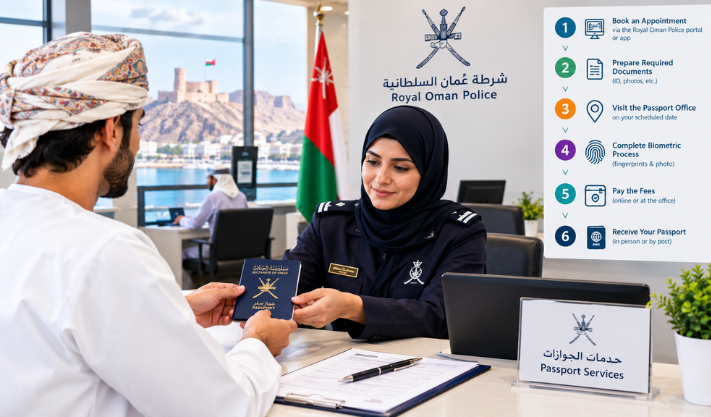
Step by Step Guide: How to Apply for a Passport in Oman?
Step by Step Guide: How to Apply for a Passport in Bahrain?