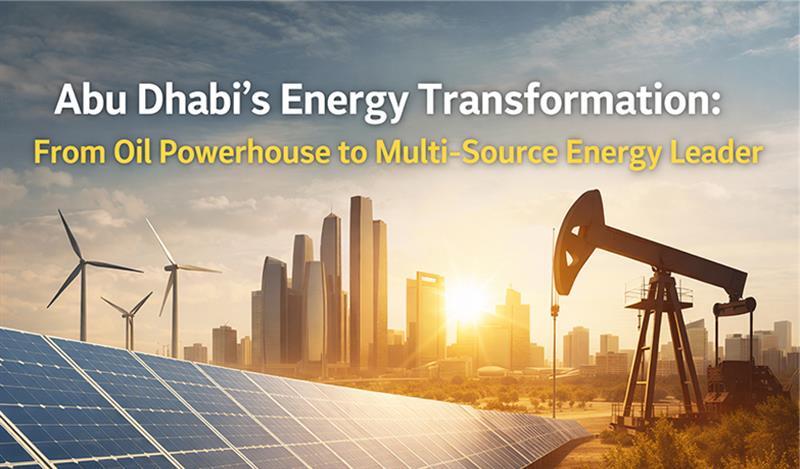
For decades, Abu Dhabi has occupied a central position in the global energy landscape. The emirate’s vast hydrocarbon resources have shaped not only the economy of the United Arab Emirates but also the broader dynamics of international energy markets. Oil revenues financed major infrastructure development, supported one of the world’s largest sovereign investment ecosystems, and positioned Abu Dhabi among the most influential energy exporters globally.
Today, however, the emirate is entering a new phase in its energy evolution.
While hydrocarbons remain a cornerstone of economic strength, Abu Dhabi is steadily expanding its strategy to include renewable power, hydrogen development, and advanced energy technologies. The goal is not simply to reduce dependence on fossil fuels. Instead, the emirate is building a diversified and resilient energy ecosystem capable of sustaining long-term economic growth in an increasingly complex global energy environment.
Recent developments highlight the scale of this transformation. According to research published by Market Research Abu Dhabi, the emirate has significantly expanded its renewable energy capacity through large-scale solar projects, positioning itself among the leading clean energy investors in the region.
Damien Duhamel, Managing Partner Middle East and Asia at Eurogroup Consulting believe Abu Dhabi’s strategy reflects a broader effort to maintain leadership while adapting to the global energy transition.
“Abu Dhabi is not stepping away from its role as a global energy producer,” he explains. “Instead, it is expanding that role by investing in renewable energy, hydrogen, and advanced infrastructure that will shape the next generation of energy systems.”
For Duhamel, the transition represents a strategic expansion rather than a departure from hydrocarbons.
“The emirate understands that the future energy system will be diversified. Maintaining leadership requires capabilities across both traditional and emerging energy sources.”
Expanding Renewable Energy Capacity
Renewable energy development has become one of the central pillars of Abu Dhabi’s evolving energy strategy.
Large-scale solar projects across the emirate demonstrate how renewable generation is being integrated into the national energy mix. Among the most notable developments is the Al Dhafra Solar PV project, one of the world’s largest single-site solar plants with a capacity of two gigawatts. The project is capable of powering thousands of homes while significantly reducing carbon emissions.
Another major initiative is the Al Ajban Solar Park, a 1.5 gigawatt project expected to reduce approximately 2.4 million tonnes of carbon emissions annually.
Beyond individual projects, the emirate is pursuing a broader national strategy. The UAE Energy Strategy 2050 aims to increase the share of clean energy in the national energy mix to 50 percent while reducing the carbon footprint of power generation by 70 percent.
These initiatives are supported by key institutions including Masdar, Abu Dhabi’s renewable energy company, and the Emirates Water and Electricity Company (EWEC), both of which play critical roles in developing and managing renewable energy infrastructure.
Together, these projects are positioning Abu Dhabi as one of the most dynamic renewable energy markets in the Middle East.
Hydrogen and the Next Generation of Energy Markets
In addition to solar energy, Abu Dhabi is also positioning itself within the emerging global hydrogen economy.
Hydrogen is increasingly viewed as a critical solution for decarbonizing sectors that are difficult to electrify, including heavy industry, aviation, shipping, and long-distance transport. Governments and corporations around the world are investing heavily in hydrogen production, storage, and export infrastructure.
Abu Dhabi’s existing industrial ecosystem provides a strong foundation for participation in this emerging market. The emirate already possesses large-scale industrial infrastructure, export capabilities, and technical expertise that enable hydrogen production at scale.
Current national plans aim to develop hydrogen production capacity reaching up to 15 million tonnes annually by 2050, potentially positioning the UAE among the world’s leading suppliers of low-carbon fuels.
According to Damien Duhamel, hydrogen represents one of the most strategically important opportunities within the evolving energy landscape.
“Hydrogen has the potential to reshape global energy trade over the coming decades. For energy-exporting economies such as Abu Dhabi, it offers a pathway to remain central to global energy markets even as decarbonization accelerates.”
The development of hydrogen ecosystems also creates opportunities across multiple industries including engineering services, equipment manufacturing, logistics infrastructure, and technology innovation.
Infrastructure Enabling Energy Diversification
Energy transformation depends not only on new technologies but also on strong industrial infrastructure.
Abu Dhabi benefits from an extensive logistics and industrial framework that supports the development of new energy sectors. Ports, industrial zones, and transportation corridors allow energy production facilities to connect efficiently with global markets.
Khalifa Port, one of the region’s most advanced maritime hubs, plays a key role in this ecosystem. Its integration with nearby industrial zones enables companies to develop energy-related production facilities with direct access to international shipping routes.
At the same time, investments in energy storage technologies, digital grid management systems, and advanced transmission infrastructure are modernizing the emirate’s power network.
These developments make it easier for both domestic and international companies to participate in Abu Dhabi’s evolving energy ecosystem.
Growing Opportunities for International Investors
As Abu Dhabi expands its energy portfolio, new opportunities are emerging for investors, industrial operators, and technology providers.
Renewable energy developers can participate in large-scale solar projects. Engineering firms can support infrastructure construction and energy system integration. Technology companies can contribute solutions in areas such as smart grids, energy storage, and hydrogen production technologies.
Many of these projects involve collaboration between international firms and local institutions, helping accelerate technology transfer while strengthening Abu Dhabi’s domestic energy ecosystem.
Industry experts, including analysts from Market Research Abu Dhabi, note that this collaborative model is essential for building sustainable energy ecosystems that combine investment, innovation, and industrial capability.
Understanding regulatory frameworks, investment incentives, and sector priorities remains essential for companies seeking to enter the market. As the emirate’s energy strategy continues to evolve, market insight and local partnerships will play an increasingly important role.
A New Chapter of Energy Leadership
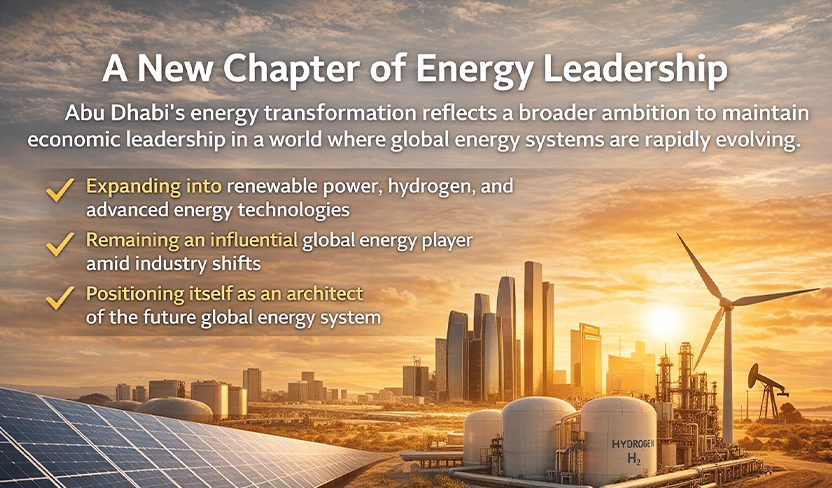
Abu Dhabi’s energy transformation reflects a broader ambition to maintain economic leadership in a world where global energy systems are rapidly evolving.
Rather than moving away from its legacy as an energy powerhouse, the emirate is expanding that legacy into new domains including renewable power, hydrogen production, and advanced energy technologies.
This diversified strategy allows Abu Dhabi to remain one of the world’s most influential energy players while adapting to new global realities.
As renewable infrastructure expands and emerging energy industries mature, the emirate is positioning itself not only as a producer of energy resources but also as a key architect of the future global energy system.
Also Read:
Silver’s breakout surge faces a structural test in the Middle East
Trump halts strikes; Iran agrees 2-week ceasefire
Has the War Ended? 10 Simple Points About the US-Iran Ceasefire