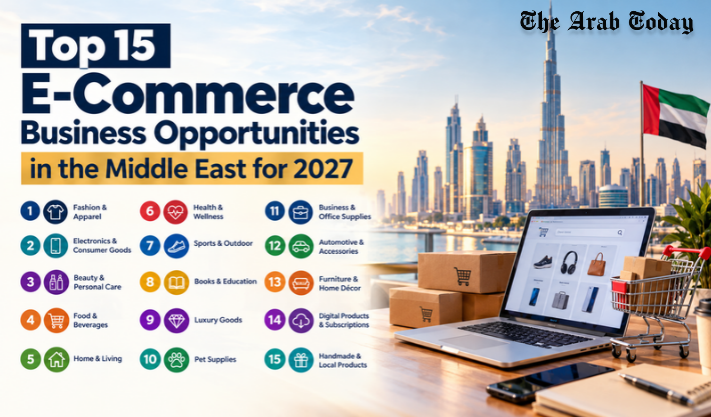
The Middle East is becoming a hotspot for entrepreneurs eager to establish online businesses, attract new customers, and expand into international markets. The growing adoption of digital technology, mobile shopping, digital payment options, and convenient delivery services is creating opportunities across retail, food, education, beauty, technology, and business services.
Entrepreneurs can develop e-commerce businesses targeting consumers and companies in countries such as the United Arab Emirates, Saudi Arabia, Qatar, Kuwait, Bahrain, and Oman in 2027. However, the best opportunity depends on customer demand, startup capital, competition, logistics, and local regulations.
In this guide, we explore 15 e-commerce business opportunities in the Middle East for 2027. We explain how each business model works and answer frequently asked questions to help aspiring entrepreneurs choose the right business idea.
What Are the Best E-Commerce Business Opportunities in the Middle East for 2027?
Some of the most promising e-commerce niches include:
- Niche online stores
- Beauty and personal care products
- Modest fashion and clothing
- Specialty food and grocery products
- Subscription services
- Digital products
- Online education platforms
- Sustainable products
- Business-to-business marketplaces
Entrepreneurs do not always need to build a large online marketplace from scratch. Instead, they can target a specific customer group, develop a focused product range, and implement a suitable marketing strategy. This approach makes it easier to test demand before expanding.
The following business ideas offer different entry points depending on your budget, skills, and target market.
1. Fashion and Modest Clothing Online Store
Why Is Fashion E-Commerce a Lucrative Business Opportunity in the Middle East?
The fashion e-commerce sector offers opportunities for businesses selling modest clothing, abayas, kaftans, occasion wear, footwear, and accessories. Customers can explore different styles, compare prices, and place orders online without visiting a physical store.
Saudi Arabia and the UAE are potential markets for fashion businesses, although competition can be intense. Entrepreneurs can differentiate themselves by developing a niche brand rather than competing directly with large fashion retailers. For example, a business could specialize in modern abayas, modest office wear, or affordable clothing for young professionals.
How Can You Start an Online Fashion Business?
Start by identifying reliable suppliers, selecting an initial inventory, creating accurate size charts, and investing in high-quality product photography. Establish a clear return policy and use social media campaigns to test demand before purchasing large quantities of stock.
2. Beauty and Personal Care Products
Is Selling Beauty Products Online Profitable in the Middle East?
Beauty and personal care products offer opportunities for repeat purchases because customers regularly buy skincare, haircare, cosmetics, fragrances, and grooming essentials.
Businesses can differentiate themselves through product quality, educational content, specialized collections, and convenient delivery. Potential niches include fragrance discovery kits, skincare for specific concerns, men’s grooming products, and beauty accessories.
How Can a Beauty E-Commerce Business Stand Out?
Provide accurate ingredient information, sell authentic products, publish helpful tutorials, and offer guidance that addresses different customer needs. Before selling cosmetics or skincare products, check the applicable product registration, import, labeling, and licensing requirements in each target country. Verify the legitimacy and reliability of suppliers before purchasing inventory.
3. Specialty Food and Grocery Delivery
Why Should Entrepreneurs Explore Selling Food and Groceries Online?
Online food businesses serve customers looking for convenience, specialty ingredients, international snacks, premium dates, regional delicacies, and everyday grocery essentials.
Some customers also search for products that are difficult to find in local stores. This creates opportunities for specialized online shops that focus on a particular category instead of competing with large supermarket delivery platforms across every product range.
Potential business ideas include curated snack boxes, specialty coffee, healthy pantry products, regional food hampers, and subscriptions for frequently purchased goods.
What Should Beginners Consider Before Selling Food Online?
Start with products that are relatively easy to ship and have a reasonable shelf life. Fresh and frozen foods require more complex storage, temperature control, and delivery arrangements. Businesses must also comply with applicable food safety, labeling, import, and licensing requirements.
4. Electronics and Smart Home Gadgets
Is Electronics a Smart E-Commerce Business Idea for 2027?
Electronics remains an important online retail category, offering opportunities in mobile accessories, charging equipment, computer peripherals, smart lighting, home automation, and connected devices.
Rather than selling every type of electronic product, entrepreneurs can focus on a specific audience, such as remote workers, gamers, students, or smart-home enthusiasts.
For example, a specialized online store could sell ergonomic desk accessories, laptop stands, cable organizers, and compatible charging products.
How Can an Electronics Store Compete With Established Retailers?
Provide clear product specifications, compatibility information, demonstration videos, reliable warranties, and responsive customer support. Check electrical safety standards, product certification requirements, and after-sales obligations in each country where you plan to sell.
5. Eco-Friendly and Sustainable Products
Can You Build a Profitable E-Commerce Business Selling Eco-Friendly Products?
Sustainable e-commerce businesses sell products designed to reduce waste and encourage more responsible consumption. Potential categories include reusable household goods, refillable containers, durable shopping bags, recycled-material products, and reusable kitchen accessories.
Entrepreneurs can also explore low-waste office supplies and durable alternatives to disposable products.
The key is to solve a genuine customer problem rather than relying solely on sustainability claims.
How Can You Start a Sustainable Products Business?
Choose products with clear practical benefits, support environmental claims with reliable evidence, and explain how customers can use and maintain the products. Avoid claims such as “100% eco-friendly” or “zero environmental impact” unless they can be substantiated.
6. Online Home Decor and Lifestyle Store
Why Is Home Decor a Promising E-Commerce Niche in the Middle East?
Home decor businesses can serve customers furnishing apartments, renovating villas, decorating offices, or preparing properties for rental and hospitality purposes.
Product categories include decorative lighting, cushions, wall art, dinnerware, storage accessories, rugs, and small furniture.
A niche online store could focus on modern Arabian interiors, minimalist home furnishings, premium gifts, or practical products for smaller apartments.
How Can a Home Decor Store Build Customer Trust?
Provide accurate measurements, detailed material descriptions, realistic product photographs, and clear delivery estimates. For larger products, calculate shipping, potential damage, installation, and return costs before setting prices.
7. Pet Accessories and Supplies
Is Opening an Online Pet Store a Good Business for Beginners?
An online pet store can serve pet owners looking for toys, beds, grooming products, travel accessories, and everyday care essentials.
A specialized business could focus on indoor cats, small dogs, pet travel, or premium pet accessories. Repeat purchases and personalized recommendations can help improve customer retention.
How Can You Start an Online Pet Store?
Begin with a small selection of lightweight, non-perishable accessories. Introduce subscriptions for suitable repeat-purchase products once customer demand becomes clearer. Before selling regulated products, check local requirements for pet food, veterinary supplies, imports, and restricted ingredients.
8. Membership Shopping and Subscription Boxes
How Do Subscription-Based E-Commerce Businesses Make Money?
Subscription businesses charge customers for products or services delivered on a recurring schedule. Examples include monthly coffee selections, stationery kits, hobby boxes, personalized gift boxes, and premium lifestyle collections.
This model can create more predictable revenue when customers renew their subscriptions. However, recurring payments do not guarantee profitability. Businesses must continue delivering sufficient value to retain subscribers.
A Middle Eastern subscription brand could offer monthly Arabic coffee discovery boxes or curated collections of locally manufactured products.
What Is the Key to a Successful Subscription Business?
Calculate product costs, packaging, delivery, payment processing fees, and customer acquisition expenses. Clearly communicate billing schedules, renewal dates, cancellation procedures, and subscription terms.
9. Digital Products and Downloadable Resources
Can You Start an E-Commerce Business Without Holding Inventory?
Yes. Digital products allow entrepreneurs to sell downloadable resources without storing or shipping physical goods.
Examples include business templates, planners, graphic designs, instructional workbooks, presentation templates, and professional development guides.
For example, an entrepreneur could sell invoice templates, social media content calendars, or project management resources to small businesses across the Gulf.
The main advantages include low fulfillment costs and the ability to sell the same product multiple times. However, success still depends on product quality, differentiation, visibility, and customer demand.
How Can You Start Selling Digital Products?
Identify a specific problem, develop a useful resource, create a clear product preview, and establish secure payment and automatic delivery systems. Respect copyright, licensing, consumer protection, and applicable digital tax requirements.
10. E-Learning and Online Education Platforms
Why Does E-Learning Offer Business Opportunities in the Middle East?
Online education allows entrepreneurs to provide learning resources and training to students, working professionals, business owners, and organizations.
Potential niches include business English, digital marketing, coding, graphic design, entrepreneurship, exam preparation, and professional software skills.
Entrepreneurs with specialized knowledge can begin with a focused online course, live workshop, or collection of recorded lessons instead of investing in an expensive education platform.
What Makes an Online Education Business Successful?
Develop an organized curriculum, practical exercises, clearly defined learning outcomes, and responsive student support. Start with a specific audience, demonstrate the value of the course, and expand your offerings based on customer feedback.
11. Customized Products and Personalized Gifts
Is Personalized Gifting a Good E-Commerce Business Opportunity?
Personalized gifting allows customers to purchase products customized with names, messages, dates, or designs. Popular options include engraved accessories, personalized notebooks, corporate gifts, photo products, and customized home decor.
Demand may increase around weddings, birthdays, graduations, national celebrations, corporate events, and religious holidays.
Entrepreneurs can initially work with local printing or engraving suppliers instead of purchasing all the necessary equipment.
How Can You Reduce Risk When Selling Personalized Products?
Use digital proofs and confirm customization details before production. Establish realistic delivery times and clear return policies for personalized merchandise. Corporate gifting can also provide an additional revenue stream through larger orders.
12. Social Commerce and Influencer-Led Shopping
How Can Entrepreneurs Sell Products Through Social Media?
Social commerce combines product discovery, creator content, customer engagement, and online purchasing. Entrepreneurs can use short videos, product demonstrations, live shopping, and creator partnerships to introduce products to relevant audiences.
Fashion, cosmetics, food gifts, home furnishings, and lifestyle products are suitable categories because customers can see how products look and function before purchasing.
This model can be particularly useful for businesses that want to test demand before investing heavily in a standalone online store.
What Is the Best Strategy for Social Commerce?
Choose platforms that match your target audience, publish useful and authentic content, and simplify the checkout process. Track sales, conversion rates, and customer acquisition costs instead of evaluating performance through views alone. Follow applicable advertising and influencer-disclosure requirements.
13. B2B E-Commerce for Small Businesses
Is Business-to-Business E-Commerce a Good Online Opportunity?
Business-to-business e-commerce allows organizations to purchase products and services from online suppliers. Opportunities include office supplies, packaging materials, restaurant consumables, uniforms, promotional merchandise, and wholesale accessories.
Business customers may place larger orders or purchase products regularly. However, they also expect competitive pricing, dependable fulfillment, suitable payment terms, and consistent product availability.
A specialized online catalog serving cafes, salons, small retailers, or offices can provide a focused starting point.
How Should Entrepreneurs Start a B2B E-Commerce Business?
Interview prospective business customers, identify frequently purchased products, negotiate reliable supplier agreements, and provide transparent bulk pricing. Establish efficient ordering, invoicing, and customer service processes before expanding your customer base.
14. AI-Powered Shopping and E-Commerce Services
How Can Artificial Intelligence Create E-Commerce Business Opportunities?
Artificial intelligence creates opportunities for online retailers and service providers that help merchants operate more efficiently.
Entrepreneurs can offer AI-assisted product description writing, customer service chatbots, multilingual catalog management, product recommendation systems, and sales reporting services.
For example, a small agency could help retailers organize product information in Arabic and English or automate routine customer inquiries.
These services can be sold as one-time projects or recurring monthly packages.
What Should Beginners Know About AI-Powered E-Commerce Services?
Start by solving one measurable business problem, protect customer data, review AI-generated content for accuracy, and maintain human oversight where necessary. Avoid guaranteeing revenue growth or promising completely automated operations without supporting evidence.
15. Cross-Border E-Commerce and Regional Marketplace Services
Why Is Cross-Border E-Commerce Attractive in the Middle East?
Cross-border e-commerce enables businesses to sell products to customers in multiple countries. Entrepreneurs can source distinctive products internationally or help regional brands reach new markets.
Potential niches include specialty gifts, fashion accessories, home products, and locally manufactured items with international appeal.
Another opportunity is providing services to merchants, including fulfillment coordination, catalog localization, shipping support, and returns management.
How Can a Startup Enter the Cross-Border E-Commerce Market?
Begin with one source market and one destination country. Calculate shipping charges, customs duties, taxes, payment fees, returns, and delivery times before listing products. Confirm import restrictions, business registration requirements, and other local regulations rather than assuming that one set of rules applies throughout the region.
How Do You Choose the Right E-Commerce Business in the Middle East?
Choosing the right e-commerce idea requires more than identifying a popular product. Entrepreneurs should evaluate customer demand, startup costs, competition, supplier reliability, and the potential for repeat purchases.
The UAE e-commerce market reached AED 42.2 billion in 2025, according to figures reported by the Emirates News Agency. This provides useful context for entrepreneurs considering online retail, although overall market growth does not guarantee the success of an individual business.
Which E-Commerce Business Is Best for a Small Budget?
Digital products, specialized online services, and social-commerce businesses can be suitable starting points because they may require less investment in physical inventory than traditional retail. Actual startup costs depend on software, marketing, product development, and operational requirements.
Which Middle Eastern Country Should You Target First?
The UAE may suit businesses targeting international customers, premium products, and regional distribution. Saudi Arabia may appeal to businesses targeting its domestic consumer market. Qatar, Kuwait, Bahrain, and Oman can also offer opportunities for businesses with the right products and customer strategies.
Research local demand, competition, and legal requirements before deciding. Starting in one country can make it easier to test pricing, delivery, and customer acquisition before expanding into additional markets.
What Are the Most Important E-Commerce Trends for 2027?
Key trends to monitor include:
- AI-assisted product discovery and personalized recommendations.
- Social commerce and creator-led product promotion.
- Mobile-first shopping experiences.
- Digital wallets and flexible payment options.
- Faster delivery and simpler returns.
- Subscription shopping and customer retention strategies.
- Digital services that help small businesses sell online.
Developments in regional commerce indicate that artificial intelligence, payment innovation, and convenience are important areas to watch as online shopping evolves.
Frequently Asked Questions About E-Commerce in the Middle East
1. Is E-Commerce a Good Business Opportunity in the Middle East in 2027?
Yes. E-commerce offers opportunities in fashion, beauty, food, home products, digital services, and specialized retail. Success depends on customer demand, pricing, competition, reliable fulfillment, and effective marketing.
2. What Are the Top Five E-Commerce Business Ideas for Beginners?
Five options worth evaluating are digital products, niche fashion, personalized gifts, social commerce, and specialized home accessories. Beginners should choose an idea that matches their skills, budget, and ability to reach customers.
3. Can I Start an Online Business in the Middle East With Little Investment?
Yes. You can test digital products, freelance services, or a small catalog of niche products with a limited budget. However, business registration, platform fees, marketing, payment processing, and other operating expenses must be considered.
4. Is the UAE a Good Place to Start an E-Commerce Business?
The UAE offers an established digital commerce ecosystem, logistics infrastructure, and access to regional and international markets. Entrepreneurs should still assess competition, licensing requirements, operating costs, and their intended customer base.
5. Is Saudi Arabia a Good Market for Online Selling?
Saudi Arabia is a significant market for online retail, with opportunities across fashion, cosmetics, groceries, electronics, and other categories. Businesses should adapt their customer experience to local preferences and understand applicable regulations, payment options, and delivery expectations.
6. Do I Need a Website to Start an E-Commerce Business?
Not always. Some entrepreneurs begin through online marketplaces or social-commerce channels. A dedicated website can provide greater control over branding, customer experience, and customer data, subject to applicable privacy requirements.
7. How Can AI Help an E-Commerce Business Grow?
AI can support product recommendations, customer service responses, inventory forecasting, catalog management, and marketing analysis. Results depend on data quality, implementation, and appropriate human oversight.
8. What Is the Biggest Challenge for New E-Commerce Businesses?
Common challenges include acquiring customers affordably, managing shipping and returns, competing on price, maintaining product quality, and building customer trust. Strong operations and a clearly defined niche can help businesses address these challenges.
9. Can I Sell Products Across Multiple Middle Eastern Countries?
Yes, provided your business meets the applicable requirements in each destination. Before expanding, review registration, tax, customs, consumer protection, product compliance, and delivery obligations for every target market.
10. How Can I Make My E-Commerce Business Profitable?
Focus on products customers genuinely want, manage costs carefully, set sustainable prices, and encourage repeat purchases through quality service. Track gross margins, customer acquisition costs, return rates, and repeat-order rates to understand whether your business model is working.
Conclusion: The Future of E-Commerce Business in the Middle East
The Middle East offers a broad range of e-commerce opportunities for 2027, from specialized fashion stores and beauty products to digital education, AI-powered services, and cross-border marketplaces.
The best approach is to start with a specific customer problem, validate demand, and build a business model that delivers value consistently. Entrepreneurs do not need to compete with every major marketplace
Also Read:-
Profitable Small Business Ideas in Dubai to Start in 2026
How to Apply for a Passport in Qatar: A Simple Guide
Is Dubai Real Estate a Good Investment in 2027? Guide