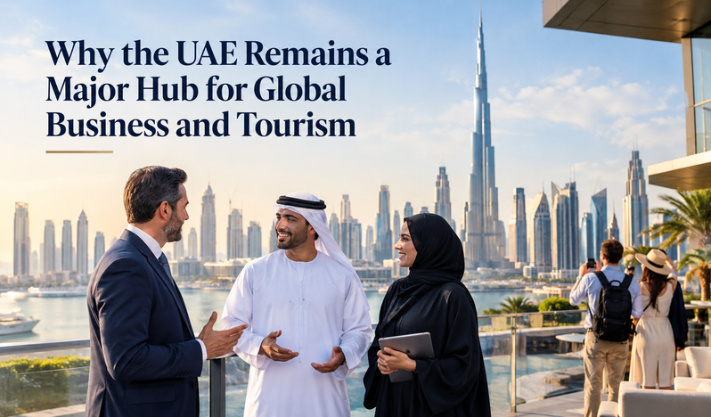
The United Arab Emirates (UAE) has established itself as one of the world’s most important destinations for international business, investment, and tourism. Strategically located between Europe, Asia, and Africa, the country connects global markets while offering modern infrastructure, a business-friendly environment, world-class hospitality, and a diverse range of cultural and leisure experiences.
Cities such as Dubai and Abu Dhabi have become internationally recognised for their business districts, financial services, luxury hotels, major exhibitions, shopping destinations, and ambitious development projects. At the same time, the UAE continues to invest in technology, renewable energy, logistics, aviation, healthcare, and tourism to strengthen its position in the global economy.
The country’s appeal extends beyond its skyline and luxury attractions. Entrepreneurs value its international connectivity, companies benefit from its access to regional markets, and visitors enjoy a combination of modern entertainment, desert landscapes, beaches, heritage sites, and cultural experiences.
But why does the UAE continue to attract businesses, investors, and tourists from around the world? Its success comes from a combination of geographic advantages, economic diversification, infrastructure, international connectivity, safety, and long-term development strategies.
This article explores the key reasons the UAE remains a major global hub for business and tourism, using a question-and-answer format designed for readers, search engines, AI-powered search tools, and voice search.
1. Why Is the UAE Considered a Major Global Business Hub?
The UAE is considered a major global business hub because it combines international connectivity, modern infrastructure, investor opportunities, and access to markets across the Middle East, Africa, Asia, and Europe.
The country has developed a business environment that attracts multinational corporations, entrepreneurs, startups, financial institutions, manufacturers, and professional service providers. Dubai is particularly recognised for international trade, finance, logistics, real estate, and entrepreneurship, while Abu Dhabi has a strong presence in energy, investment, industry, government-related business, and emerging technologies.
Businesses can choose from mainland company structures and specialised free zones, depending on their activities and regulatory requirements. These options help companies establish operations that suit their commercial goals.
The UAE also hosts international conferences, trade exhibitions, investment forums, and industry events that bring decision-makers together. These gatherings create opportunities for partnerships, networking, and cross-border expansion.
In simple terms, the UAE attracts global businesses because it provides access to international markets, established infrastructure, and multiple pathways for commercial growth.
2. How Does the UAE’s Strategic Location Support International Trade?
The UAE’s geographic location is one of its greatest economic advantages. Positioned between major markets in Europe, Asia, and Africa, it serves as a convenient base for companies managing international supply chains and regional operations.
Its airports connect travellers and business professionals to destinations worldwide, while its seaports support the movement of goods through major international shipping routes. This combination of air and maritime connectivity makes the country important for logistics, distribution, re-exports, and global commerce.
For businesses, this location can make it easier to coordinate suppliers, customers, and regional offices across different time zones. Companies operating in the UAE can also explore opportunities in neighbouring Gulf markets and wider regions, subject to applicable trade and regulatory requirements.
Dubai’s Jebel Ali Port and the wider Jebel Ali economic and logistics ecosystem illustrate how transport infrastructure can support international commerce. Abu Dhabi also contributes through its ports, industrial zones, and logistics networks.
The UAE’s location matters because it helps connect markets, simplify international coordination, and support the movement of people and products.
3. Why Do International Companies Choose the UAE to Establish Their Businesses?
International companies choose the UAE because it offers a combination of business infrastructure, international talent, connectivity, specialised commercial zones, and access to regional opportunities.
The country provides a range of company formation options. Depending on the activity and jurisdiction, businesses may establish mainland entities or operate through free zones designed for particular industries or commercial models.
Many free zones offer services such as company registration, office facilities, licensing support, and administrative assistance. However, the exact requirements, costs, ownership rules, and permitted activities vary by jurisdiction and business type.
The UAE also attracts professionals from many countries, helping employers build internationally experienced teams. Its developed banking sector, professional services industry, telecommunications networks, and transport systems further support day-to-day business operations.
Another advantage is the presence of established commercial communities. Entrepreneurs can meet investors, suppliers, distributors, consultants, and potential customers within a relatively connected business environment.
Before establishing a company, investors should compare licensing costs, visa requirements, office arrangements, taxation, banking eligibility, and the rules governing their specific activities.
The UAE is attractive to international companies because it offers several business structures and a developed environment for operating across borders, although the right setup depends on each company’s needs.
4. How Does Economic Diversification Strengthen the UAE’s Global Position?
Economic diversification strengthens the UAE by reducing its dependence on oil-related activity and creating opportunities across a wider range of industries.
Although hydrocarbons remain important, particularly in Abu Dhabi, the country has expanded its economic activity in tourism, trade, finance, aviation, real estate, technology, manufacturing, healthcare, education, and renewable energy.
Dubai has built a substantial international profile around trade, tourism, financial services, and real estate. Abu Dhabi has developed significant investment, industrial, cultural, and clean-energy activities. Other emirates contribute through manufacturing, agriculture, ports, tourism, and specialised industries.
Government strategies have encouraged private investment, entrepreneurship, digital transformation, innovation, and international partnerships. Initiatives supporting artificial intelligence, advanced manufacturing, sustainable energy, and digital services are also creating new areas for business development.
Diversification benefits companies because it creates a broader network of suppliers, customers, investors, and skilled professionals. It also provides opportunities for startups to serve industries beyond traditional energy and construction.
However, diversification is an ongoing process. Economic resilience depends on productivity, workforce development, global demand, investment quality, and the ability to respond to changing market conditions.
The UAE’s long-term strength comes from building a broader economy in which trade, tourism, technology, investment, and industry complement its established energy sector.
5. What Makes Dubai a Leading Destination for Business and Tourism?
Dubai is a leading destination because it combines commercial activity with internationally recognised attractions, hospitality, shopping, entertainment, and major events.
The city is home to important business districts, including the Dubai International Financial Centre and established commercial areas that serve regional and international companies. Its airports, port infrastructure, hotels, exhibition venues, and road networks help support both business travel and leisure tourism.
For visitors, Dubai offers attractions such as Burj Khalifa, Dubai Mall, Palm Jumeirah, traditional markets, beaches, museums, and desert experiences. The city also hosts international exhibitions, sporting events, concerts, and conferences throughout the year.
This combination benefits the local economy. Business travellers may extend their stays for leisure, while tourists can discover investment opportunities, attend industry events, or explore the city’s entrepreneurial ecosystem.
Dubai’s diverse hospitality sector accommodates different budgets and travel preferences, from luxury resorts to more affordable hotels and serviced apartments.
Its international population and multicultural food scene further contribute to its global appeal.
Dubai stands out because it allows visitors and businesses to experience commercial opportunities, entertainment, hospitality, and international connectivity in one destination.
6. Why Is Abu Dhabi Important for Global Business and Tourism?
Abu Dhabi plays an important role because it combines the UAE’s capital-city functions with investment, energy, industry, culture, and growing tourism opportunities.
The emirate has a significant position in the energy sector and is also investing in advanced manufacturing, financial services, clean energy, technology, and economic development. Its investment institutions and business ecosystem connect it with companies and projects around the world.
Abu Dhabi is also developing its identity as a cultural and leisure destination. Attractions include the Louvre Abu Dhabi, Sheikh Zayed Grand Mosque, Qasr Al Watan, and the entertainment destinations on Yas Island.
Its beaches, desert landscapes, heritage experiences, and hospitality offerings appeal to visitors looking for a different experience from Dubai’s fast-paced urban environment.
The emirate’s combination of government institutions, investment activity, cultural venues, and industrial development gives it a distinct role within the UAE economy.
Abu Dhabi complements Dubai by combining investment and industrial strength with cultural attractions, heritage, and expanding leisure tourism.
7. How Does the UAE Attract Tourists From Around the World?
The UAE attracts tourists by offering a wide range of experiences within a relatively compact and well-connected country.
Visitors can explore modern skylines, beaches, shopping centres, desert landscapes, traditional neighbourhoods, museums, theme parks, and luxury resorts. The country’s mix of urban entertainment and natural scenery appeals to families, couples, solo travellers, and business visitors.
Dubai is known for major attractions, shopping, dining, and entertainment. Abu Dhabi offers cultural landmarks, museums, theme parks, and coastal experiences. Sharjah attracts visitors interested in arts, museums, and heritage, while Ras Al Khaimah offers mountain scenery, outdoor activities, and beach resorts.
The UAE’s hospitality industry also supports tourism through international hotel brands, restaurants, guided excursions, event venues, and transport services.
Seasonal festivals, sporting competitions, concerts, shopping events, and business exhibitions create additional reasons to visit. The country’s position as a major aviation hub also makes it a convenient stopover destination for international travellers.
Tourism experiences vary by season, location, budget, and individual interests, so planning ahead can help visitors choose the right activities.
The UAE’s tourism appeal comes from its variety: visitors can combine city experiences, culture, beaches, adventure, shopping, and hospitality in one trip.
8. How Important Are Aviation and Transport Infrastructure to the UAE?
Aviation and transport infrastructure are essential to the UAE’s success because they connect businesses, tourists, workers, and international markets.
Dubai International Airport is a major international passenger hub, while Abu Dhabi’s Zayed International Airport supports extensive international connectivity. Emirates, Etihad Airways, and other carriers connect the country with destinations across multiple continents.
These connections support more than tourism. They help companies arrange business travel, transport high-value goods, manage international meetings, and recruit employees from overseas.
The UAE’s ports, logistics facilities, highways, urban transport systems, and freight services also strengthen its position in international trade. Efficient connections between airports, seaports, industrial areas, and commercial districts can help businesses manage supply chains.
For tourists, reliable transport infrastructure makes it easier to move between hotels, attractions, shopping districts, airports, and conference venues. Dubai’s Metro and the public transport networks available in different emirates provide additional travel options.
Continued investment in infrastructure also supports the country’s ambition to attract more international events, investment projects, and visitors.
Transport infrastructure is a major competitive advantage because it makes the UAE easier to reach, easier to navigate, and more practical for international business.
9. What Role Does Government Policy Play in the UAE’s Economic Growth?
Government policy plays a significant role by shaping the business environment, supporting economic diversification, attracting investment, and developing infrastructure.
The UAE has introduced initiatives relating to company formation, digital government services, innovation, industrial development, tourism, and foreign investment. Various free zones and economic programmes provide specialised support for selected sectors and business activities.
The country has also developed long-term strategies covering economic growth, sustainability, technology, energy, and workforce development. These priorities help establish a framework for public investment and private-sector participation.
Regulatory changes can create opportunities, but companies must understand the specific rules that apply to their operations. Corporate tax, value-added tax, employment law, immigration rules, licensing requirements, and financial compliance obligations may affect different businesses in different ways.
Investors should rely on current official guidance rather than assuming that every company qualifies for the same benefits or exemptions.
The UAE’s policy environment supports business development, but successful investment still requires careful planning, regulatory compliance, and an understanding of the relevant jurisdiction.
10. Is the UAE a Good Destination for Startups and Entrepreneurs?
Yes, the UAE can be a strong destination for startups and entrepreneurs, particularly those seeking international customers, regional partnerships, and access to a diverse business community.
The country offers opportunities in areas such as financial technology, artificial intelligence, e-commerce, logistics, healthcare, travel services, sustainability, education, and professional consulting.
Entrepreneurs may benefit from incubators, accelerators, networking events, coworking spaces, investor communities, and specialised free zones. These resources can help founders test ideas, develop products, meet potential partners, and explore funding opportunities.
The UAE’s multicultural population can also provide access to varied customer needs and business perspectives. For companies with regional ambitions, the country may serve as a base for managing relationships across several markets.
Nevertheless, launching a startup involves costs and risks. Founders should assess market demand, competition, customer acquisition costs, licensing, staffing, tax obligations, and available capital before committing to a business model.
The UAE can be an attractive startup destination when entrepreneurs match the right business structure with a clear market opportunity and a realistic financial plan.
11. How Does the UAE Support Luxury Tourism and High-Value Travel?
The UAE supports luxury tourism through premium hotels, private resorts, fine dining, designer shopping, exclusive experiences, and high-quality event facilities.
Dubai has built an international reputation for luxury hospitality, iconic architecture, high-end retail, yacht experiences, and premium leisure activities. Abu Dhabi complements this offering with luxury resorts, cultural experiences, golf, beaches, and entertainment destinations.
The luxury travel market also benefits from international airport connectivity, private transport services, event planning, and a wide selection of hospitality brands.
However, luxury tourism is only one part of the country’s travel economy. Visitors can also find family attractions, cultural tours, public beaches, traditional markets, affordable restaurants, and hotels across different price ranges.
This range allows the UAE to serve different visitor segments while maintaining a strong presence in the premium travel market.
Luxury tourism strengthens the UAE’s international image, while its broader range of travel options helps attract visitors with different interests and budgets.
12. Why Is the UAE Becoming More Important in Technology and Innovation?
The UAE is increasing its focus on technology and innovation to support productivity, create new industries, and prepare its economy for future opportunities.
Artificial intelligence, cloud computing, cybersecurity, fintech, digital services, smart infrastructure, and advanced manufacturing are among the areas receiving attention from businesses and policymakers.
Dubai and Abu Dhabi have developed technology-oriented business communities, while various innovation programmes aim to encourage startups, research, entrepreneurship, and collaboration between public and private organisations.
Digital government services and modern telecommunications infrastructure can also make administrative processes and everyday business operations more convenient.
Technology development creates opportunities for software companies, consultants, investors, skilled professionals, and businesses that help traditional industries modernise.
At the same time, companies entering the market must consider talent availability, operating costs, data protection, intellectual property, sector-specific regulation, and competition.
The UAE’s investment in technology helps diversify its economy and creates opportunities for businesses developing digital products, services, and innovative solutions.
13. How Is Sustainability Shaping the UAE’s Future?
Sustainability is becoming an increasingly important part of the UAE’s long-term development strategy.
The country is investing in renewable energy, energy efficiency, sustainable urban planning, cleaner technologies, and environmental initiatives. Solar energy is an important part of its renewable-energy development, while clean-energy projects and research support broader efforts to diversify energy sources.
Sustainability also affects tourism and real estate. Hotels, developers, transport providers, and event organisers face growing interest in energy-efficient buildings, responsible resource use, waste reduction, and lower-impact travel options.
These developments can create opportunities for companies working in renewable energy, water management, sustainable construction, electric mobility, environmental services, and climate-related technology.
However, progress depends on implementation, investment, infrastructure, and measurable results. Businesses should assess environmental claims carefully and distinguish between announced ambitions and completed outcomes.
Sustainability matters to the UAE because it can support economic diversification, attract new investment, and strengthen long-term resilience.
14. What Challenges Should Businesses Consider Before Entering the UAE Market?
Although the UAE offers many advantages, businesses should evaluate its costs, regulations, and competitive environment before entering the market.
Company registration, licences, office space, employee visas, insurance, staffing, and professional services can create significant initial and ongoing expenses. Costs differ depending on the emirate, business activity, company structure, and scale of operations.
Competition can also be intense in popular industries such as real estate, hospitality, consulting, retail, and digital services. Businesses need a clear value proposition and a strong understanding of their target customers.
Companies must also comply with applicable tax, employment, immigration, consumer protection, data protection, and sector-specific requirements. Banking arrangements and customer acquisition may require additional time and documentation.
Market research is essential. Demand in Dubai may differ from demand in Abu Dhabi or other emirates, and a product that succeeds in one market may require adjustments elsewhere.
The best approach is to treat the UAE as a promising but competitive market, supported by detailed research, sound financial planning, and compliance with current regulations.
15. What Is the Future Outlook for the UAE as a Global Business and Tourism Hub?
The UAE is positioned to remain an important international centre as it continues to develop trade, tourism, investment, technology, and non-oil industries.
Future growth opportunities may come from artificial intelligence, clean energy, advanced manufacturing, financial services, healthcare, logistics, cultural tourism, and international events. Continued investment in airports, ports, commercial districts, hospitality, and digital infrastructure may further strengthen its connectivity.
Tourism demand can benefit from new attractions, cultural programmes, improved travel connections, and experiences aimed at different visitor segments. Meanwhile, international companies may continue to view the country as a base for regional operations and cross-border partnerships.
However, future performance will depend on global economic conditions, competition from other business centres, geopolitical developments, environmental pressures, and the effectiveness of economic policies.
The UAE’s long-term success will therefore depend not only on attracting new investment but also on developing talent, improving productivity, supporting innovation, and maintaining a competitive and adaptable business environment.
The UAE’s outlook remains closely connected to its ability to diversify, innovate, maintain international connectivity, and deliver value to businesses and visitors.
Frequently Asked Questions (FAQs)
16. Why is the UAE important to the global economy?
The UAE is important to the global economy because it connects international markets through trade, aviation, logistics, finance, energy, tourism, and investment. Its location between Europe, Asia, and Africa helps businesses coordinate regional and international operations.
17. Which UAE city is best for international business?
Dubai is often preferred for international trade, finance, tourism, logistics, and entrepreneurship. Abu Dhabi is particularly important for energy, investment, government-related business, industry, and clean energy. The best city depends on a company’s sector, customers, budget, and operating requirements.
18. Why do tourists prefer visiting the UAE?
Tourists visit the UAE for its beaches, luxury hotels, shopping, modern architecture, cultural attractions, desert adventures, family entertainment, restaurants, and international events. Its transport connections also make it convenient for holidays and stopovers.
19. Is the UAE suitable for foreign investors?
The UAE can be suitable for foreign investors because it offers several company formation options, developed infrastructure, international connectivity, and opportunities across different industries. Investors should review ownership rules, licensing, taxation, costs, and relevant regulations before investing.
20. What are the main industries driving the UAE’s economy?
Major industries include oil and gas, trade, tourism, aviation, logistics, financial services, real estate, construction, manufacturing, healthcare, technology, and renewable energy. Their relative importance varies across the emirates.
21. How does tourism benefit UAE businesses?
Tourism supports hotels, restaurants, transport companies, retail businesses, entertainment venues, tour operators, and event organisers. It also creates demand for suppliers, professional services, construction, and other supporting industries.
22. Can small businesses succeed in the UAE?
Yes, small businesses can succeed in the UAE if they identify genuine customer demand, manage operating costs, comply with regulations, and differentiate their products or services. Success depends on the business model, competition, funding, and execution rather than location alone.
23. What makes the UAE different from other business destinations?
The UAE combines a strategic geographic position, international air and sea connections, specialised business zones, a multicultural workforce, modern infrastructure, and a well-developed tourism industry. Its ability to connect commercial activity with travel and hospitality gives it a distinctive international profile.
24. Is the UAE focused only on oil and luxury tourism?
No. Oil and luxury tourism are important parts of its economic profile, but the UAE also has substantial activity in trade, aviation, finance, logistics, manufacturing, healthcare, technology, education, and renewable energy. Economic diversification is a central part of its long-term development.
25. What should entrepreneurs know before starting a business in the UAE?
Entrepreneurs should research customer demand, select the appropriate jurisdiction, compare licence and office costs, understand tax and visa requirements, assess competition, and prepare a realistic business plan. They should confirm current rules with the relevant UAE authorities or qualified professional advisers.
Conclusion: Why the UAE Continues to Attract the World
The UAE remains a major hub for global business and tourism because it brings together several advantages: strategic location, international connectivity, developed infrastructure, diverse economic opportunities, modern hospitality, and continued investment in innovation.
Dubai attracts international attention through trade, finance, entrepreneurship, shopping, and entertainment. Abu Dhabi strengthens the country’s position through investment, energy, industry, culture, and clean-energy development. Other emirates contribute additional opportunities through manufacturing, heritage, nature, and specialised tourism.
For businesses, the UAE can offer a practical base for exploring regional and international markets. For travellers, it provides a varied destination combining modern attractions, cultural experiences, beaches, and desert landscapes. For entrepreneurs and investors, it presents opportunities across both established industries and emerging sectors.
Also Read:-
Step by Step Guide: How to Apply for a Passport in Turkey?
12 Side Hustles to Start in the UAE in 2026
Step by Step Guide: How to Apply for a Passport in Egypt?