Introduction
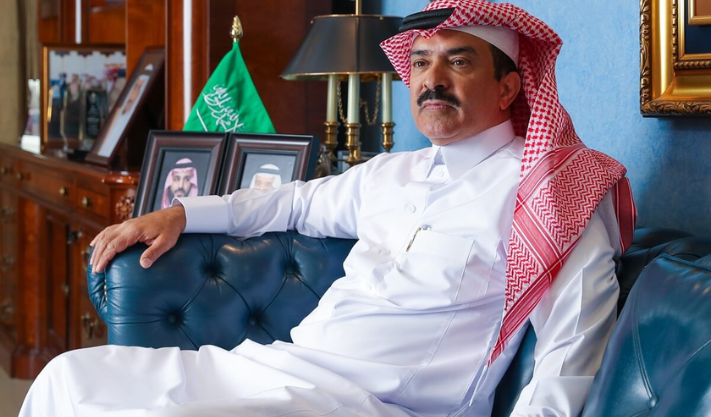
His story appeared in the April/May 2026 issue, highlighting the region’s Most Impactful Real Estate Leaders ranking. It offers a deep look into how one of Saudi Arabia’s most prominent business figures is navigating a period of profound economic transformation. As the Kingdom accelerates its shift away from oil dependency, leaders like Ajlan Abdulaziz Alajlan are redefining what long-term wealth creation looks like in a diversified, future-focused economy.
Saudi Arabia’s Shift Toward Economic Diversification
Saudi Arabia’s economic structure is undergoing a historic transformation. With non-oil activities contributing 55.1% of GDP in Q3 2025, the Kingdom is making measurable progress toward reducing its reliance on hydrocarbons. This shift is not accidental but the result of deliberate policy, investment, and structural reform aimed at building a resilient, multi-sector economy.
At the center of this transformation are large conglomerates like Ajlan & Bros Holding. Under Alajlan’s leadership, the company has evolved into a diversified powerhouse with interests spanning real estate, textiles, mining, technology, energy, and tourism. Generating $1.7 billion in revenue in 2025, the group serves as a microcosm of Saudi Arabia’s broader economic ambitions.
Repositioning Wealth for the Future
For Alajlan, the current moment is less about disruption and more about strategic repositioning. Rather than abandoning traditional sources of wealth, he is integrating them into a broader investment strategy that balances stability with growth.
This approach reflects a nuanced understanding of economic cycles. Established sectors like real estate continue to provide reliable returns, while emerging industries such as mining and digital finance offer long-term upside. The goal is not to replace one with the other, but to create a portfolio that is both diversified and interconnected.
Real Estate as a Core Pillar
Real estate remains at the heart of Alajlan’s strategy. He views it as a timeless asset class that underpins economic activity across sectors. From residential housing to commercial infrastructure, property plays a foundational role in supporting growth, employment, and investment.
This perspective is reinforced by market data. Real estate continues to command a significant share of financial activity, accounting for over 20% of total bank credit to companies. Its enduring relevance lies in its ability to adapt to changing economic conditions while maintaining intrinsic value.
Market Growth and Financial Trends
The strength of the real estate sector is evident in its financial performance. Lending to individuals has surpassed $193 billion, reflecting sustained demand for housing and property ownership. Meanwhile, corporate lending within the sector has grown by 21% annually, indicating strong developer activity and investor confidence.
These trends highlight the sector’s resilience and its capacity to absorb capital at scale. They also underscore the importance of real estate as a vehicle for wealth generation, both for individuals and institutions.
A New Real Estate Cycle
However, the nature of the real estate cycle has changed. Unlike previous booms driven primarily by speculative investment and private sector momentum, today’s growth is more structured and policy-driven.
Government initiatives are playing a central role in shaping demand and supply dynamics. This includes housing programs aimed at increasing homeownership, regulatory reforms to enhance transparency, and large-scale development projects that create long-term economic value.
Key Drivers of Demand
Several factors are driving this new wave of demand. One of the most significant is the increasing participation of women in the workforce. This has led to a rise in dual-income households, boosting purchasing power and expanding the pool of potential homeowners.
Tourism is another major driver. The Kingdom has seen a dramatic increase in international visitors, far exceeding global averages. This surge is fueling demand for hospitality infrastructure, retail spaces, and mixed-use developments.
Additionally, population growth and urbanization continue to support long-term demand for housing and commercial real estate.
Vision 2030 and Policy Influence
Saudi Arabia’s Vision 2030 is the backbone of these changes. The national strategy aims to diversify the economy, attract foreign investment, and create new opportunities across sectors.
In real estate, this has translated into increased institutional involvement, improved regulatory frameworks, and a focus on sustainable development. The government’s target of attracting $100 billion in foreign direct investment, including $19 billion for real estate, reflects the scale of ambition.
Evolution of Financing Models
Financing models have also evolved to support this growth. Public-private partnerships have become a key mechanism for delivering large-scale projects, combining government resources with private sector expertise.
At the same time, real estate investment funds are democratizing access to the market. By allowing multiple investors to pool capital, these funds enable participation in projects that would otherwise be out of reach for individual investors.
Geographic Expansion Beyond Riyadh
While Riyadh remains the focal point of development, investment is increasingly spreading to other regions. Cities such as Makkah, Madinah, and Jeddah are attracting significant capital, along with emerging destinations in the south.
This geographic diversification reflects a broader effort to distribute economic activity more evenly across the Kingdom. It also opens up new opportunities for growth in underserved markets.
Diversification Within Real Estate
Within the sector itself, investment priorities are shifting. While residential development remains important, there is growing interest in logistics, warehousing, office spaces, and commercial real estate.
This shift is driven by changes in consumer behavior, e-commerce growth, and the needs of a modern economy. Large-scale developments spanning millions of square meters are becoming increasingly common, reflecting the scale of ambition.
Mining as the Next Growth Frontier
Looking beyond real estate, mining is emerging as a key pillar of future growth. Alajlan sees the sector as a natural extension of the Kingdom’s resource base and a critical component of economic diversification.
The potential is enormous, with mineral resources estimated at $2.5 trillion. This positions mining as one of the most promising long-term investment opportunities in the region.
Major Investments in Natural Resources
To capitalize on this potential, the group plans to invest $13.3 billion in mining over the next decade. Already, $3 billion has been deployed across projects involving gold, silver, copper, zinc, and manganese.
These investments are characterized by long development cycles, with returns expected over six to seven years. However, they offer substantial upside and align with global demand for critical minerals.
Strategic Projects and Partnerships
Collaboration is central to the group’s mining strategy. Partnerships with international companies bring technical expertise, operational efficiency, and access to global markets.
Large-scale projects, including zinc and copper developments, are expected to generate significant output and contribute to the Kingdom’s industrial base.
Industrial Expansion Plans
Beyond extraction, the group is investing in downstream industrial capabilities. Plans for major facilities in the Western Region, including a large-scale plant in Yanbu and a zinc smelter, highlight a commitment to building an integrated value chain.
These projects are not only economically significant but also strategically important for reducing reliance on imports and enhancing domestic production.
Digital Economy and Financial Innovation
In parallel with traditional sectors, the group is embracing the digital economy. Investments in fintech and digital banking reflect a recognition of the growing importance of technology in shaping financial services.
The planned launch of a digital bank and the expansion of a digital wallet platform demonstrate a commitment to innovation and customer-centric solutions.
Logistics and Infrastructure Growth
Logistics is another area of focus, driven by the rise of e-commerce and global trade. Strategic partnerships and acquisitions are strengthening the group’s position in this sector, enabling it to support supply chain operations across the region.
Infrastructure development, including facility management and transportation, further complements this strategy.
Energy and Sustainability Initiatives
Energy and sustainability are also integral to the group’s vision. Investments in power generation, renewable energy, and water infrastructure reflect a commitment to supporting the Kingdom’s long-term development goals.
Projects in wind energy and desalination highlight the importance of sustainable resource management in a rapidly growing economy.
Investment Strategy Going Forward
Looking ahead, Alajlan’s investment strategy remains balanced and pragmatic. If allocating $10 billion today, he would direct a significant portion toward real estate, particularly in high-growth segments such as hospitality.
The remaining capital would be distributed across mining, tourism, and financial markets, ensuring a diversified portfolio that captures both immediate opportunities and long-term growth.
A Long-Term Vision for Growth
Ultimately, Alajlan’s approach is defined by integration rather than isolation. Each sector within the group’s portfolio is interconnected, creating synergies that enhance overall performance.
He believes that Saudi Arabia is entering a period of unprecedented growth. With the right mix of policy, investment, and leadership, the next decade could surpass the achievements of the past 50 years, positioning the Kingdom as a global economic powerhouse.
Also Read:-
Top 10 Most Beautiful Arab Women in the World (2026)
Meet Saudi Arabia’s Youngest Billionaire Dominating Real Estate
How Yasmine Sabri Became a Fashion Icon in the Arab World