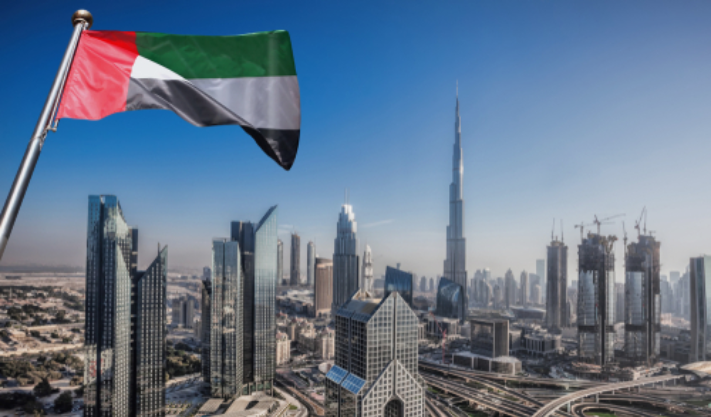
UAE Leads Gulf Economies in 2025, IMF Says at Abu Dhabi Finance Week
The UAE achieved the strongest economic growth among the Gulf Cooperation Council (GCC) countries in 2025. According to the International Monetary Fund (IMF), this success was mainly driven by Abu Dhabi’s strong performance. The statement was made on Monday during Abu Dhabi Finance Week.
Growth Through Diversification
The UAE’s economic progress shows the results of its long-term plan to diversify the economy. Instead of depending only on oil, the country has been investing in many important sectors. The Emirates News Agency (WAM) reported comments from Jihad Azour, who is the director of the IMF’s Middle East and Central Asia Department. Azour spoke at the opening of Abu Dhabi Finance Week and praised the UAE’s strategy.
Azour explained that investment in technology and artificial intelligence (AI) is now a key priority for all GCC countries. He said digital innovation is becoming a major driver of economic competitiveness in the region. This means that countries that invest in advanced technology will be able to grow faster and stay ahead globally.
Financial Sector Playing a Bigger Role
Azour also highlighted the rising importance of the Gulf’s financial sector. Areas such as financial technology (fintech) and capital market development are expanding quickly. These improvements are helping GCC countries build stronger financial markets. Strong financial markets support economic growth by attracting investment, improving business activity, and encouraging innovation.
Stable Performance Despite Global Challenges
Although the world is facing many uncertainties—such as changes in trade policies, new tariffs, and geopolitical tensions—the Middle East has managed to remain stable. Azour said this stability is due to three main factors.
First, the non-oil sectors of GCC economies have been growing well. Second, oil production increased in many Gulf countries. Third, there have been positive spillover effects on nearby oil-importing countries. These benefits include more tourism, stronger trade, and better overall economic activity.
Looking Ahead to 2026
Azour said it will be important to carefully watch inflation levels, trade patterns, financial market performance, and overall economic activity in 2026. He stressed that staying alert will help GCC countries maintain their economic strength.
KPMG’s April 2025 Regional Economic Outlook also supported a positive view of the region. According to their report, the GCC’s non-oil sectors continue to show strong performance. This strength comes from major spending on infrastructure, a steady flow of foreign investment, and low inflation levels around 2%.
UAE’s Continued Growth
In the UAE, sectors such as tourism, logistics, renewable energy, and digital services are expanding quickly. These sectors are helping the country reach its goals of economic diversification and long-term sustainability. They also support balanced growth beyond oil.
Azour concluded that the UAE’s forward-looking approach and broad investments make it a leader in the Gulf region. Even during global uncertainty, the UAE continues to build a strong and diverse economy. With ongoing efforts from both the government and private sector, the country is expected to maintain its momentum. This will strengthen its role as a regional center for innovation, trade, and finance.
Published: 10th December 2025
For more article like this please follow our social media Twitter, Linkedin & Instagram
Also Read:
Mirna Sleiman leads bold change in Middle East fintech
Khaled Al Qasimi: A visionary reshaping modern Arab fashion
Rami Al-Qawasmi: Leading Mawdoo3’s Arabic digital growth