The Middle East’s Next Energy Challenge Is Not Building Power, But Managing It
The Middle East is moving quickly toward renewable energy. Countries in the region are building more solar and wind projects every year. But now, the main challenge is changing. It is no longer about producing enough electricity. Instead, it is about managing that electricity in a smart and efficient way.
Renewable energy investment is growing
Investment in renewable energy is increasing fast across the Middle East. In 2025, the region invested about $12.9 billion in renewable energy projects. This is higher than $10.1 billion in the previous year. Many global investors are also showing interest in the region, with about one in four saying the Middle East is a top place to invest in clean energy.
This growth shows an important shift. The Middle East is not only known for oil and gas anymore. It is now becoming a strong player in clean energy as well.
Countries like the UAE and Saudi Arabia are seeing a sharp rise in electricity use. This is happening because of growing populations, new industries, and the rapid expansion of technologies like artificial intelligence and cloud computing.
According to the International Energy Agency (IEA), electricity demand in the Middle East could increase by 50% by 2035. One major reason is the rise of large data centres, which need a constant and high supply of power. Cooling systems, especially in hot climates, also require a lot of electricity.
The real problem: managing the grid
As more renewable energy projects are built, a new problem is becoming clear. Power generation is growing fast, but the electricity grid is not keeping up.
In many parts of the region, the grid system is still limited. Connections between countries are weak, and systems are not flexible enough. This creates risks such as congestion, where too much electricity is produced but cannot be delivered. It can also lead to energy waste and unstable prices.
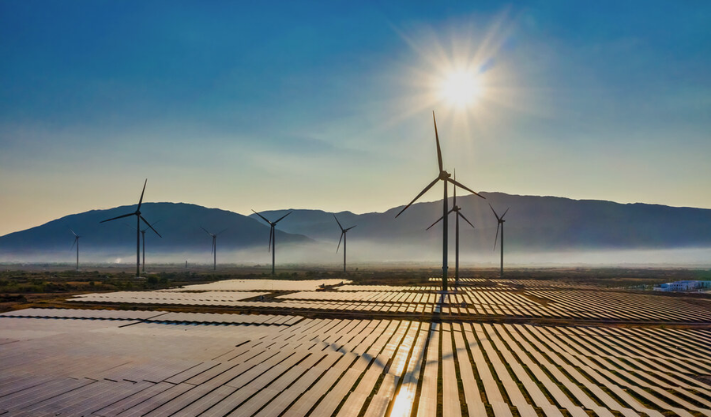
This issue is even more serious in the Middle East because solar energy is the main source of renewable power. Solar energy is only produced during the day, which creates an uneven supply. At times, there is too much power, and at other times, there is not enough.
As a result, grid operators now face more pressure. They must balance supply and demand in real time. Managing sudden changes in power generation has become a key challenge.
Storage is becoming essential
In the past, energy storage was seen as optional. Today, it is becoming necessary.
Energy storage systems, especially batteries, can help solve many of the problems caused by renewable energy. They can store extra power when production is high and release it when demand increases. This helps keep the system stable.
Reports show that around 34% of investors in Europe, the Middle East, and Africa see energy storage as one of the most important growth areas in the coming years.
For example, in the UAE, solar energy projects have expanded quickly. Large projects like Abu Dhabi’s Al Dhafra solar plant produce huge amounts of electricity. But without proper storage, some of this energy could go to waste. That is why combining solar power with storage systems is becoming more important.
However, storage alone is not enough. It must be supported by good planning, forecasting, and real-time management systems.
Governments are changing their role
Governments in the Middle East are also changing how they manage the energy sector. Instead of only providing electricity, they are now designing energy markets.
Saudi Arabia’s Vision 2030 and the UAE’s Energy Strategy 2050 are good examples. These plans are not just about building power plants. They also focus on improving how energy systems work.
In 2025, Saudi Arabia introduced a new power market model through the Saudi Power Procurement Company. This is a step toward creating a more competitive electricity market. Oman has also taken steps by allowing private companies to sell renewable energy directly to industrial users.
At the regional level, countries are working together more closely. The Gulf Cooperation Council Interconnection Authority is improving connections between national grids. A new link with Oman, launched in 2026, is part of this effort. The goal is to create a shared electricity market across the Gulf region.
These changes are important because modern energy systems need flexibility. Countries are also introducing new pricing systems, where electricity costs vary depending on the time of day. This encourages people and businesses to use energy more efficiently.
New business models, such as Energy-as-a-Service, are also emerging. These models allow private companies to invest in energy systems, including battery storage, which is expected to grow significantly by 2030.
From building capacity to handling complexity
The challenge is no longer just about building more power plants. It is about managing a more complex energy system.
If grid improvements and market reforms do not keep up with energy production, problems will increase. One major risk is “curtailment,” where renewable energy is wasted because the grid cannot handle it. This can lead to financial losses for investors and slow down future investments.
If these challenges are solved, the Middle East could move ahead of many developed markets. By using modern technology and better regulations, the region has a chance to build one of the most advanced energy systems in the world.
The key question now is whether investments are leading to systems that can operate smoothly and reliably. The success of renewable energy projects will depend on this.
In simple terms, success is no longer measured by how much energy is produced. It is measured by how well that energy is managed.
A shift toward decentralised energy
Another important change is happening at the local level. Energy production is moving closer to homes.
Governments are encouraging people to install solar panels on their rooftops. This allows individuals to both produce and use their own electricity. These people are called “prosumers.”
In Dubai, the Shams Dubai initiative makes it easier for residents to connect their solar systems to the grid. The process has become faster with the use of artificial intelligence. Homeowners can also benefit from net metering, where extra energy is added as credit to their electricity bills.
In Saudi Arabia, the National Renewable Energy Program aims to provide renewable energy to up to 1.1 million homes.
While large power plants will still play a major role, rooftop solar systems will also become an important part of the energy mix.
Conclusion
The Middle East’s energy transition is entering a new phase. The focus is no longer only on building renewable energy capacity. It is now about managing that energy in a smart, flexible, and efficient way.
Strong grids, better storage, modern market systems, and local energy production will all play a key role. If these elements come together successfully, the region can build a reliable and sustainable energy future.
In the end, the true measure of success will not be how much energy is produced, but how well it is used and managed.
Also Read:
Balancing AI Growth and Cybersecurity in MENA
The Middle East’s Healthcare Billionaires in 2026
Saudi Arabia’s PIF Eyes $5B Stake in SpaceX IPO