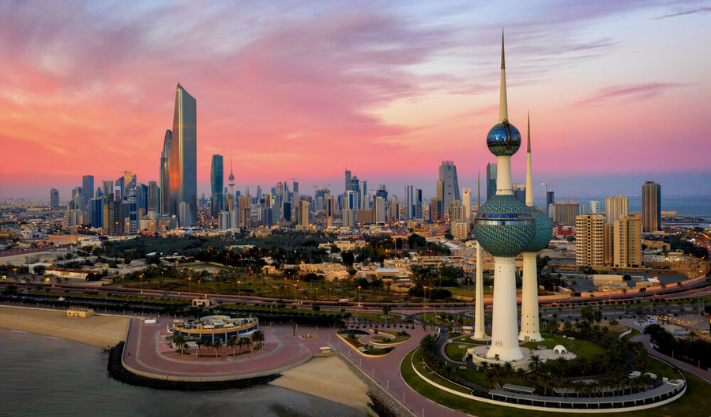
Kuwait’s Economic Growth Expected at 2.6% in 2025: IMF
Kuwait’s economy is expected to grow again next year. The International Monetary Fund (IMF) says the country’s GDP will increase by 2.6% in 2025 and rise further to 3.8% in 2026.
According to the Central Bank of Kuwait, IMF experts believe this growth will come from higher oil production as OPEC+ oil cuts are slowly reduced, along with strong growth in the non-oil sector.
In the coming years, economic growth is expected to stay slightly above 2%, the IMF said after its recent visit to Kuwait.
The non-oil economy is expected to grow by 2.7% in 2025 and 3% in 2026, helped by increased investment. Over the medium term, non-oil growth is expected to remain steady at 2.7%.
The IMF noted that Kuwait’s recovery has already started. In the second quarter of 2025, GDP grew by 1.7%, mainly due to strong non-oil sector growth of 3.1%.
Inflation is also slowing. Consumer price inflation fell to 2.4% in August. The IMF expects inflation to drop to 2.3% in 2025 and 2.1% in 2026, and stay below 2% in the coming years.
Kuwait returned to international debt markets after almost ten years. By the end of October, it issued local bonds equal to 4.6% of GDP and foreign bonds worth 7.1% of GDP.
Kuwait’s External Position
Even though oil exports declined, Kuwait’s external position remains strong. The current account surplus fell to 29.1% of GDP in 2024 due to lower oil income, but this was partly balanced by higher non-oil exports and investment earnings.
Foreign exchange reserves covered about 8.3 months of imports at the end of 2024. However, the IMF said Kuwait’s external position in 2025 is weaker than ideal because the country still depends heavily on oil and saves too little oil revenue, although its financial buffers remain strong.
Kuwait’s fiscal situation improved in 2025 despite lower oil income. The central government deficit narrowed to 2.2% of GDP, helped by lower public wage costs, reduced energy subsidies, and higher non-oil revenue from government fees.
At the broader government level, the fiscal surplus increased to 27.7% of GDP, mainly due to higher income from sovereign wealth fund investments.
Banking outlook
The IMF said Kuwait’s central bank is following the right monetary policy. Since September 2024, the Central Bank of Kuwait (CBK) has reduced interest rates by 75 basis points. However, rates are still kept above neutral levels to help control inflation and support stability in the non-oil economy.
Under its main forecast, the IMF expects interest rates to continue moving toward normal levels as inflation slows and growth in the non-oil sector improves.
Kuwait’s financial system remains stable. Banks are well capitalized and have strong liquidity. Lending to private non-financial businesses has increased, helping non-oil economic growth. At the same time, bad loans remain low and are well covered.
Continued dependence on oil
The IMF warned that Kuwait is still highly exposed to global risks because it depends heavily on oil. These risks include changes in oil prices, global financial conditions, and global economic growth.
Within the country, delays in structural reforms and infrastructure projects are seen as the biggest risks to economic diversification.
The IMF said Kuwait aims to move from an oil-based welfare economy to a more diversified and active economy under Vision 2035. Reform efforts have picked up since the financing and liquidity law was passed in 2024.
To support long-term non-oil growth, the IMF called for wide-ranging fiscal and structural reforms.
It said fiscal reforms should improve long-term budget sustainability and encourage Kuwaitis to work in the private sector. Structural reforms should focus on unifying the labor market and making the business environment more attractive.
The IMF also recommended slowly reducing energy subsidies by increasing prices for electricity, water, and fuel to average Gulf Cooperation Council (GCC) levels, while protecting low-income groups through targeted support.
To raise non-oil revenues, the IMF suggested extending the 15% corporate income tax to all local companies, introducing the GCC excise tax, and adding a 5% value-added tax.
Over the next 10 years, the IMF said Kuwait will need fiscal tightening equal to about 10% of GDP to ensure fairness for future generations. This should be supported by better public financial management, a medium-term budget framework, and continued investment in infrastructure to support long-term growth.
What to watch for
The IMF expects budget pressures to increase. The central government budget deficit is forecast to rise to 8.7% of GDP ($13.7 billion) in 2026 and 9.4% of GDP in 2027. By 2032, the deficit could reach 11.5% of GDP, or $22.8 billion.
To cover these deficits, Kuwait is expected to borrow about $128.3 billion over this period.
Published: 19th December 2025
For more article like this please follow our social media Twitter, Linkedin & Instagram
Also Read:
TECOM launches $167M Phase 4 Innovation Hub in Dubai
Israel Approves $35 Billion Gas Deal With Chevron to Supply Egypt
Borouge joins FTSE ADX Index, boosting UAE market profile