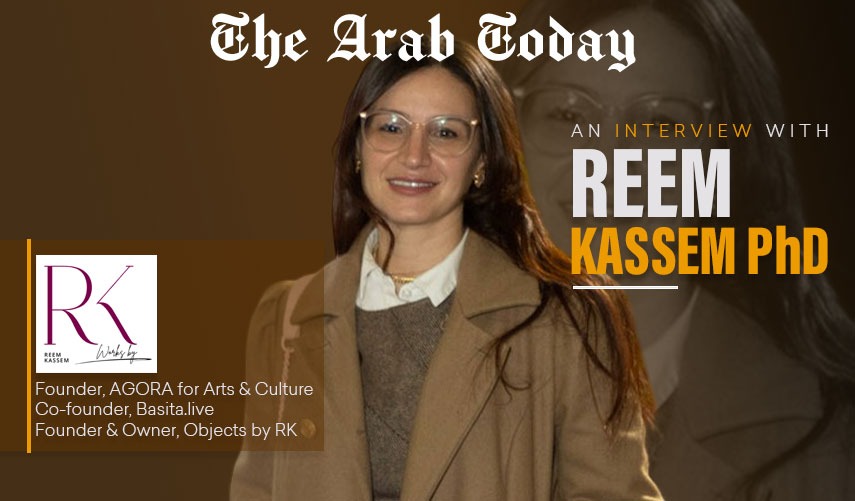
Reem Kassem Interview
This insightful interview of Reem Kassem, explores a visionary journey rooted in the cultural sector, evolving into the founding of two impactful initiatives; AGORA (2011) and Basita (2020). It highlights how arts and culture can transcend traditional boundaries and empower communities, particularly women and youth, in crisis-affected environments. Through practice-based research and real-world implementation, the conversation sheds light on resilience as a dynamic, collective process shaped by creativity, participation, and non-formal education. The discussion ultimately positions culture not as a luxury, but as a vital social infrastructure for healing, sustainability, and long-term societal transformation.
The Journey Behind AGORA and Basita
We started the interview by asking, “Can you tell us about your beginnings in the cultural sector and how your career evolved into founding AGORA and Basita?”
Reem Kassem replied, “I began working in the cultural sector at a very early age. At seventeen, I started my journey at the Library of Alexandria, where I was initially involved in programming before becoming the coordinator of the performing arts programme and later its head. I was fortunate to learn from a group of amazing cultural leaders and artists in Egypt. From the beginning, I was particularly interested in taking the arts beyond institutional walls; bringing them into public spaces and engaging harder-to-reach communities that were often excluded from formal cultural life.
Alongside programming, I consistently advocated for sustainable models to support the arts, not only through public space festivals but also through long-term funding and structural approaches that could ensure continuity and impact. This vision led me, in 2011, to found AGORA for Arts & Culture with the mission of creative community engagement through education, dissemination, and the production of arts and culture. AGORA was conceived to support both social and economic development through culture, and over the years it has delivered numerous programmes, including Start With Yourself, Bab El-Bahr Festival, and Green Crafts, among others.
In 2020, when the world was deeply affected by the COVID-19 pandemic, I became increasingly concerned about the financial sustainability of the cultural sector and the livelihoods of artists. In response, I co-founded Basita as a digital platform and tool that enables cultural practitioners to engage with global audiences while generating income. At that time, I was only six months into my PhD research, which was grounded in practice- and arts-based methodologies. The emergence of Basita came at a pivotal moment, allowing me to expand my research focus from exclusively in-person cultural engagement to a hybrid model that embraces the flexibility of integrating virtual platforms. Basita was therefore developed not only as a response to an urgent global crisis, but also as a research-informed intervention aimed at facilitating a sustainable ecosystem; one that supports the emergence and growth of a truly global cultural sector.”
Inspiration for Resilience Research
The Arab Today: What initially sparked your interest in researching resilience building through culture?
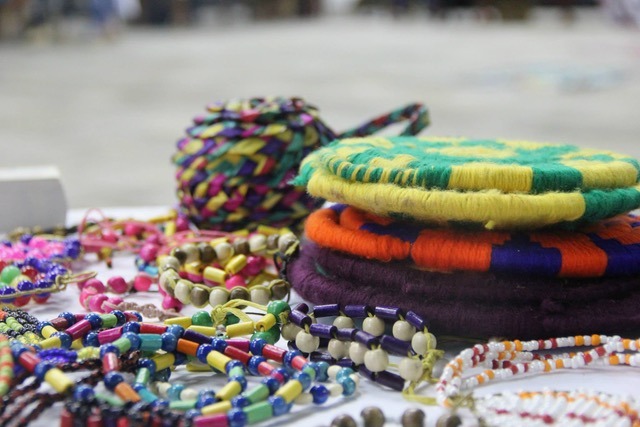
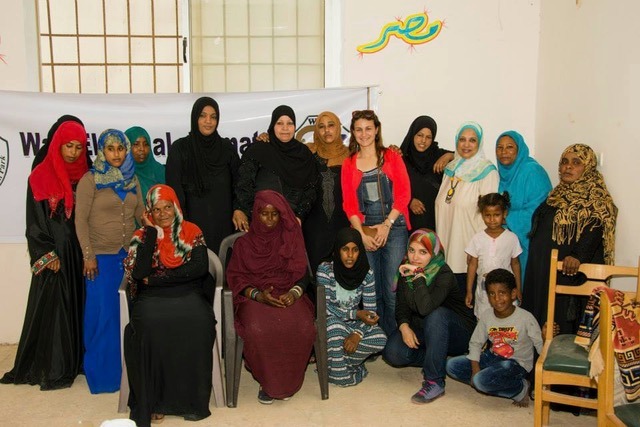
Reem Kassem replied, “My interest in resilience building emerged through more than a decade of working directly with vulnerable communities, where I witnessed, both personally and professionally, the long-term effects of violence, trauma, and prolonged instability. In 2012, I conceptualized an intensive programme that was funded by the Prince Claus Fund called “Green Crafts”, from which all my observations started. As I mentioned in my research, I followed the steps of participatory action research (PAR) long before officially starting the study. Through this project, I saw with my own eyes the impact that arts and cultural engagement could have on individuals and communities, especially vulnerable women. I could see it working, but I could not yet prove it scientifically. This gap compelled me to document these observations and translate them into academic research as my contribution to knowledge and, ultimately, to humanity.
I gathered data and reflected on years of practice within this research, while also undertaking further focused and academically grounded projects, including work with young women living in care shelters in Alexandria, enabling them to engage with green crafts while utilizing non-formal education techniques through a digital tool, Basita Live. The research grew from a deep conviction that many cycles of violence and extremism are rooted not only in crisis conditions, but in unresolved trauma and the absence of spaces for self-expression, hence healing and growth, and that resilience must be nurtured early, collectively, and ethically if societies are to move beyond survival toward sustainability and growth.”
Core Research IdeaTop of Form
The Arab Today: Your PhD research focuses on culture and resilience. What is the core idea driving your study?
Reem Kassem replied, “My research is driven by the question of how cultural and creative practices can support individuals to develop their own resilience in contexts of prolonged crisis. Rather than viewing resilience as a static trait, I examined it as a collective, relational, and cultural process; one that is acquired through a process of participation, creativity, and informal learning. The study explores how arts-based practices enable people, particularly women and young people, to adapt, heal, and reimagine their futures under conditions of instability and uncertinity.”
Policy Gaps Addressed
The Arab Today: What gap does your research address within cultural policy and practice?
Reem Kassem replied, “Much cultural policy still treats the arts as either symbolic or economic, while overlooking their role in psychosocial recovery and social repair, especially in crisis-affected contexts. My research addresses this gap by providing evidence of how non-formal education combined with participatory cultural practices function as resilience-building mechanisms. It challenges short-term, project-based approaches and argues for longer-term, care-centred cultural frameworks embedded within policy and institutional thinking.”
Focus on Women & Youth
The Arab Today: Your work engages closely with women and young people living under crisis. Why is this focus important?
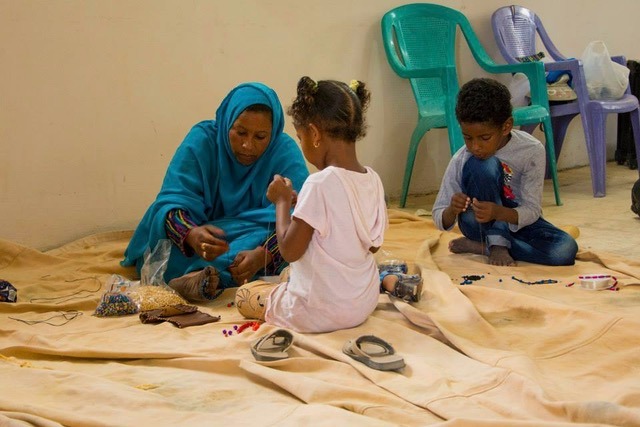
Reem Kassem replied, “Women and young people often experience the most sustained impacts of violence, displacement, and structural inequality, yet their voices are frequently marginalised in formal recovery frameworks. More broadly, we are living in a world increasingly shaped by acts of extreme violence carried out by individuals who themselves were often exposed to abuse, trauma, or prolonged harm without access to healing. And this cycle never stops. My research foregrounds the lived experiences of women and young people and examines how creative spaces can interrupt these cycles by enabling self-expression, agency, and healing. While creative practices do not “fix” trauma, they create conditions for dignity, connection, emotional processing, and ethical growth; foundations that are essential to achieving growth, and for preventing the reproduction of violence and countering extremism in both actions and ways of thinking. Actually my research proposal initially was focused on countering violence and extremism through cultural engagment, however, after the literature review phase at the beginning of my study, I shifted the focuse to be on resilience building as it results into countering violence and disrupts this negative cycle.”
Rethinking Resilience
The Arab Today: How does your research redefine resilience beyond conventional interpretations?
Reem Kassem replied, “Resilience is often framed as endurance or the ability to “bounce back.” My research reframes it as transformative and adaptive process (not a trait but a process), recognising that in protracted crises there is often no return to a previous state. Instead, resilience emerges through ongoing negotiation, creativity, and meaning-making. Cultural practice becomes a way to live with uncertainty while still producing knowledge, identity, and collective strength.
In this research, I combine non-formal education techniques with sustained engagement with the arts; specifically green crafts, to intentionally activate these adaptive processes. This approach enables dialogue that supports recovery, practices that reinforce sustainability in everyday life, and actions that encourage sustainability, growth and transformation. These three dimensions align with the adaptive outcomes of resilience identified by Zautra and Reich and are central to my analytical framework, demonstrating how creative practice can move beyond coping toward long-term individual and collective resilience.”
Policy Impact Vision
The Arab Today: What impact do you hope your research will have on cultural policy and practice?
Reem Kassem replied, “I hope the research contributes to a shift in how institutions and policymakers understand the role of culture engagment on the wellbeing of societies; recognising it as a long-term social infrastructure, not an emergency tool. By evidencing the impact of creative practice on resilience and healing, the research advocates for policies that invest in continuity, access, and cultural rights, particularly in regions experiencing prolonged instability and crisis, as well as among vulnerable communities that are not typically engaged with culture or that perceive it as a luxury or a secondary need.
As a result of this research, I have developed a model of Creative Resilience that translates theory into practice. The model is designed to be adaptable across different social, cultural, and crisis contexts, offering communities practical tools to engage with creativity as a means of recovery, sustainability, and growth. By implementing this model in varied settings, my aim is to support societies more broadly in developing resilient capacities; strengthening their ability to respond to disruption, reduce cycles of violence, and cultivate long-term social wellbeing through cultural practice.”
Beyond Academia
Lastly, we asked, “How do you see your research translating beyond academia?”
“From the outset, my research was designed to be practice-facing because this is who I am; a cultural practitioner. Its outcomes are intended to inform cultural programming, institutional strategy, and policy design, while remaining accessible to practitioners and communities. Ultimately, I see it as a bridge between academic knowledge and real-world cultural practice; one that supports real, tangible impact that can be measured, proven, and acknowledged by society.
Beyond cultural policy and programming, I see this research translating into the everyday life and relationships. I envision its application within education systems to support the development of children to become more flexible, emotionally aware, and resilient in the face of life’s hardships. I also see it implemented at home, in the ways parents interact with their children; adapting non-formal education techniques to build trust, communication, and emotional safety. In workplaces, the model offers pathways to healthier and more resilient work environments. Ultimately, I see this approach not as a standalone intervention, but as a way of life; one that embeds resilience, care, and creativity into how we learn, relate, and work.
By conducting this research I have myself grown into a more resilient woman; during my journey of studying resilience I built my own resilience.” Reem Kassem concluded
Connect with Reem Kassem on LinkedIn
For more information visit https://www.reemkassem.com/
Also Read:
Majed Al-Amoudi: From financial discipline to real estate leader
Walaa Fouda on Media, Innovation
Sergey Volnov leads It’s AI with a focus on trust