Egypt to Receive Remaining EU Financial Support by 2027
Egypt is expected to receive the remaining $4.66 billion (€4 billion) from a financial support package provided by the European Union (EU) by 2027. The money is part of a larger $5.82 billion assistance program agreed earlier to support Egypt’s economy.
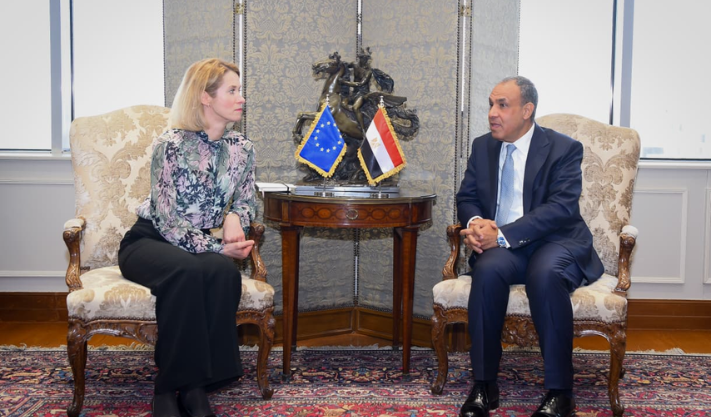
The funds will be paid in three stages, according to Egypt’s Foreign Minister Badr Abdelatty, who was quoted by Reuters. Egypt expects to receive the first payment of $1.2 billion within the next few days. This will happen after Egypt completes its fifth and sixth reviews under its current agreement with the International Monetary Fund (IMF).
This EU funding is part of a wider $8.1 billion support package announced in 2024, which includes low-interest loans, grants, and investment support. Egypt already received an initial $1.16 billion payment from the EU in January.
The EU created this financial package to help stabilize Egypt’s economy, which has faced many challenges. These include the effects of the war in Gaza, attacks in the Red Sea that disrupted trade routes, and ongoing global economic problems linked to the Ukraine war. These events have reduced foreign currency earnings, weakened trade income, and increased pressure on Egypt’s public finances.
IMF Review and Economic Progress
An IMF team visited Cairo last month to review Egypt’s economic program. The talks focused on policies linked to the fifth and sixth reviews of the Extended Fund Facility (EFF) and the first review under the Resilience and Sustainability Facility (RSF).
The discussions ended with a staff-level agreement, meaning IMF officials and Egyptian authorities broadly agreed on the next steps. The IMF said Egypt’s stabilization efforts have shown positive results and that the economy is growing despite difficult regional and global conditions.
Egypt’s economic growth rose to 4.4% in the 2024–25 fiscal year, up from 2.4% the previous year. This growth was supported by industries such as manufacturing, transport, finance, and tourism, rather than oil and gas. Growth became even stronger, reaching 5.3% in the first quarter of fiscal year 2025–26.
Improved Financial Position
Egypt’s balance of payments has improved. The current account deficit became smaller, helped by strong remittances from Egyptians abroad, higher tourism income, and growth in non-oil exports. Financial conditions also improved in 2025, with foreign investors bringing $30 billion into local government debt. Egypt’s foreign currency reserves increased to $56.9 billion.
The government said it remains committed to careful spending and financial discipline. Egypt plans to achieve a primary budget surplus of 4.8% of GDP in 2025–26 and 5% in 2026–27. Tax reforms are also planned and are expected to increase government revenue by about 1% of GDP.
Future Reforms
The IMF said Egypt now needs to focus on building a strong private-sector–led economy. This includes reducing the role of the state in business, speeding up asset sales, and creating fair competition so private companies can grow and invest more easily.
Published: 12th January 2026
For more article like this please follow our social media Twitter, Linkedin & Instagram
Also Read:
SABIC sells two units to focus on high-growth markets
Kuwait Finance House Raises $1 Billion Through Sukuk Deal
OPEC Shares New Compensation Plans from Key Members