Saudi Arabia’s Non-Oil Exports Rise Strongly in October
Saudi Arabia’s non-oil exports increased by 32.3% in October compared to the same month last year. The latest data was released by the General Authority for Statistics (GASTAT) on Thursday. This strong growth shows Saudi Arabia’s continued efforts to reduce its dependence on oil and expand other sectors of the economy.
The growth in non-oil exports also improved the country’s trade performance. The ratio of non-oil exports to imports rose by 42.3% year-on-year in October. This means Saudi Arabia earned more from non-oil goods compared to what it spent on imports.
At the same time, the share of oil exports in total exports fell. Oil exports made up 67.4% of total exports in October 2025, down from 72.5% in October 2024. This decline highlights the growing importance of non-oil products in the kingdom’s export mix.
Imports increased by 4.3% in October 2025 compared to the same month last year. Because exports grew faster than imports, Saudi Arabia’s merchandise trade surplus rose sharply by 47.4% year-on-year.
One of the biggest increases was seen in imports of machinery and electrical equipment, which rose 26.3% in October. This category is also the largest for both non-oil exports and imports. Machinery and electrical equipment accounted for 23.6% of total non-oil exports and 30.2% of total imports. The rise suggests growing industrial activity and investment in infrastructure and manufacturing.
China remained Saudi Arabia’s largest trade partner in October 2025. It accounted for 24.8% of total imports and 14.1% of total exports. The United Arab Emirates (UAE) and India followed as major export destinations, representing 10.9% and 9.9% of Saudi exports, respectively.
Other important export destinations included Japan, South Korea, the United States, Bahrain, Egypt, and Singapore. Together, the top 10 export partners made up 70.4% of Saudi Arabia’s total exports.
On the import side, Saudi Arabia mainly sourced goods from the United States, UAE, Germany, India, Japan, and Italy. The top 10 importing countries accounted for 65.2% of total imports, showing strong trade ties with these nations.
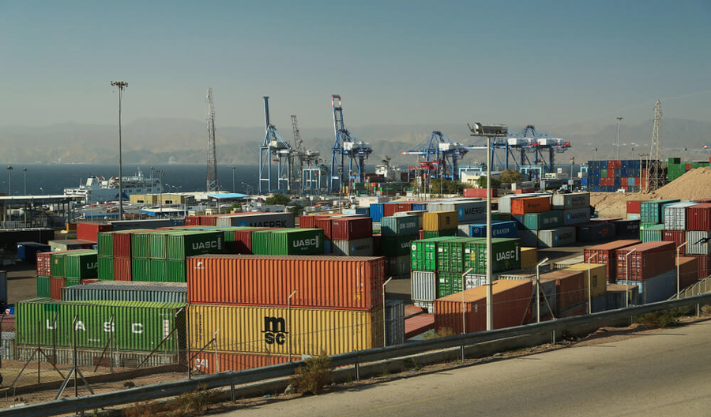
In terms of entry points, King Abdulaziz Seaport in Dammam was Saudi Arabia’s largest port for imports in October. It handled 25.7% of all imported goods. The port is the second-largest seaport in the country and serves as a key gateway for the Gulf Cooperation Council (GCC) region.
Along with Jeddah Islamic Seaport, King Khalid International Airport in Riyadh, King Abdulaziz International Airport, and King Fahd International Airport in Dammam, these five locations handled 79.2% of Saudi Arabia’s total merchandise imports.
Big Number
$5.3 billion (SAR 20 billion) — this was the total value of Saudi Arabia’s non-oil exports in October, according to GASTAT.
Published: 26th December 2025
For more article like this please follow our social media Twitter, Linkedin & Instagram
Also Read:
The Rise of Gold Eyewear by Oro
Binghatti Wins Major Corporate Bond Award
IMF Agrees on New Reviews of Egypt’s Loan Program