Dr. Adel Alzahrani Interview
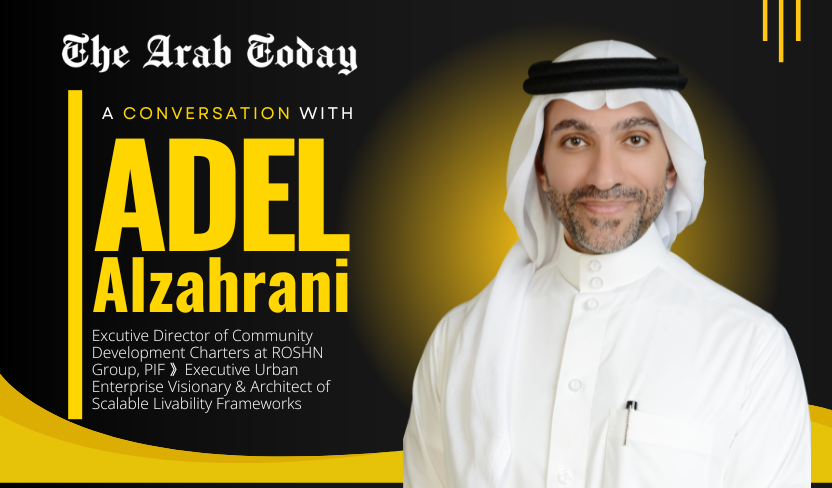
Dr. Adel Alzahrani is a visionary architect and urbanist who approaches city-making through logic, systems, and human behavior rather than imagery alone. By bridging governance, design, and enterprise-scale frameworks, he creates cities that perform—socially, economically, and culturally. His work focuses on embedding livability, identity, and long-term value into urban systems, ensuring environments that are not only functional and sustainable but deeply human and future-ready.
Embedding Human Values into the Urban Code
We started the interview by asking, “Your work is often described as shaping the “DNA of Livability.” What does this concept truly mean to you?”
Dr. Adel Alzahrani replied, “For me, the “DNA of Livability” is about encoding values into the physical and social fabric of cities. It goes beyond design aesthetics or infrastructure, it’s a system that integrates culture, sustainability, inclusivity, walkability, and human behavior into every planning and development decision. At ROSHN, this DNA becomes a living charter that guides how communities are shaped, experienced, and evolved. When livability is embedded at an enterprise level, it ensures consistency, quality, and long-term value, while allowing each place to express its unique identity and sense of belonging.”
From National Policy to Enterprise Impact
The Arab Today: How has your experience as Deputy Minister influenced your current leadership at ROSHN Group?
Dr. Adel Alzahrani replied, “Serving as Deputy Minister gave me a national, multi-scalar perspective on how cities function as systems policy, governance, design, economics, and society working together. That experience sharpened my understanding of how visionary ideas must translate into implementable frameworks. At ROSHN, I apply the same rigor but with greater agility, ensuring that urban codes and design principles are not just aspirational but operational. The transition allowed me to bridge public policy thinking with enterprise-scale delivery, ensuring that Vision 2030 ambitions materialize into tangible, high-quality communities.”
Rethinking Cities as Living Systems
The Arab Today: You pioneered concepts like Symbiotic Urbanism and Sick Urban Syndrome. Why are these ideas critical today?
Dr. Adel Alzahrani replied, “Cities today face a silent crisis places that function technically but fail emotionally, socially, and behaviorally. Sick Urban Syndrome describes environments that erode well-being through poor design, isolation, and lack of identity. Symbiotic Urbanism, on the other hand, offers a solution: cities designed as living ecosystems where people, nature, mobility, and culture coexist in balance. These concepts are critical because urban success can no longer be measured only by density or efficiency, it must be measured by how cities heal, connect, and elevate human life.”
Global Standards, Local Soul
The Arab Today: Cultural identity is a strong thread in your work. How do you balance global best practices with local authenticity?
Dr. Adel Alzahrani replied, “True urban excellence lies in translation, not imitation. Global best practices provide tested frameworks, but culture gives cities their soul. In Saudi Arabia, we are rich in architectural heritage and social patterns that deserve contemporary expression. Whether through the 19 Saudi Architectural Identities or ROSHN’s Urban DNA, my approach is to localize innovation ensuring that global standards enhance, rather than dilute, cultural authenticity. When people see themselves reflected in their environment, cities become meaningful, resilient, and deeply loved.”
Livability as a Strategic Engine of Vision 2030
The Arab Today: What role does livability play in achieving Vision 2030?
Dr. Adel Alzahrani replied, “Livability is not a byproduct of development, it is a strategic driver of national success. Vision 2030 recognizes that quality of life, economic competitiveness, and social cohesion are deeply interconnected. Walkable neighborhoods, vibrant public realms, and inclusive spaces directly impact productivity, health, and community resilience. By embedding livability into urban policy, KPIs, and development frameworks, we ensure that growth is human-centered and sustainable. Cities that prioritize people ultimately outperform cities that prioritize assets alone.”
A Leadership Model Forged Across Policy
The Arab Today: You have worked across policy, academia, private enterprise, and civil society. How does this multidimensional experience shape your leadership?
Dr. Adel Alzahrani replied, “Each domain taught me a different language of impact. Academia grounded me in research and critical thinking. Government taught me scale, responsibility, and alignment. Private enterprise sharpened execution and value creation. Civil society reminded me why cities matter to people. Together, these experiences allow me to act as a systems integrator, connecting vision with delivery. Leadership today requires fluency across disciplines and the ability to align diverse stakeholders around a shared urban future.”
Sketching as Systems Thinking
The Arab Today: Your freehand sketches have become a recognizable signature of your thinking, and their language is notably different from conventional architectural or design sketching. How does this way of thinking function as a mindset for understanding, testing, and connecting ideas; from architectural scale to the lived dynamics of city life?
Dr. Adel Alzahrani replied, “My sketching is not a design act. It’s a way of thinking in relationships. I don’t sketch to search for form or style. I sketch to test behavior, sequence, proportion, and consequence. My sketching is not a design act; it’s a way of thinking in relationships. I don’t sketch to search for form or style, but to test behavior, sequence, proportion, and consequence. A line can be a wall, a threshold, or a policy decision. A shadow can stand for climate, time, or human comfort. What matters is not how the sketch looks, but what it reveals. When I sketch a street, I’m not drawing buildings—I’m asking whether it’s designed for movement or for life. That single question shapes width, shade, edges, entrances, and how long people choose to stay. More importantly, it tests how buildings participate in the street as a system, not how they sit on it. A street is not a backdrop; it’s a living system, and buildings must earn their place within it. That’s why my sketches don’t represent architecture—they explain how space shapes life, from a doorway to an entire city.”
Shaping the Next Era of Saudi Urban Excellence
Lastly we asked, “Looking ahead, how do you envision the next decade of urban development in Saudi Arabia?”
“I see a decade defined by maturity, not speed cities that are regenerative, identity-driven, and emotionally intelligent. Saudi Arabia has already demonstrated bold ambition; the next chapter is about refinement, performance, and legacy. We will see cities that are walkable yet smart, modern yet rooted, scalable yet deeply human. My focus remains on building frameworks that outlive projects urban systems that continuously adapt, elevate quality of life, and inspire pride for generations to come.” Dr. Adel Alzahrani concluded
Connect with Dr. Adel Alzahrani on LinkedIn
Also Read:
Nisreen Shocair’s Vision for Scaling Luxury Globally
Jasbir Bassi: Empowering Mobility and People
From Finance to Real Estate: The Journey of Seema Balwani