The Middle East at the Center of a Sanctions-Driven Energy Market
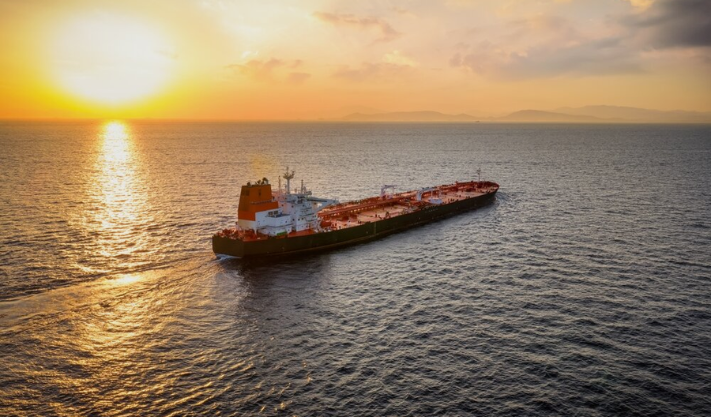
Western sanctions on Russian oil are changing how energy moves around the world. As these sanctions tighten, the Middle East—especially countries like Saudi Arabia and the United Arab Emirates (UAE)—is becoming more important as a reliable supplier of oil and fuel to global markets.
This change is not just a short-term shift in trade routes. Instead, it shows a deeper change in the balance of power in the global energy system. Sanctions are dividing energy markets and increasing the importance of suppliers that are seen as politically neutral and compliant with international rules.
For the first time since the oil crises of the 1970s, Middle Eastern oil producers are gaining more influence. They now have stronger pricing power, more political protection, and a crucial role in global energy supply. This is not because oil is scarce, but because sanctions have reduced the number of large, reliable exporters that many countries are willing to buy from.
Russian discounts, rising Gulf influence
As the United States and Europe increase pressure on Russian oil exports, global oil pricing is changing. New sanctions target ships, traders, and refined oil products. According to an S&P analysis released in October 2025, these measures have given Gulf producers more pricing power and more geopolitical influence.
In this environment, oil from the Middle East is no longer just an alternative. For many buyers, it has become the preferred option.
This is speeding up a long-term change in global energy trade. Europe and other major oil-consuming regions are moving away from Russian energy. As a result, oil and fuel exports from Gulf Cooperation Council (GCC) countries are rising. At the same time, Gulf producers are becoming more important to Western energy security, even as the influence of traditional Western enforcement systems weakens.
Trade data from the Oxford Institute for Energy Studies shows that Middle Eastern crude exports to Europe have increased by about 400,000 barrels per day. European refineries are switching away from Russian oil, and the extra Gulf supply is large enough to affect regional oil prices and long-term supply contracts.
An S&P report from July 2025 also noted that stricter US and EU sanctions have pushed European buyers to look elsewhere for oil and fuel. This has raised prices for Middle Eastern crude and refined products, as demand moves away from sanctioned Russian supplies.
With less Russian oil available to Europe, a supply gap has opened. Gulf exporters are now filling that gap on a long-term basis. According to a February 2025 analysis by the Center for Research on Energy and Clean Air (CREA), sanctions have reduced Russian export revenues and volumes. This has encouraged buyers to use non-Russian oil instead.
GCC countries have sharply increased energy exports to Europe, while cheaper Russian oil has been redirected to other parts of the world. The Middle East Institute reported in February 2025 that Gulf oil shipments to the EU rose strongly through 2024, as Russia’s share of the market fell under sanctions.
Two types of UAE supply, two levels of risk
Global buyers are now making a clear distinction between different types of UAE-linked oil supply.
On one side is oil produced and sold by UAE national oil companies (NOCs) based in places like Abu Dhabi and Dubai. On the other side are cargoes linked to private traders and intermediaries that operate out of the UAE but are not state-owned.
Iman Nasseri, managing director for the Middle East at FGE NexantECA, explained this difference in an interview with Forbes Middle East.
“There are two types of sourcing: UAE-origin supply from reputable national companies, and companies that are based in the UAE but mainly act as traders or middlemen,” he said.
“These two types have very different risk profiles. Compliance teams know which suppliers pose reputational risks and which do not, regardless of how attractive the discounts may be.”
This view matches research from the Georgetown Journal of International Affairs, which found that sanctions-related risks are mostly linked to trading, shipping, and intermediaries, rather than state-backed oil production.
Refineries as strategic tools
Middle Eastern refineries are becoming more important—not as channels for sanctioned oil, but as strategic assets. They allow Gulf producers to sell compliant refined fuel into markets that face supply limits.
However, Nasseri said refinery expansion in the Middle East is not mainly about handling sanctioned oil.
“I don’t think refinery expansions are linked to sanctioned crude,” he said. “Most refinery output is sold by national oil companies, using their own production.”
S&P data supports this view. It shows that growing Middle Eastern fuel exports are mainly driven by Europe replacing Russian supply, not by blending or hiding sanctioned oil in Gulf refineries.
This distinction matters more as Europe tightens rules on the origin of fuel entering EU markets.
Enforcement risks mainly for private players
If US and EU enforcement becomes even stricter, Nasseri believes private companies will feel the impact more than Gulf governments.
“I don’t think Gulf states oppose stronger enforcement,” he said. “But some private operators and terminal companies could face higher risks, which may affect business in certain ports and free zones.”
Recent sanctions increasingly focus on shipping networks, port activity, and fuel movements. According to CREA, enforcement efforts have targeted shadow fleet ships and intermediaries.
Although some speculate that major hubs like Fujairah could face broad restrictions, Nasseri expects authorities to focus on individual firms and vessels instead.
Recent US and EU sanctions have mostly targeted specific companies and ships, not entire ports or countries. This shows a transaction-based approach rather than a location-based one.
Not a permanent sanctions hub
Nasseri does not believe the Middle East will become a permanent center for sanctioned oil trade. He argues that such trade is spread across many regions and actors.
“Sanctioned crude has very little to do with the Middle East itself,” he said. “It’s mainly refined products using the region as one of several trade hubs.”
Sanctioned oil trade remains flexible and scattered, using shadow fleets and third-country transfer points. This reduces the chance that any single region becomes a long-term hub for such activity.
Looking ahead: the Middle East’s growing leverage
If sanctions on Russian energy continue into 2026 and 2027, the Middle East is likely to become even more central to global oil and fuel markets. Gulf producers will need to balance new commercial opportunities with geopolitical and compliance risks.
This long-term shift could strengthen GCC energy diplomacy, deepen ties with Europe and Asia, and influence future investment in refineries and logistics. As global energy markets split into different political and economic blocs, the Middle East is set to play a defining role in the new global energy order.
Published: 10th February 2026
For more article like this please follow our social media Twitter, Linkedin & Instagram
Also Read:
Oman’s Investment Drive Marks a New Stage in Gulf Competition
How digital innovation is reshaping government in UAE and GCC
How Sukuk Became Central to the UAE’s Debt Market